Bhatapara Ambuja Cements Drives Community Pond Project To Address Water Scarcity Challenges
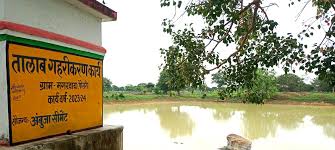
Bhatapara Ambuja Cements has launched an extensive community pond project to tackle persistent water scarcity affecting Maldi village and seven neighbouring settlements. By deepening and reshaping existing ponds, the company aims to retain monsoon water for longer periods, ensuring reliable supply for both households and agriculture. The initiative demonstrates how industrial players can integrate sustainable water management into rural operations, supporting local livelihoods while strengthening relations between the cement plant and surrounding communities.
Water stress is a growing challenge in the Baloda Bazaar-Bhatapara region, where shallow ponds often dry out well before summer ends. Seasonal rainfall alone cannot meet the rising needs of households and farms, leaving communities vulnerable during critical months. While local authorities occasionally dredge ponds, the interventions are temporary and fail to address the structural limitations of existing water bodies. Ambuja Cements’ approach focuses on enhancing pond depth and reshaping contours to capture monsoon runoff efficiently, reducing evaporation and extending water availability.The Maldi project follows a successful model previously implemented in Magarway village, where a deepened pond now holds over 3,600 cubic metres of water, remaining full for six to eight months annually. Ambuja worked closely with village leaders and district officials to design the project, ensuring local priorities and traditional knowledge guided the planning. “Community participation was key to the project’s design and execution,” a senior company official said, emphasising that engagement fosters both trust and effectiveness.
For cement manufacturers, such initiatives are not only socially responsible but strategically vital. Water scarcity in neighbouring villages can disrupt operations, provoke protests, or trigger regulatory scrutiny. By enhancing local water security, Ambuja strengthens groundwater recharge, supports farming productivity, and ensures uninterrupted plant functioning. The project aligns with the company’s broader commitment to sustainable water management, now reinforced under the Adani Group’s stewardship.Beyond operational benefits, the initiative illustrates a deeper connection between rural water security and regional stability. Reliable water sources improve agricultural outcomes, bolster local economies, and reduce social tensions. For industries operating in water-stressed regions, actively contributing to community water solutions becomes essential for long-term sustainability. Ambuja’s Maldi project serves as a replicable framework for other plants across India, highlighting how industrial growth and rural well-being can coexist.
The project exemplifies a shift in industrial strategy: companies can no longer view surrounding communities as peripheral. By prioritising watershed management and cooperative planning, Ambuja Cements positions itself as a partner in regional development, not just a resource extractor. If successful, the Maldi pond deepening project could expand to other locations, offering a scalable model for climate-resilient, community-focused industrial engagement in rural India.