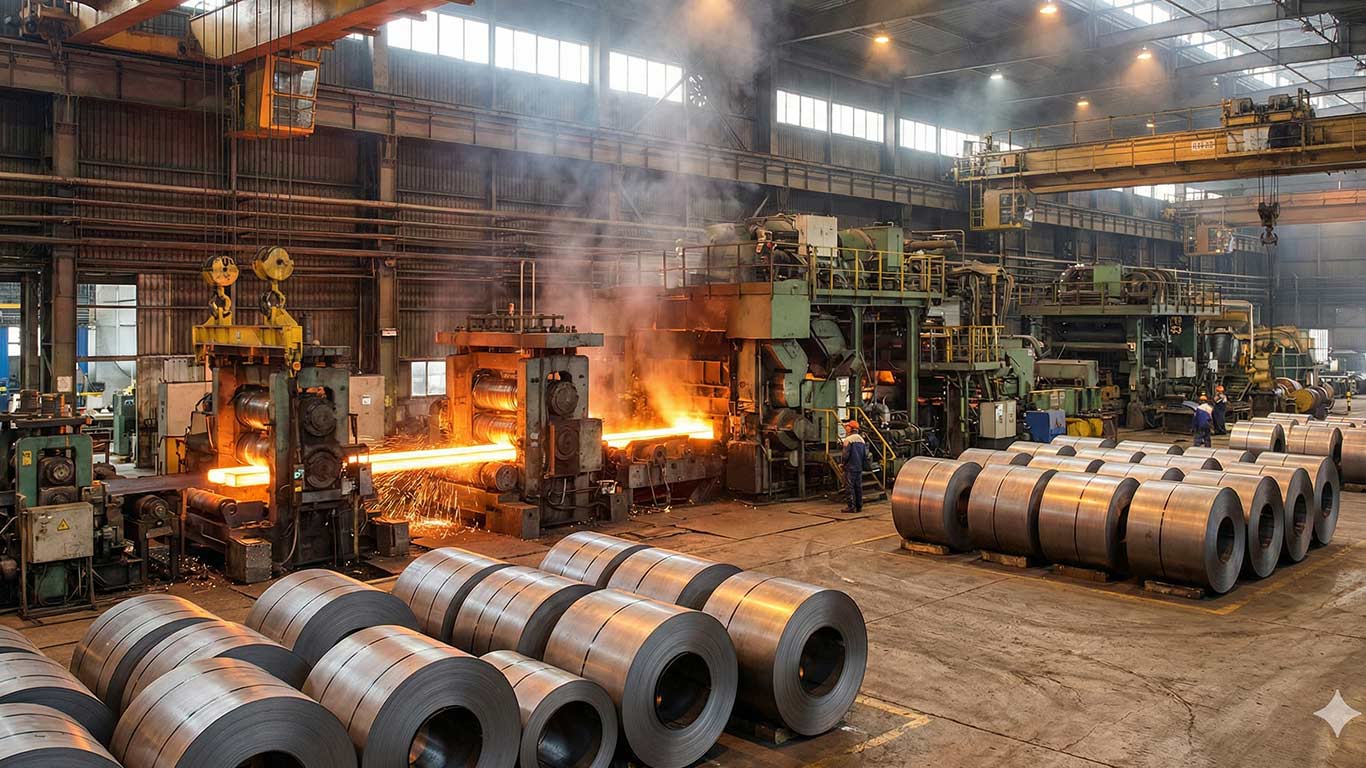
India’s expanding infrastructure pipeline and industrial ambitions are expected to dominate discussions at Bharat Steel 2026, a national industry forum that will bring together policymakers, manufacturers and global investors to chart the next phase of growth for the country’s steel sector.
Scheduled to be held in New Delhi, the summit is designed as a strategic platform to connect steel producers, infrastructure developers and technology providers at a time when India is positioning itself as a major global manufacturing hub. The event will focus on capacity expansion, supply-chain resilience and technological innovation in steelmaking. Industry analysts say the conversations around Bharat Steel 2026 will reflect the strong momentum in India’s construction and infrastructure sectors. Rapid urbanisation, large-scale transport projects and new industrial corridors are pushing demand for steel used in highways, metro rail networks, bridges and high-rise construction.
India already ranks among the world’s largest steel producers and consumers, and its domestic demand is projected to grow faster than most major economies. Global industry forecasts suggest the country’s steel consumption could expand by around nine percent in both 2025 and 2026, driven by sustained investment in construction, automobiles and industrial manufacturing. At the policy level, the steel sector plays a critical role in supporting national infrastructure programmes, including rail modernisation, urban housing and logistics networks. Steel remains a foundational material for modern economies, forming the structural backbone of transportation systems, ports, industrial facilities and urban buildings.
Against this backdrop, Bharat Steel 2026 is expected to emphasise production capacity expansion across both public and private sector manufacturers. Government policy frameworks, including the National Steel Policy, aim to significantly increase domestic steelmaking capacity over the next decade in order to meet rising domestic demand and strengthen India’s export competitiveness.Another central theme of the forum will be the transition toward cleaner and more efficient steel production. Industry stakeholders are increasingly exploring technologies such as hydrogen-based steelmaking, renewable-energy integration and digital manufacturing systems that reduce emissions and improve resource efficiency.
Sustainability considerations are becoming increasingly important for the steel industry as cities and infrastructure projects seek to lower their environmental footprint. Steel manufacturers are under growing pressure to adopt low-carbon processes while maintaining competitive production costs.Participants at the summit are also expected to examine ways to strengthen raw material supply chains, particularly for iron ore, coal and emerging energy sources needed for next-generation steel production.
For India’s infrastructure economy, the outcomes of Bharat Steel 2026 could shape how the sector aligns industrial expansion with sustainability goals. As the country accelerates urban development and manufacturing growth, steel producers are preparing to scale production capacity while adapting to the technological and environmental demands of a rapidly evolving global market.