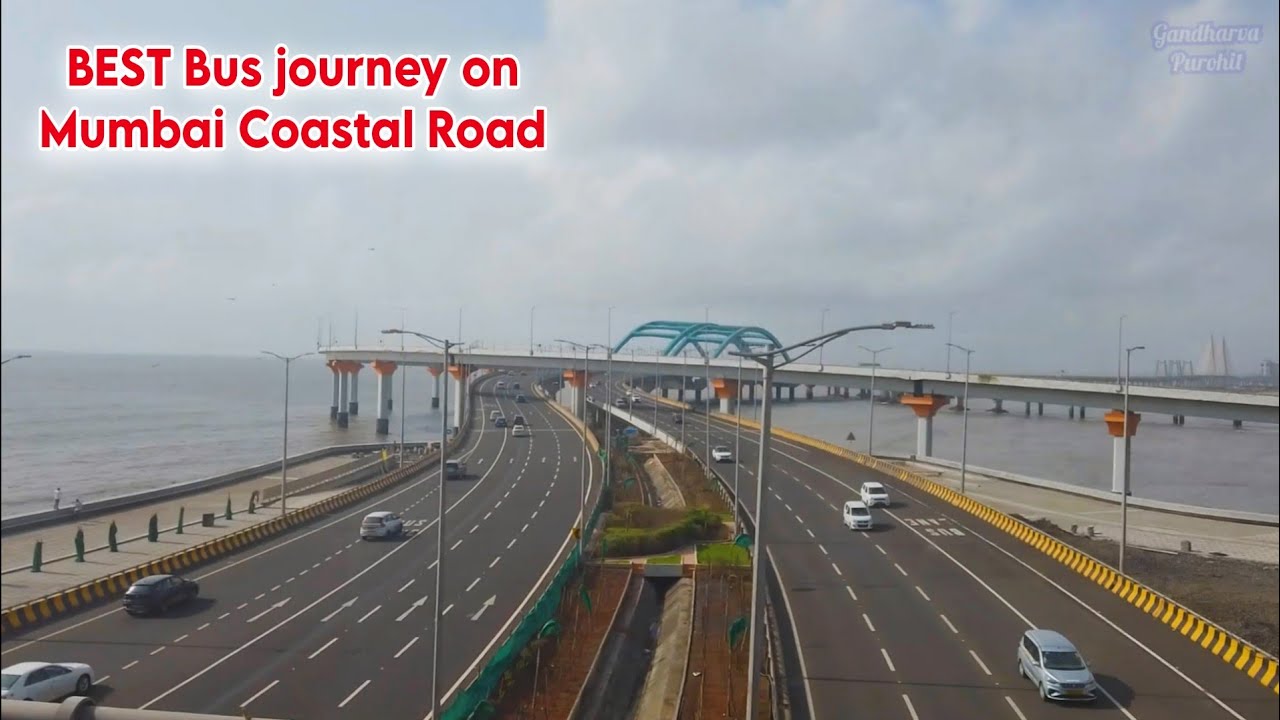
The Mumbai coastal road, conceived as a flagship urban mobility corridor to decongest city arteries and offer faster, signal-free travel, is coming under scrutiny from daily commuters over limited public transport access. Despite incorporating a dedicated bus lane intended to prioritise mass transit, only two Brihanmumbai Electric Supply and Transport (BEST) routes currently operate along the stretch, leading to long intervals between services and diminishing the road’s potential as a mass transit solution.
Passengers report gaps of up to an hour between buses, effectively reducing the anticipated time-saving advantage of the corridor. Urban transport observers note that the coastal road, designed to provide smooth, uninterrupted travel, risks functioning predominantly as a private vehicle route unless bus operations are scaled up and integrated with the city’s broader transit network. BEST officials have acknowledged the issue, citing fleet constraints as a primary hurdle in expanding services. While some buses currently utilise the corridor effectively, a senior transport planner emphasised that without clear operational guidelines and higher service frequency, commuters will continue to experience inconsistent accessibility, undermining the infrastructure’s role in promoting sustainable mobility.
Industry experts argue that the corridor’s underutilised bus lane reflects a broader challenge in urban transport planning: balancing road infrastructure investment with equitable access for public transit users. Increasing the number of bus trips and synchronising routes with key arterial roads could encourage commuters to shift from private vehicles to public transport, thereby easing congestion, lowering emissions, and supporting Mumbai’s sustainability objectives. Analysts also highlight the importance of perception and reliability in commuter behaviour. Even with a dedicated lane, limited service frequency can discourage daily users, reducing the effectiveness of major mobility projects in promoting inclusive, climate-resilient urban transport. Urban planners suggest that integrating real-time scheduling, mobile ticketing, and dedicated fleet deployment could significantly improve the corridor’s appeal for daily commuters.
The current situation has sparked debate over infrastructure priorities in Mumbai’s transport network. While the coastal road demonstrates the city’s capacity for large-scale engineering and planning, its public utility depends on complementary measures that prioritise accessibility, frequency, and affordability. Expanding bus services along the corridor will be essential to ensure that the project contributes meaningfully to congestion reduction, equitable mobility, and the city’s long-term vision for sustainable urban transit.
BEST Bus Services Limited On Coastal Corridor