


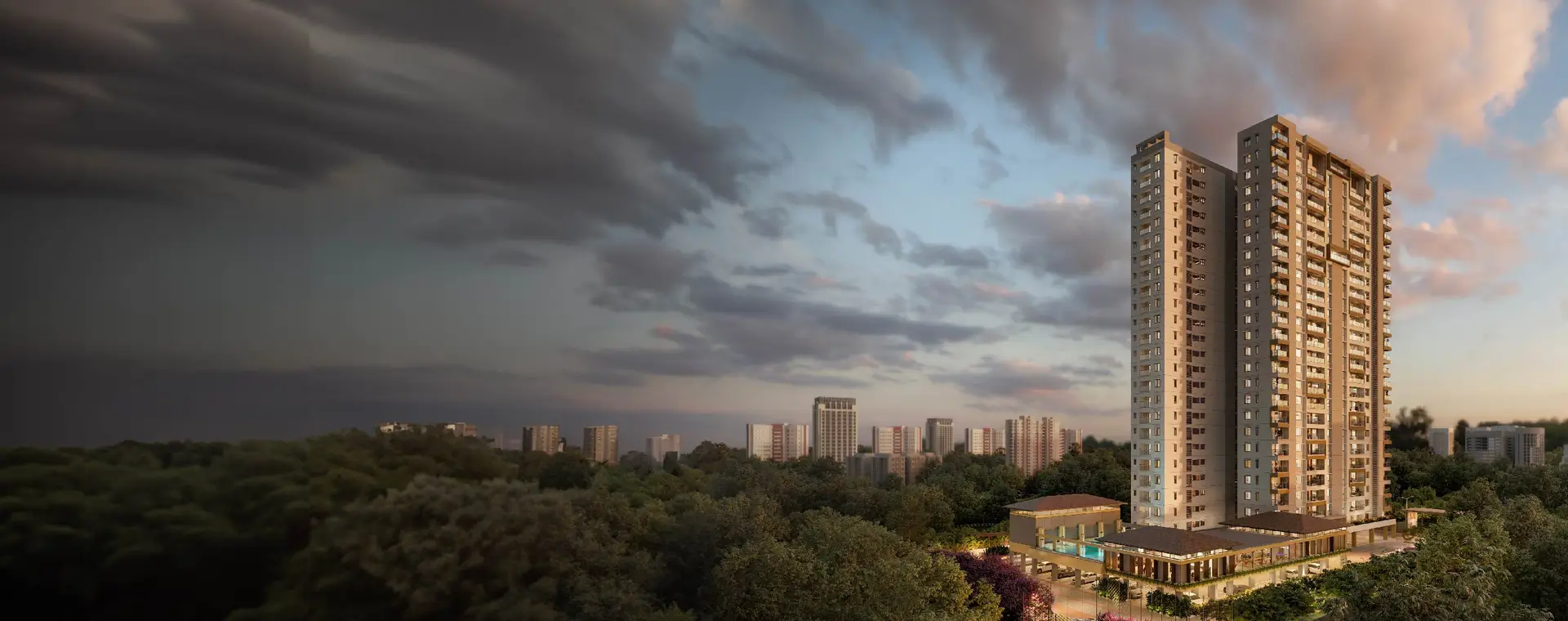
Bengaluru’s Whitefield micro-market continues to consolidate its position as one of the city’s most active residential growth corridors, with a leading listed developer announcing a large-scale premium housing project anchored in sustainability and transit-oriented planning. The newly launched development, with an estimated gross development value of about Rs 1,900 crore, reflects a broader shift in urban housing towards end-user demand, green design, and integrated neighbourhood planning.
Located close to a key metro station along the eastern IT corridor, the project benefits from direct access to employment centres, public transport, and established social infrastructure. Urban planners note that proximity to mass transit is becoming a decisive factor for both buyers and city authorities, as Bengaluru grapples with congestion, rising commute times, and the environmental cost of urban sprawl. Industry experts say the project’s emphasis on larger homes ranging from mid-sized to expansive family configurations signals renewed confidence in the premium end-user segment rather than speculative investment. “Buyers today are prioritising liveability, light, ventilation, and access to open spaces,” said a senior real estate analyst. “This marks a departure from density-led development towards quality-led growth.” Nearly three-quarters of the project area has been reserved as open-to-sky space, including landscaped courtyards and gardens. Such planning choices are increasingly viewed as critical in high-density cities, where access to greenery has a direct impact on mental well-being, urban heat mitigation, and long-term environmental resilience.
Sustainability has been positioned as a core design principle. The development is planned around a net-zero waste framework and is pursuing green building certification, making it the developer’s third residential project in Bengaluru to adopt this model. According to sustainability consultants, net-zero waste planning not only reduces landfill pressure but also lowers operational costs over the life cycle of a residential community. Amenities have been designed to support community interaction while reducing the need for residents to travel for daily needs. These include indoor and outdoor recreational spaces, walking and cycling tracks, wellness facilities, and neighbourhood retail. Urban designers point out that such mixed-use elements help create self-sufficient precincts, particularly important in cities seeking to reduce carbon-intensive mobility patterns. The launch also reflects a broader national strategy, with the developer expanding selectively across high-demand urban centres. Having already delivered significant residential stock across multiple cities, the company is increasingly focusing on redevelopment and infill projects within existing urban fabric rather than greenfield expansion.
As Indian cities balance growth with sustainability, projects that combine transit access, environmental responsibility, and inclusive design are likely to set new benchmarks. Whitefield’s evolution suggests that the future of urban housing may lie not just in scale, but in how thoughtfully cities are built for people and the planet.
Also Read: Mumbai SBI To Revisit Housing Construction Finance Policy Emphasising Transparency Accountability
Bengaluru Whitefield Sees Mahindra Lifespaces Launch Premium Blossom Residential Project
