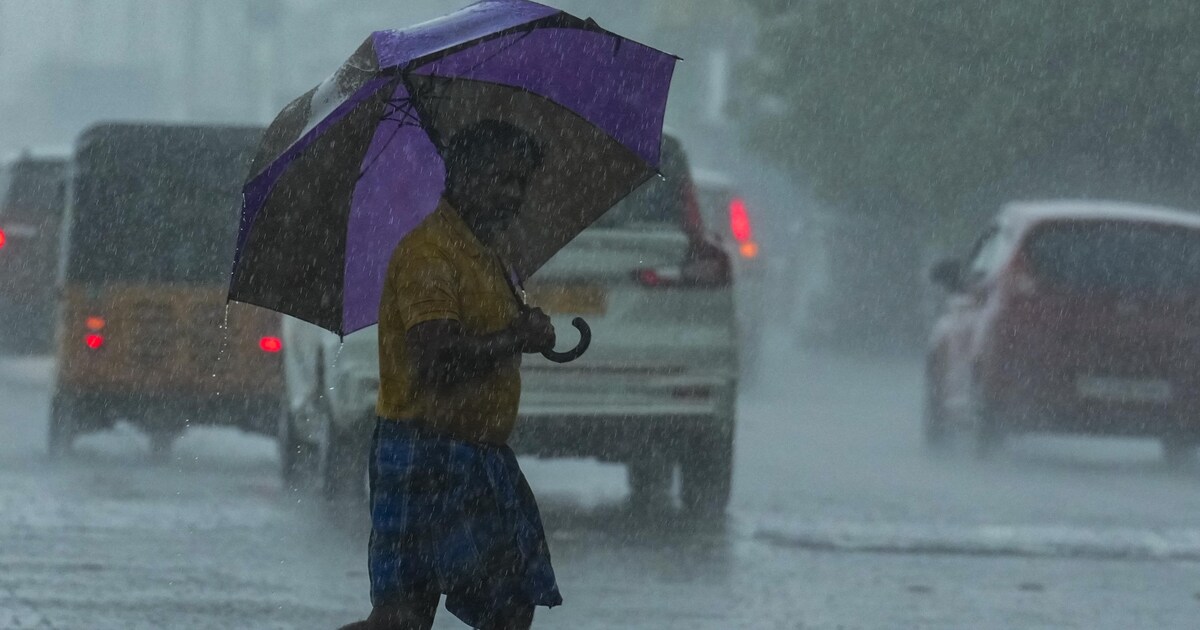
Bengaluru enters the weekend under a cloudier, moisture-heavy sky, with intermittent rainfall and elevated humidity shaping daily life across the city. While temperatures remain moderate for January, the weather pattern underscores how short, uneven rain events and fluctuating air quality are becoming routine challenges for India’s fast-growing technology capital with direct implications for public health, mobility, and urban resilience. Meteorological indicators suggest that Saturday will remain unsettled, marked by passing showers rather than continuous rain. Daytime temperatures are expected to stay in the mid-20s Celsius, while overnight lows remain mild. The real discomfort, however, lies in the high humidity levels, which intensify the “felt” temperature and reduce thermal comfort, particularly in dense neighbourhoods with limited green cover.
For residents, this combination often translates into sticky afternoons, sudden traffic slowdowns, and higher exposure to pollutants during peak commute hours. Urban planners note that Bengaluru’s built environment dominated by paved surfaces and shrinking tree canopies amplifies moisture retention, making even modest weather systems more disruptive than they appear on paper. Air quality adds another layer of complexity. Recent readings placed the city’s Air Quality Index in the moderate range, a level that can aggravate respiratory conditions among sensitive groups. Fine particulate matter remains the dominant concern, especially along arterial roads and active construction zones. While light rain and breezes can temporarily suppress airborne dust, experts caution that high humidity can also trap pollutants closer to ground level during calmer periods.
This interplay between weather and air quality highlights a growing governance challenge for Bengaluru: climate variability is no longer a seasonal anomaly but a planning constant. Transport agencies, health systems, and housing developments must now account for frequent weather-induced disruptions from slick roads and reduced visibility to increased strain on vulnerable populations. Looking ahead, forecasts point to a clearer and warmer stretch beginning early next week. Sunshine is expected to dominate, with daytime temperatures gradually approaching the upper-20s Celsius range. For the real estate and construction sectors, the drier window offers improved conditions for site activity, while residents may find midweek more suitable for outdoor routines.
Yet urban climate specialists emphasise that such short-term relief should not mask longer-term risks. Bengaluru’s pattern of brief rains followed by sharp warming reflects broader climate signals observed across southern Indian cities. Without sustained investment in urban drainage, shaded public spaces, and low-emission transport corridors, these shifts could progressively erode liveability. As the city moves into a brighter week, the immediate priority remains adaptive planning ensuring that infrastructure, neighbourhoods, and mobility systems are resilient enough to handle increasingly unpredictable weather without compromising health, productivity, or equity.