


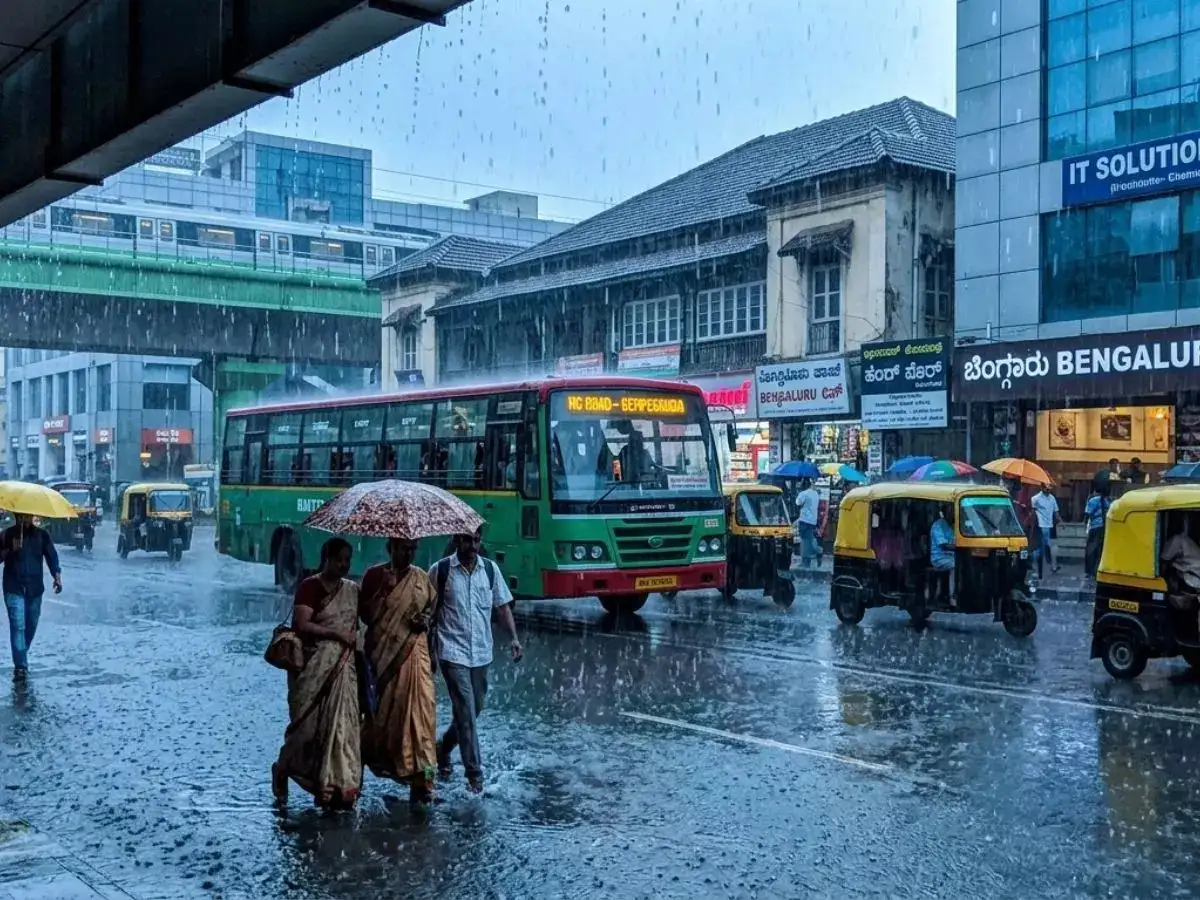
A convergence of atmospheric systems has led to sustained rainfall activity across Bengaluru, extending wet conditions into a third consecutive day and raising concerns around urban resilience in one of India’s fastest-growing metropolitan regions.
The ongoing spell, accompanied by intermittent hail in certain pockets, has disrupted mobility, strained civic infrastructure, and highlighted vulnerabilities in stormwater management.According to weather officials, the current pattern is being driven by a combination of upper-air cyclonic circulation and moisture influx from adjoining regions, creating instability over the southern peninsula. While such weather events are not unprecedented during seasonal transitions, the intensity and persistence point to shifting rainfall behaviour that urban planners are increasingly factoring into city design and risk mitigation frameworks.For Bengaluru, where rapid real estate expansion has often outpaced infrastructure upgrades, even short bursts of heavy rain can expose systemic gaps. Low-lying neighbourhoods reported waterlogging, while arterial roads experienced traffic slowdowns due to reduced visibility and surface runoff. Industry observers note that these disruptions carry economic implications, particularly for a city that functions as a major technology and services hub with high daily commuter volumes.Urban development experts argue that recurring rainfall events underline the urgency of integrating climate-adaptive planning into city growth strategies.
In many parts of Bengaluru, natural drainage channels have been altered or encroached upon over decades, reducing the land’s capacity to absorb excess water.This has increased dependence on engineered drainage networks, which often struggle to cope with sudden inflows during intense downpours.The ongoing Bengaluru weather systems event has also triggered precautionary responses from civic agencies, including closer monitoring of vulnerable zones and advisories for residents in flood-prone areas. However, experts emphasise that reactive measures alone are insufficient. Long-term resilience will depend on restoring ecological buffers such as lakes and wetlands, alongside investments in modern drainage infrastructure and data-driven weather forecasting systems.From a real estate perspective, persistent rainfall patterns are beginning to influence buyer preferences and project planning. Developers are increasingly factoring in elevation, drainage access, and flood risk assessments when designing new housing and commercial projects. This shift reflects a broader market recognition that climate resilience is becoming a critical determinant of property value and livability.
As Bengaluru continues to expand, the frequency and impact of such weather episodes are likely to shape both policy and investment decisions. Strengthening coordination between urban planning bodies, infrastructure agencies, and environmental regulators will be key to ensuring that growth does not come at the cost of long-term sustainability. The current spell serves as a reminder that climate variability is no longer a distant risk but an immediate urban challenge requiring integrated, forward-looking solutions.
Also Read:Kolkata new year celebrations boost local communities
