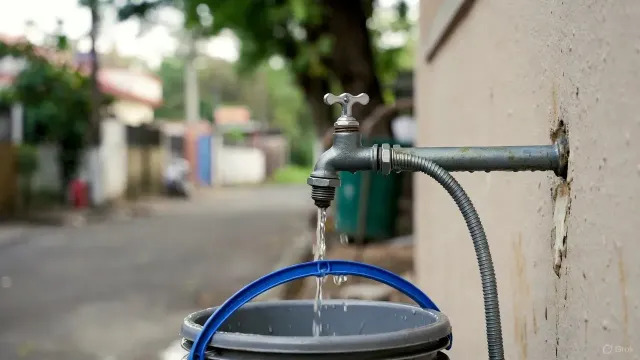
Large parts of Bengaluru will experience a planned interruption in piped water supply in early February as the city’s primary water utility undertakes emergency integration work on its Cauvery water network. The short-term disruption, while operationally necessary, highlights the growing strain on ageing urban infrastructure in one of India’s fastest-expanding metropolitan regions. According to officials familiar with the works, pumping from key stages of the Cauvery water system will be suspended for a full day to enable the connection of high-capacity transmission pipelines. These upgrades form part of ongoing infrastructure realignment aimed at stabilising supply across densely populated residential and commercial corridors. Water flow is expected to be uneven across the city for up to two days, affecting daily household consumption as well as small businesses dependent on municipal supply.
The Bengaluru water disruption comes at a time when the city is grappling with rising demand driven by population growth, apartment-led densification, and expanding commercial activity. Urban planners note that Bengaluru’s reliance on long-distance water pumping makes even short maintenance shutdowns impactful, especially in neighbourhoods that lack decentralised storage or secondary water sources. Areas expected to see reduced or halted supply span the city’s southern, central, and southeastern zones, including established residential layouts, mixed-use corridors, healthcare clusters, and older neighbourhoods with limited borewell access. Apartment associations and informal rental housing in these areas are likely to bear the immediate impact, with many households turning to private water tankers to bridge the gap.
Infrastructure specialists point out that the pipeline integration work, involving large-diameter mains, is critical for reducing long-term leakages, pressure imbalances, and service outages. “Such shutdowns are disruptive, but postponing them increases the risk of unplanned failures, which are costlier for both citizens and the city,” said an urban water systems expert. However, the expert added that better communication and phased execution could reduce the burden on vulnerable communities. From an economic perspective, intermittent water access raises operational costs for small enterprises, construction sites, and service establishments, particularly in mixed residential-commercial areas. Real estate analysts also flag that water security is increasingly shaping housing preferences, influencing rental values and buyer decisions in Bengaluru’s apartment markets.
The current Bengaluru water disruption underscores the need for a more resilient and decentralised urban water strategy. Experts argue that accelerating wastewater reuse, rainwater harvesting compliance, and local storage infrastructure can reduce dependence on single-source systems like the Cauvery. These measures are increasingly viewed as essential for climate-adaptive cities facing variable rainfall and growing consumption. Officials have indicated that normal supply will resume once the pipeline integration is completed. In the longer term, urban governance experts stress that coordinated infrastructure upgrades, transparent timelines, and demand-side management will be critical to ensuring that Bengaluru’s water network keeps pace with its economic and demographic ambitions.