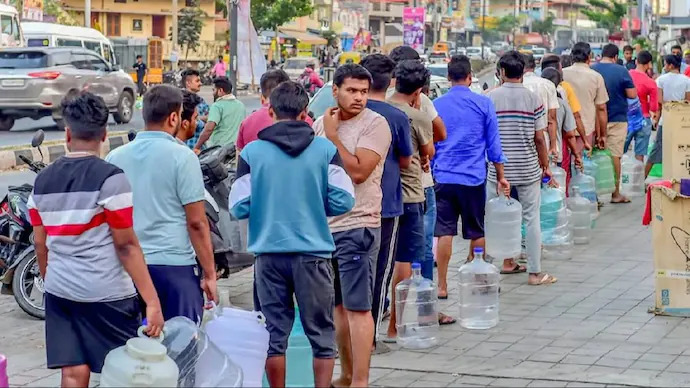
Bengaluru’s long-term urban and economic trajectory is increasingly tied to how quickly the city can confront a growing water emergency, experts cautioned during a national water and sustainability conference held this week in the city. The warnings come as India’s technology capital faces mounting stress on groundwater, erratic rainfall and rising consumption driven by rapid urban expansion. Urban academics and infrastructure specialists at the event said Bengaluru is nearing a tipping point where current water practices may no longer sustain its population, economy or real estate growth. For a city that anchors global technology, startup ecosystems and high-value residential development, the implications extend far beyond household supply concerns.
A senior university administrator speaking at the conference noted that water scarcity is no longer a seasonal issue but a structural one, shaped by unchecked extraction, shrinking catchment areas and limited integration of water planning into urban development. He indicated that the city’s dependence on distant surface water sources and borewells has left neighbourhoods increasingly vulnerable to supply shocks. Industry experts emphasised that the Bengaluru water crisis has become a material risk for urban productivity and investment. Commercial districts, technology parks and housing clusters now face higher operational costs linked to tanker dependency, while lower-income communities bear disproportionate burdens during shortages. The challenge, they said, highlights the urgent need for equitable, city-wide water governance rather than fragmented local solutions.
Former national-level technical regulators at the forum underscored that water security must be treated with the same seriousness as food or energy security. They pointed to rainwater harvesting, decentralised wastewater reuse and demand management as scalable tools that can be embedded into buildings and infrastructure without slowing development. Such measures, when enforced consistently, could significantly reduce pressure on freshwater sources. Public-health and environmental specialists also linked water mismanagement to wider climate and health risks. Polluted lakes, untreated wastewater and overdrawn aquifers, they warned, increase exposure to disease while amplifying climate vulnerability in a city already experiencing extreme heat and flooding cycles.
For Bengaluru’s real estate and infrastructure sectors, the message was clear: future growth will depend on how responsibly water is planned, priced and reused. Sustainable water systems are increasingly becoming a prerequisite for resilient housing, commercial viability and liveable urban environments. The discussions concluded with a call for coordinated action between civic agencies, planners, developers and institutions to embed long-term water resilience into the city’s growth model. As Bengaluru continues to expand, addressing the Bengaluru water crisis may prove decisive in shaping whether the city remains competitive, inclusive and environmentally secure in the decades ahead.