


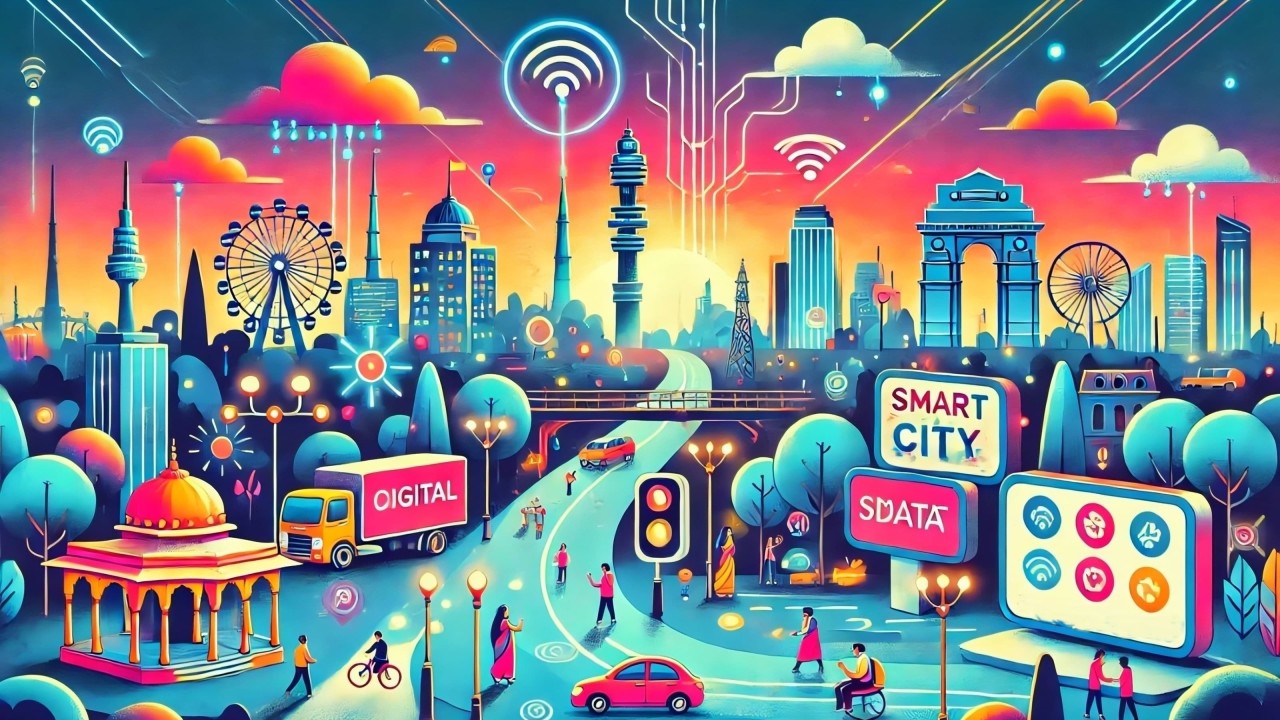
Bengaluru Urban Challenges Demand Smarter Policy and Research
Urban Expansion and Growing Challenges
The rapid expansion of Indian cities has exacerbated their infrastructure challenges, with Bengaluru emerging as a key example. While the city remains a hub for technology and innovation, it also faces recurrent floods, crippling traffic, and deteriorating air quality. The 2022 and 2024 floods brought Bengaluru to a standstill, while 2023 saw an alarming drought, highlighting the unpredictability of urban planning failures. The latest TomTom Traffic Index ranks Bengaluru’s traffic as the third slowest in the world, a crisis mirrored in Kolkata, which holds the second spot. Delhi continues to battle extreme winter pollution, and Mumbai’s monsoons routinely bring its transport systems to a halt. Each city struggles with similar problems, yet their causes are deeply rooted in local urban planning decisions, political structures, and environmental factors.
Research, Policy, and the Role of Technology
Research institutions such as IIIT-Bangalore’s Centre for Information Technology and Public Policy (CITAPP) play a crucial role in bridging technological advancements with public policy. Experts argue that while technological solutions such as AI-driven traffic management and smart surveillance are often touted as game-changers, they remain mere band-aid solutions if underlying structural and governance issues are not addressed. The failure to ask fundamental questions—such as why Bengaluru prioritised a flyover in Electronic City before the metro—reveals deeper governance challenges. Instead of attempting to replicate models like Silicon Valley, cities need to focus on localised frameworks that consider their unique geographic, demographic, and economic conditions.
Sustainability and Future Planning
Sustainable urban planning cannot be an afterthought. Bengaluru’s urban flooding crisis, for instance, is linked to unregulated real estate expansion over natural drainage systems, a pattern seen in many other Indian cities. Kolkata, on the other hand, faces flooding due to its low-lying topography. Similarly, Delhi’s air pollution crisis is exacerbated by stubble burning in neighbouring states, whereas Bhopal’s environmental struggles trace back to the Union Carbide disaster. The need of the hour is a policy framework that integrates historical data with future projections, ensuring that urban growth does not come at the cost of environmental sustainability.
Governance, Power, and Accountability
The effectiveness of urban solutions is ultimately dictated by governance structures and political decision-making. Without strong accountability mechanisms, infrastructure projects risk becoming reactive rather than proactive. The growing reliance on AI and technology for urban management, while promising, requires rigorous oversight and adaptive policymaking. Experts caution against blind adoption of AI without understanding its societal impact. India’s urban challenges require more than just technological fixes—they demand the right questions, interdisciplinary research, and policies that prioritise both economic growth and social equity.
