


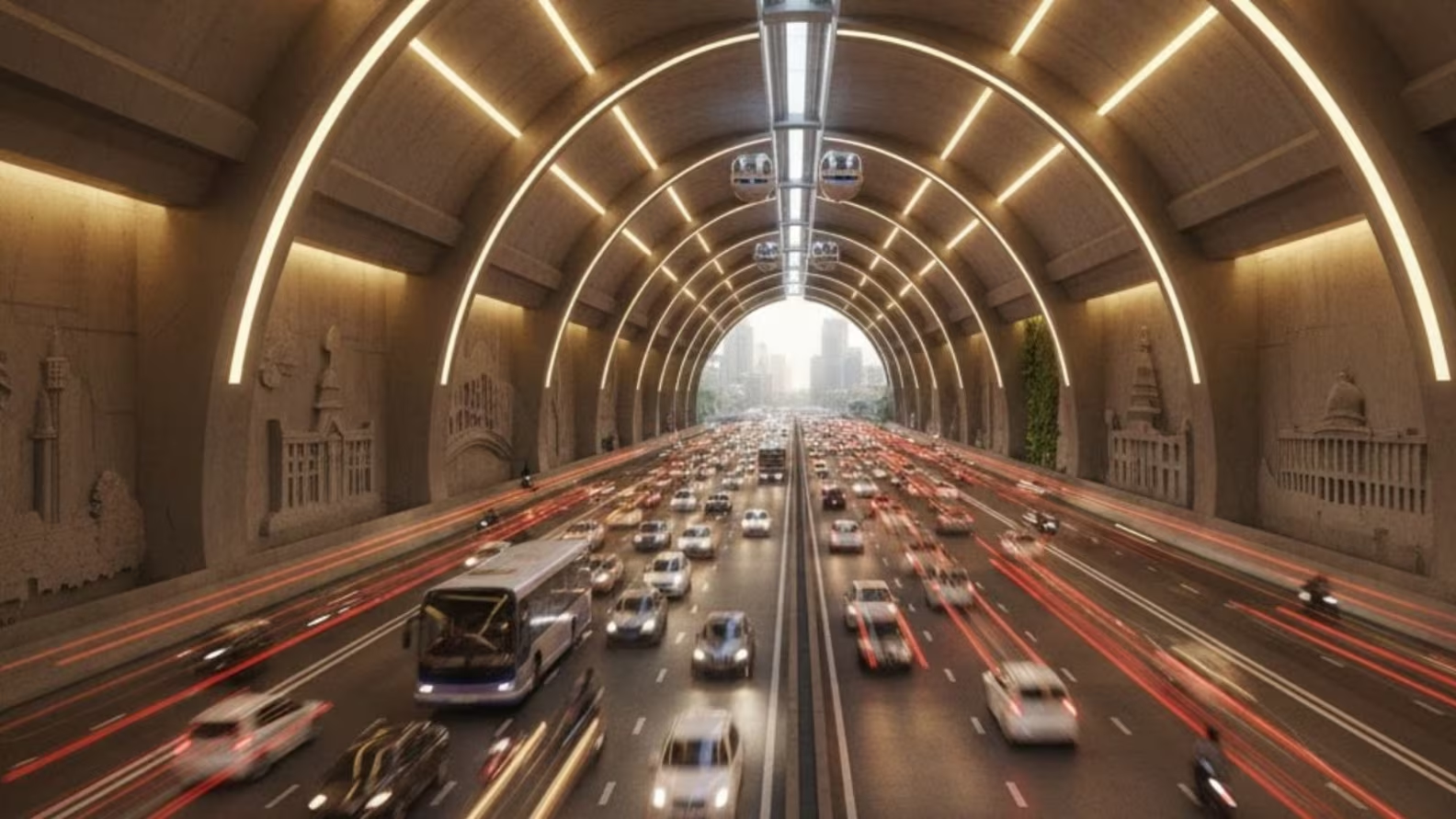
Bengaluru is witnessing renewed momentum in urban infrastructure planning as prominent business stakeholders have voiced support for the city’s proposed tunnel road project.
Designed to decongest key arterial routes in the metropolitan core, the initiative aims to improve commute efficiency while integrating broader mobility and environmental objectives. The development underscores the critical role of private sector engagement in shaping sustainable city infrastructure.The tunnel project, spanning multiple central corridors, is intended to bypass surface-level congestion and provide uninterrupted vehicular flow. Urban planners highlight that Bengaluru’s road network faces chronic traffic pressure due to rapid population growth, high vehicle density, and fragmented land use. By diverting through-traffic underground, the initiative seeks to reduce surface-level congestion, enhance pedestrian safety, and improve public transport reliability along parallel routes.Industry experts note that private sector endorsements can accelerate project feasibility, particularly in securing funding, enabling technical expertise, and fostering innovative urban design solutions. A senior official from the municipal transport department emphasised that stakeholder collaboration is essential for integrating such projects with existing public infrastructure, including metro lines, bus corridors, and pedestrian pathways.Environmental considerations are central to the project’s planning. Subsurface traffic corridors can reduce idling vehicles on surface roads, thereby lowering local emissions.
Planners advocate for the inclusion of electric vehicle lanes and energy-efficient tunnel ventilation systems to align the project with the city’s climate-resilience goals. Analysts also suggest that careful monitoring of ecological impacts, stormwater drainage, and urban heat island effects will be critical for long-term sustainability.From an economic standpoint, efficient mobility corridors are key to maintaining Bengaluru’s position as a technology and service hub. Reducing commute times directly benefits productivity, logistics, and real estate development along high-density commercial zones. Urban development specialists observe that projects integrating modern traffic management and smart infrastructure can enhance property values and stimulate equitable growth while maintaining the city’s liveability.The tunnel proposal also reflects a growing trend of public-private cooperation in Indian cities, where large-scale infrastructure initiatives often require financial and operational partnerships to succeed. By engaging private sector leaders, authorities aim to blend technical innovation, social accountability, and fiscal viability, potentially setting a model for other metropolitan regions grappling with similar congestion and sustainability challenges.
Looking ahead, project planners emphasise phased implementation, community engagement, and rigorous feasibility studies to ensure the tunnel aligns with Bengaluru’s long-term urban mobility strategy. If executed effectively, the project could establish a blueprint for climate-resilient, people-centric, and economically productive urban transport corridors in rapidly expanding cities.
Also Read:Bengaluru traffic diversions enhance urban mobility
