


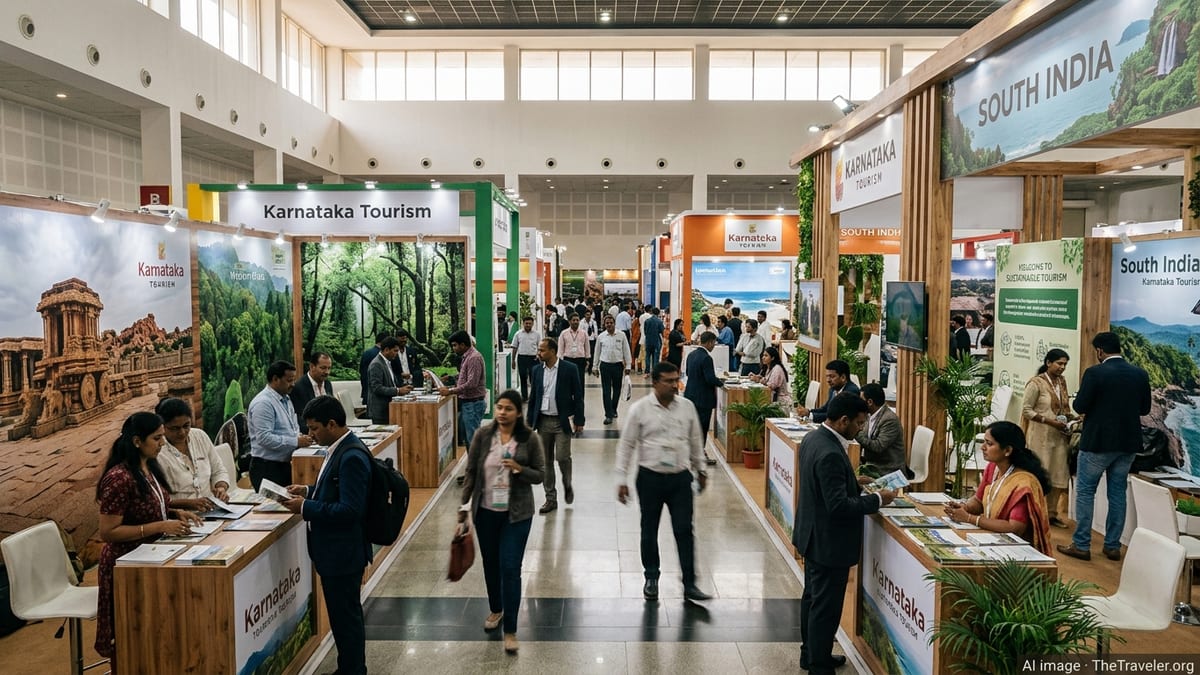
A major industry gathering in Bengaluru has brought renewed attention to the evolving role of travel-linked commerce in shaping urban economies, with stakeholders pointing to airports and transit hubs as critical engines of retail growth and infrastructure-led development.
The conference, held in Bengaluru, convened global and domestic participants across aviation, retail, and policy ecosystems. Its significance extends beyond sectoral networking, underscoring how travel retail is increasingly tied to city-level economic strategies, particularly in fast-growing metropolitan regions.Industry observers note that India’s aviation expansion—combined with rising passenger volumes—has transformed airports into complex commercial zones. These spaces are no longer limited to transit functions but are emerging as integrated consumption hubs, influencing real estate demand, employment patterns, and urban planning decisions.A senior industry representative indicated that Indian cities are entering a phase where airport-led development is driving new forms of economic clustering. Retail formats within terminals, including luxury, duty-free, and experiential stores, are being reimagined to cater to a diverse and increasingly global consumer base.This shift is also reshaping how infrastructure investments are prioritised. Urban planners suggest that the integration of retail, hospitality, and logistics within transport nodes can unlock higher land value and improve financial sustainability for large-scale infrastructure projects. In Bengaluru, where airport connectivity continues to expand, such developments are expected to influence peripheral real estate growth and mobility patterns.The travel retail conference further highlighted sustainability concerns tied to this expansion.
Experts emphasised the need for energy-efficient design, waste management systems, and responsible sourcing within airport retail ecosystems.As cities aim to align with climate goals, integrating low-carbon practices into high-footfall commercial spaces is becoming a critical consideration.At a broader level, the discussions pointed to the role of policy frameworks in enabling seamless growth. Regulatory clarity around taxation, licensing, and international trade norms was identified as essential to attract global brands and investment into India’s travel retail sector. This, in turn, can strengthen the competitiveness of Indian cities as international transit and consumption hubs.The event also reflected a growing convergence between digital innovation and physical retail. Participants highlighted how data analytics, artificial intelligence, and personalised consumer engagement are being deployed to enhance passenger experiences and optimise retail performance in transit environments.For Bengaluru, hosting such a travel retail conference reinforces its position as a key node in India’s urban and economic transformation. The city’s expanding infrastructure, coupled with its role as a technology and innovation hub, positions it to benefit from the next phase of airport-led commercial growth.
As Indian cities continue to urbanise and globalise, the integration of transport infrastructure with retail ecosystems is likely to play a defining role in shaping inclusive and economically resilient urban futures.
Also Read:Bengaluru Marathahalli Bridge Closure Impacts Urban Mobilit
Bengaluru Industry Meet Maps Future Of Retail
