


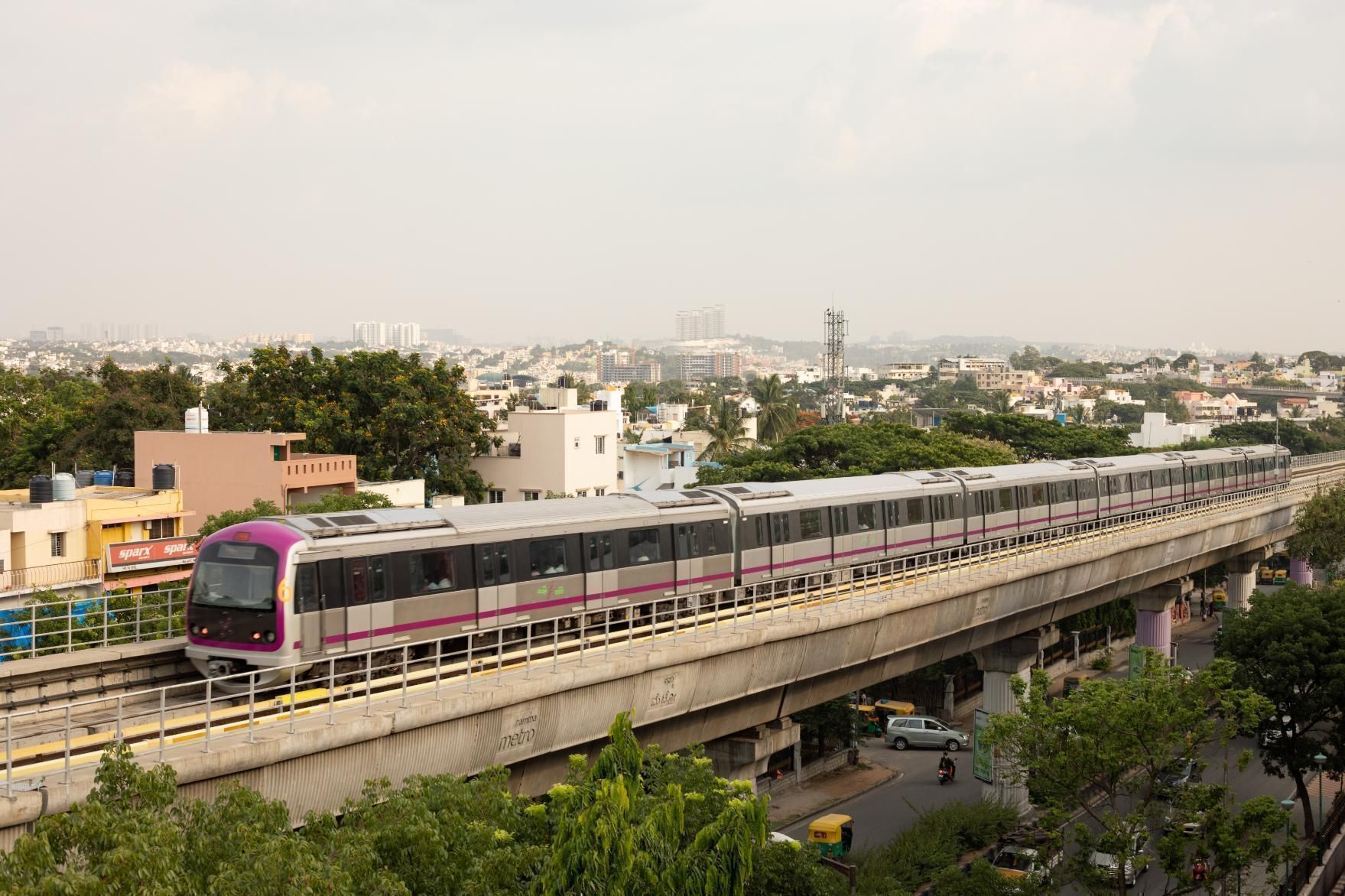
Public transport-led development is beginning to decisively reshape Bengaluru’s residential real estate landscape, with metro connectivity emerging as a key driver of both housing demand and price movement across the city. Neighbourhoods located near operational and upcoming metro stations are recording stronger buyer interest, faster absorption and sharper growth in both capital and rental values, underscoring how mobility is influencing urban housing choices.
Recent market indicators suggest that residential search activity and booking momentum are notably higher in metro-linked micro-markets compared to areas without rapid transit access. Established residential districts in west and south Bengaluru, long favoured for their liveability, have seen renewed traction as metro lines reduce dependence on private vehicles and congested road networks. This shift is particularly visible in mature neighbourhoods where limited new supply is being met with rising end-user demand. Price appreciation trends reflect this preference. Areas aligned with north–south and east–west metro corridors have outperformed the city’s average residential growth, driven by improved accessibility to employment centres and commercial districts. Urban analysts note that the premium attached to metro proximity is no longer speculative; it is increasingly being capitalised into property values as commuting predictability becomes a priority for households. The rental market has responded even faster. Homes located within walkable or short feeder-distance of metro stations are commanding higher rents, supported by sustained demand from working professionals, students and migrant employees. Technology-driven employment hubs in the east and south of the city have seen consistent rental escalation, as tenants prioritise travel time savings over unit size or older housing stock.
For many renters, metro access has become a non-negotiable criterion rather than an added convenience. Interestingly, the impact of metro expansion is extending beyond areas with operational stations. Several neighbourhoods along planned corridors are already witnessing upward pressure on prices, as buyers factor in future connectivity and long-term appreciation. This forward-looking demand reflects growing confidence in Bengaluru’s transit rollout, even as timelines and phases continue to evolve. Urban planners highlight that the metro’s influence goes beyond real estate metrics. Faster and more reliable public transport has expanded the city’s effective residential radius, enabling households to consider locations previously seen as too distant or poorly connected. In many cases, commute times have reduced significantly, improving work–life balance and reducing reliance on private vehicles an important consideration for a city grappling with congestion and air quality challenges.
As Bengaluru continues to invest in expanding its metro network, transit-oriented development is likely to play a larger role in shaping housing supply, density patterns and land-use planning. For both buyers and tenants, proximity to mass transit is increasingly tied to affordability, quality of life and long-term value, signalling a gradual but meaningful shift towards more mobility-led urban growth.
Also Read: Gurugram Luxury Launch Signals Confidence in NCR Housing
Bengaluru Transit Lines Redraw Residential Preferences
