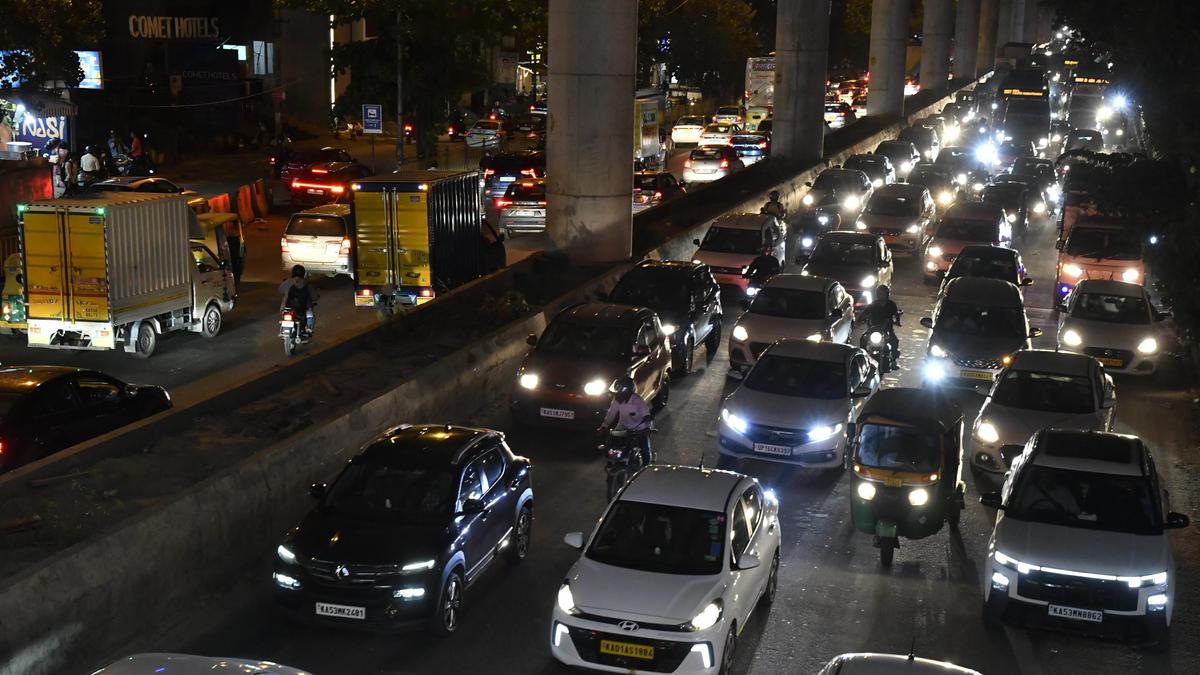
Bengaluru’s prolonged traffic congestion is no longer just an inconvenience for commuters; it is increasingly shaping where people choose to live, rent and invest in property across the city. Urban mobility pressures, combined with rising commute uncertainty, are altering residential preferences and influencing price trends in several micro-markets, signalling a structural shift in the city’s real estate dynamics.
Recent urban policy discussions at the national level have emphasised congestion pricing and demand-based parking management as potential solutions for overcrowded business districts. While such measures are still under debate, their relevance is growing in cities where daily commute times have begun to affect economic productivity, household routines and even educational choices. Bengaluru’s congestion levels have reached a point where travel time calculations now feature alongside square footage and amenities in property evaluations. The Bengaluru traffic real estate relationship is becoming evident in the way buyers prioritise proximity to employment clusters, metro corridors and essential services. Local brokers report stronger demand in neighbourhoods that offer predictable commute times rather than merely premium addresses. Areas near operational and upcoming metro lines, technology parks and mixed-use developments are witnessing both rental and capital value appreciation, while locations with poor last-mile connectivity are seeing slower absorption.
For families with school-going children, residential decisions are increasingly influenced by school distance rather than workplace alone. Parents are willing to relocate or pay higher rents to reduce travel fatigue and reclaim daily hours lost in traffic. In the rental segment, tenants now treat metro accessibility as a primary filter, with properties within walking distance commanding noticeable premiums. Industry estimates suggest well-connected homes can attract double-digit percentage increases in monthly rentals compared to comparable units farther from public transport. The shift is also visible among returning expatriate households and senior residents who prioritise airport access, healthcare proximity and neighbourhood self-sufficiency over legacy preferences. Peripheral yet well-connected zones in north and east Bengaluru are gaining traction as residents seek shorter, more reliable travel patterns rather than central locations plagued by bottlenecks. This trend reflects a growing preference for “radius living the desire to access daily needs within a limited geographic zone.
Urban planners argue that the long-term solution lies beyond road expansion. Mixed-use zoning, decentralised employment hubs, pedestrian-friendly design and integrated public transport networks are increasingly viewed as critical to reducing congestion while improving quality of life. The concept of the 15-minute city where essential services are reachable within a short journey is gaining policy attention as Bengaluru balances economic growth with climate resilience and liveability goals. As the Bengaluru traffic real estate equation continues to evolve, housing markets are likely to reward connectivity, sustainability and neighbourhood efficiency over traditional prestige. The city’s next phase of development may therefore be defined less by skyline expansion and more by mobility-centred urban planning that aligns economic opportunity with everyday human convenience.