


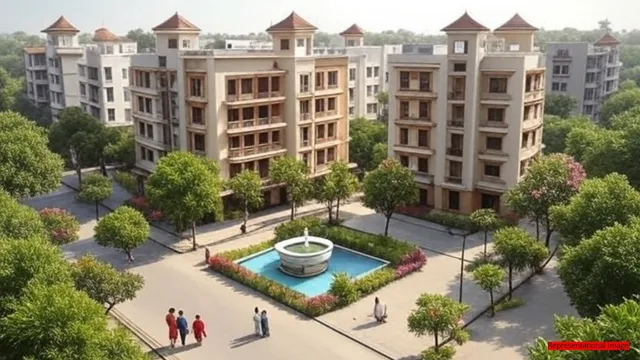
Bengaluru’s housing market is entering a consolidation phase in 2026, with demand increasingly gravitating toward large, integrated townships rather than standalone residential projects. The shift is being driven by sustained office absorption, expanding transport infrastructure, and changing household preferences shaped by post-pandemic urban living patterns.
The city continues to anchor India’s commercial real estate landscape, with strong leasing activity from technology firms and global capability centres. Urban economists say this employment concentration is now influencing residential choices, as buyers and investors prioritise neighbourhoods that combine housing, workplaces, social infrastructure, and open spaces within a single planning framework. Among the city’s sub-markets, North Bengaluru real estate has emerged as the most active zone for township-led growth. Areas along the airport corridor are benefiting from logistics parks, aerospace manufacturing clusters, and metro rail expansion. These factors have translated into steady capital appreciation and rising rental demand from professionals working in aviation, engineering, and technology services. Market analysts tracking residential values note that northern micro-markets are commanding higher entry prices than much of the city, reflecting expectations of long-term growth rather than short-term speculation. Integrated developments in these areas typically offer mixed land use, internal mobility, and access to employment zones features increasingly valued by both end-users and institutional investors.
East Bengaluru, meanwhile, continues to function as the city’s rental engine. With a dense concentration of IT campuses and established social infrastructure, eastern corridors have recorded consistent tenant demand, particularly from migrant professionals and young families. Industry data indicates that Bengaluru integrated townships in this zone are outperforming standalone projects in occupancy stability, even as supply remains elevated. Urban planners attribute this resilience to proximity-driven living. Shorter commutes, access to schools and healthcare, and shared amenities have become decisive factors, especially as congestion and environmental stress increase across the city. The township format, they argue, offers a partial solution by reducing daily travel distances and enabling more efficient service delivery. South Bengaluru presents a contrasting dynamic. While capital appreciation is relatively moderate, affordability and metro connectivity are drawing first-time buyers and long-term residents. Infrastructure-led growth, particularly along mass transit corridors, has improved the viability of planned residential clusters without the pricing pressures seen in northern and eastern markets. From a policy perspective, the township trend raises important questions around governance and sustainability. Urban development specialists caution that large-scale projects must integrate water management, energy efficiency, and public access to avoid replicating exclusionary growth patterns. When aligned with transport networks and civic planning, however, townships can support denser, more climate-resilient urban form.
As Bengaluru navigates its next growth cycle, the housing market’s pivot toward integrated developments reflects broader changes in how the city lives and works. The durability of this model will depend not just on market demand, but on how effectively planning frameworks balance private development with public urban outcomes.
Also Read: Bengaluru transport upgrade lifts Electronic City real estate
Bengaluru townships reshape housing demand in 2026
