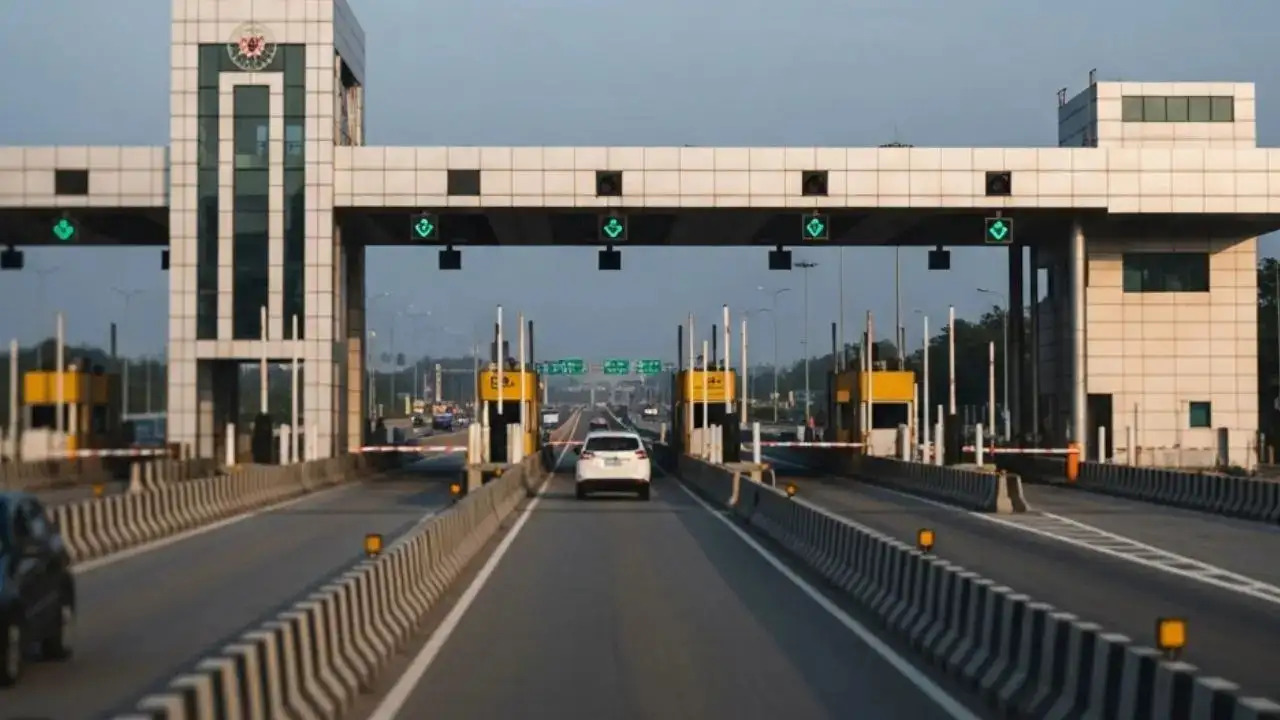
Bengaluru’s daily commute is becoming costlier not because of longer distances, but due to how often drivers are asked to pay. New parliamentary data on national highways shows that the city and its surrounding districts host the most tightly packed toll network in Karnataka, intensifying everyday travel costs for residents, logistics firms, and service workers who move through the metropolitan region. According to figures shared by the Union transport ministry, Bengaluru Urban and Bengaluru Rural together account for 13 toll plazas spread across roughly 236 kilometres of tolled highway. This makes the region the densest toll cluster in the state, despite not having the longest highway length. Urban Bengaluru alone has six toll plazas covering just over 70 kilometres, while the rural district hosts seven across about 163 kilometres.
For commuters travelling from peripheral townships and satellite suburbs into the city, this translates into repeated toll payments over relatively short distances. Urban planners note that toll spacing, rather than absolute highway length, has become the primary cost driver for mobility around Bengaluru, disproportionately affecting daily wage earners, office commuters, and small fleet operators. By comparison, several districts with significantly longer tolled highways operate with far fewer plazas. Northern and central Karnataka districts exceeding 200 kilometres of tolled roads typically have only three or four toll points, allowing uninterrupted travel over longer stretches. The contrast highlights how Bengaluru toll density differs structurally from the rest of the state.
The impact extends beyond private commuters. Transport and logistics operators say frequent tolling around the city inflates operating costs, which are eventually passed on through higher prices for construction materials, groceries, and consumer goods. Industry experts point out that Bengaluru’s role as a technology, manufacturing, and warehousing hub amplifies the effect, as freight movement is constant and time-sensitive. Data also indicates potential expansion pressures. Parts of southern Bengaluru currently have tolled highways without fee plazas, a configuration that often precedes future toll installations. Urban economists warn that unless toll planning is integrated with public transport expansion and last-mile connectivity, cumulative mobility costs could rise further as the city grows outward.
At a state level, Karnataka operates one of southern India’s most intensive toll systems when measured by plazas per kilometre. While other large states manage longer highway networks, their toll infrastructure is more evenly distributed. Around Bengaluru, however, tolling has evolved as a revenue-focused mechanism rather than a commuter-sensitive mobility tool. Urban policy specialists argue that future highway development must balance infrastructure financing with affordability, especially in high-density city regions. As Bengaluru pursues climate-resilient and inclusive urban growth, the design of its toll network will play a quiet but decisive role in shaping who can afford to live, work, and move across the metropolitan region.