Bengaluru To Lead India With Future Ready Urban Infrastructure Drive
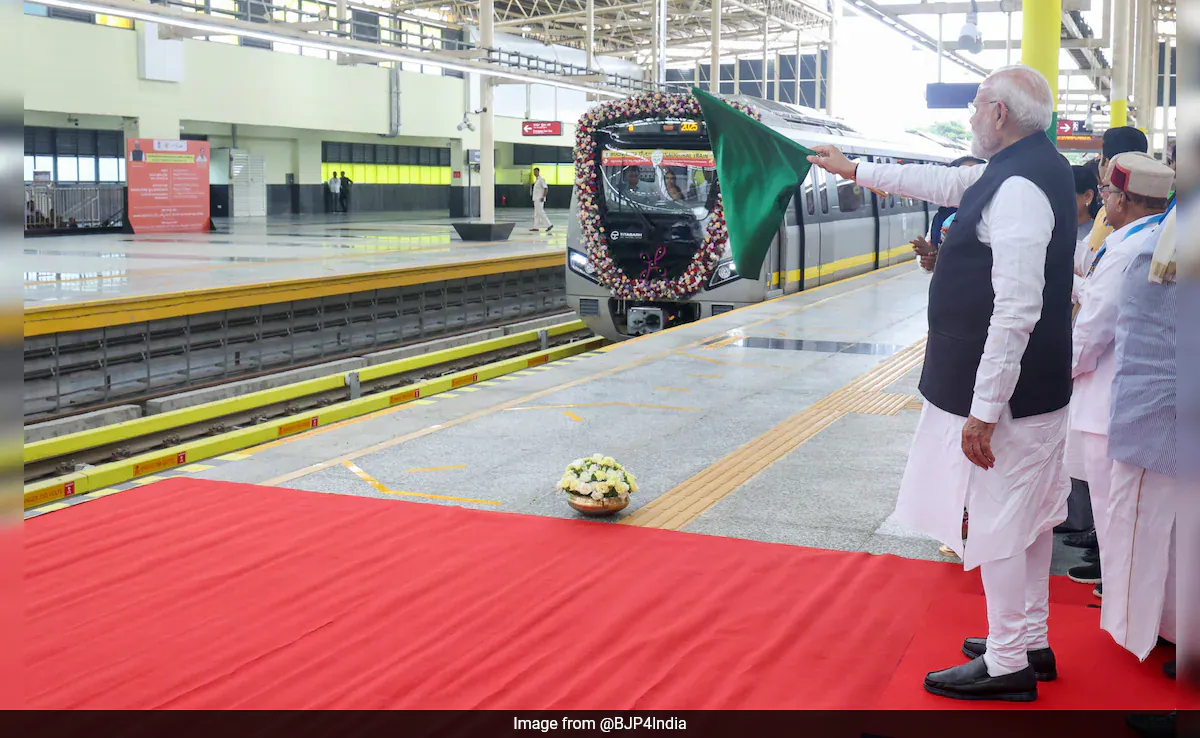
Bengaluru has been urged to take a leadership role in developing future-ready urban infrastructure that can keep pace with the demands of a rapidly growing economy and evolving urban needs. Speaking at the launch of major mobility projects in the city, senior national leadership stressed that the tech capital must spearhead innovation in city planning, sustainable transport, and manufacturing to align with the vision of a self-reliant India.
Officials noted that Bengaluru, as a hub of technology and industry, is uniquely positioned to integrate world-class infrastructure with the principles of zero defect, zero effect manufacturing. They emphasised that the city’s growth trajectory requires infrastructure that is not just modern but resilient, sustainable, and inclusive, capable of supporting both population growth and environmental commitments.Citing India’s transformation over the past decade, government representatives highlighted that the country has advanced from the world’s tenth to fifth-largest economy and is on track to enter the top three. They linked this rise to the “Reform, Perform, Transform” approach, which has driven massive expansion in transport and logistics networks. Metro rail coverage has expanded from five cities in 2014 to over 1,000 km across 24 cities, making it the third-largest metro network globally. Railway electrification has crossed 40,000 km, airports have more than doubled from 74 to 160, and national waterways have grown from three to 30.
Bengaluru’s role in boosting India’s electronics exports was underscored, with figures rising from $6 billion in 2014 to $38 billion, placing the country among the top five mobile handset exporters globally. Automobile exports have also more than doubled, ranking India fourth worldwide.The city was urged to channel its technological prowess toward domestic needs, particularly in software and app development, ensuring that digital innovations benefit the local economy and services. India’s leadership in digital payments, with more than half of the world’s real-time transactions via UPI, was cited as a benchmark for future innovations.
Infrastructure growth in healthcare and housing was also highlighted, with the number of AIIMS institutions rising from seven to 22, medical colleges expanding from 387 to 704, and over one lakh new medical seats created. Under the affordable housing programme, more than four crore pucca houses have been delivered, with an additional three crore planned.The call for Bengaluru to lead in building future-ready urban systems comes as political debates continue over credit for the city’s metro network. However, experts agree that beyond political claims, the focus must remain on ensuring that infrastructure expansion supports climate-resilient, equitable, and economically competitive cities. For Bengaluru, the path forward lies in harmonising growth with sustainability, ensuring the city remains a global innovation powerhouse while serving as a model for next-generation urban development in India.