


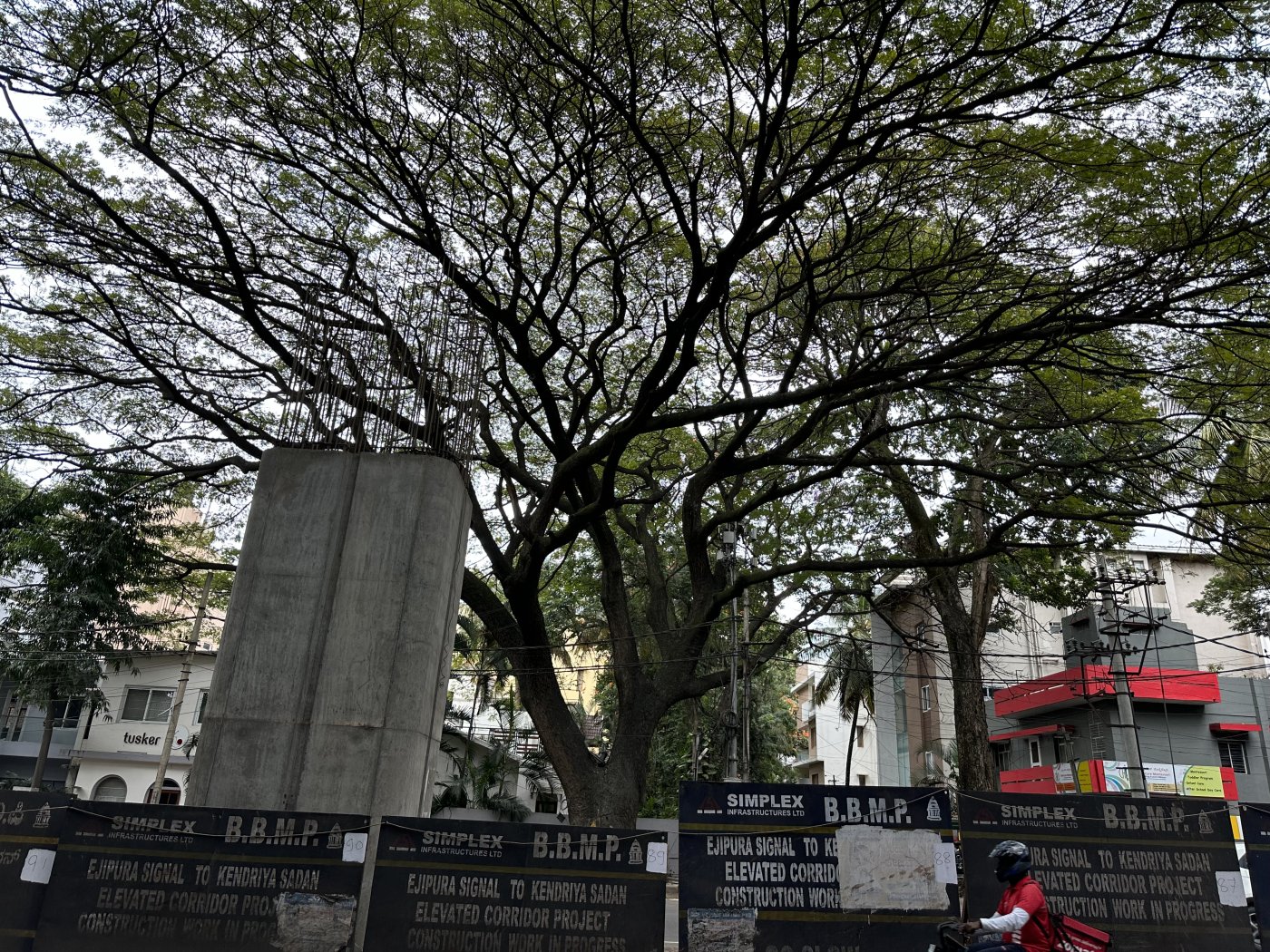
Bengaluru’s civic body has begun mapping trees trapped in layers of concrete across city roads in a renewed attempt to safeguard the health of its green cover. The exercise, long demanded by environmentalists, will pave the way for the removal of concrete around tree trunks, restoring access to water and soil vital for their survival.
Officials from the Forest Department of the city’s municipal corporation confirmed that field officers are surveying every avenue tree where concrete has been laid up to the trunk. The data, once consolidated, will be layered onto a city map to enable systematic deconcretisation. According to officials, the process will take a few weeks before being handed over to the Road Infrastructure Department, which is responsible for carrying out the actual removal.
Also Watch: An Exclusive Interview with Sanjeev Jaiswal (IAS), CEO MHADA
This move is backed by repeated directions of the National Green Tribunal (NGT), which has ruled in several cases that construction material and concrete must not be placed within one metre of any tree trunk. The tribunal underlined that allowing natural seepage of rainwater to tree roots is essential for long-term survival, especially in dense urban environments where soil access is already limited. In Bengaluru, concretisation around tree bases has been a recurring problem. During road repairs and footpath works, contractors often pave tiles or pour concrete flush with the trunks, choking root systems and preventing percolation. Experts say this has weakened countless avenue trees, some of which eventually collapse during heavy rains or winds, posing risks to pedestrians and motorists alike.
To address the issue, a budget allocation was announced last year specifically for deconcretisation efforts, with implementation scheduled in 2025. A recent government directive also mandated that tree bases across Karnataka must be freed of encasing to promote their health and longevity. While these steps have created policy momentum, actual work on the ground has been delayed, leaving activists anxious about fresh encroachments happening during ongoing road contracts. Environmentalists argue that long-term protection will require systemic changes. They stress that road-building contracts should include clear clauses on safeguarding trees, with penalties for violations. Without binding conditions, they warn, the cycle of concretisation and deconcretisation will continue, wasting public money while undermining the city’s climate resilience.
Bengaluru, often known for its canopy-lined streets, has been losing trees steadily due to infrastructure projects and urban expansion. Experts believe that protecting existing trees is as important as planting new ones, given the decades it takes for saplings to grow into mature canopies capable of cooling streets and absorbing carbon. The current initiative, though still in its preparatory stage, signals a step towards correcting past negligence. If executed thoroughly and backed by stricter accountability in future roadworks, it could help the city reclaim its identity as a green, climate-conscious metropolis while offering its residents healthier air and cooler streets.
Also Read: Mumbai gears up for transformative Metro Line 10 linking suburbs
Bengaluru to deconcretise trees for sustainable urban growth
