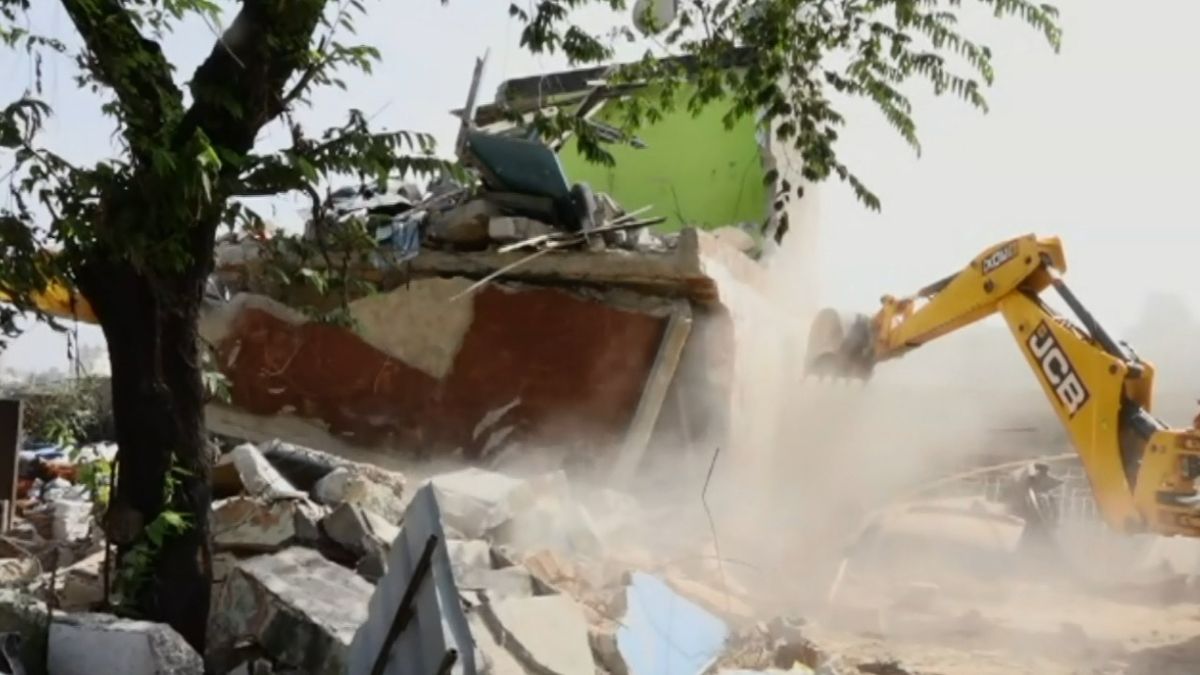
Early on Thursday, authorities carried out a demolition drive in Bengaluru’s Thanisandra area, displacing dozens of families and sparking local unrest. Bulldozers reportedly arrived at dawn near SRK Nagar, razing residential structures without prior written notice. Residents claim they hold valid property documents, including e-Khata certificates, and have consistently paid property taxes, raising questions about urban governance, land regulation, and citizen rights in rapidly expanding city spaces.
The incident follows a similar demolition operation in Kogilu in late December, where hundreds of families lost homes under comparable circumstances. Locals in Thanisandra allege that despite decades of residence—some for nearly 20 years—they were assured by local representatives that their homes would not face eviction. Current authorities now claim the land falls under Bangalore Development Authority (BDA) jurisdiction, underscoring the complexities of urban land records, overlapping administrative control, and the challenge of ensuring due process.Urban planners note that such operations highlight the tension between city development mandates and residential security. “Bengaluru’s growth trajectory has often outpaced land record management, leading to disputes that impact vulnerable homeowners,” said a senior urban policy expert. Without transparent communication and inclusive processes, demolition drives risk undermining public trust, particularly in neighbourhoods where informal settlements and long-term residences intersect with official land planning frameworks.
Beyond immediate displacement, the demolitions carry broader social and economic implications. Residents report a potential loss of livelihood infrastructure, informal community networks, and local micro-economies. Experts emphasise that such abrupt actions can exacerbate urban inequality, particularly in peripheral areas where access to legal recourse and relocation support is limited. Civil society advocates argue that integrating rehabilitation plans and proactive notice mechanisms is essential to align enforcement with equitable urban development goals.Environmental and planning specialists further point to the importance of land-use clarity and participatory city planning. Sudden demolitions without prior notice or consultation not only disrupt lives but may hinder efforts to develop climate-resilient and socially inclusive neighbourhoods. Sustainable urban management increasingly requires harmonising development imperatives with human-centred design and rights-based approaches to housing.
Residents of Thanisandra have threatened sit-in protests, demanding restoration or alternative accommodation. Authorities face the challenge of reconciling legal mandates with citizen welfare, highlighting a critical juncture for Bengaluru’s urban governance model. Observers suggest that lessons from this episode could inform city-wide policies for land adjudication, dispute resolution, and community engagement, ensuring growth that is both orderly and socially responsible.