


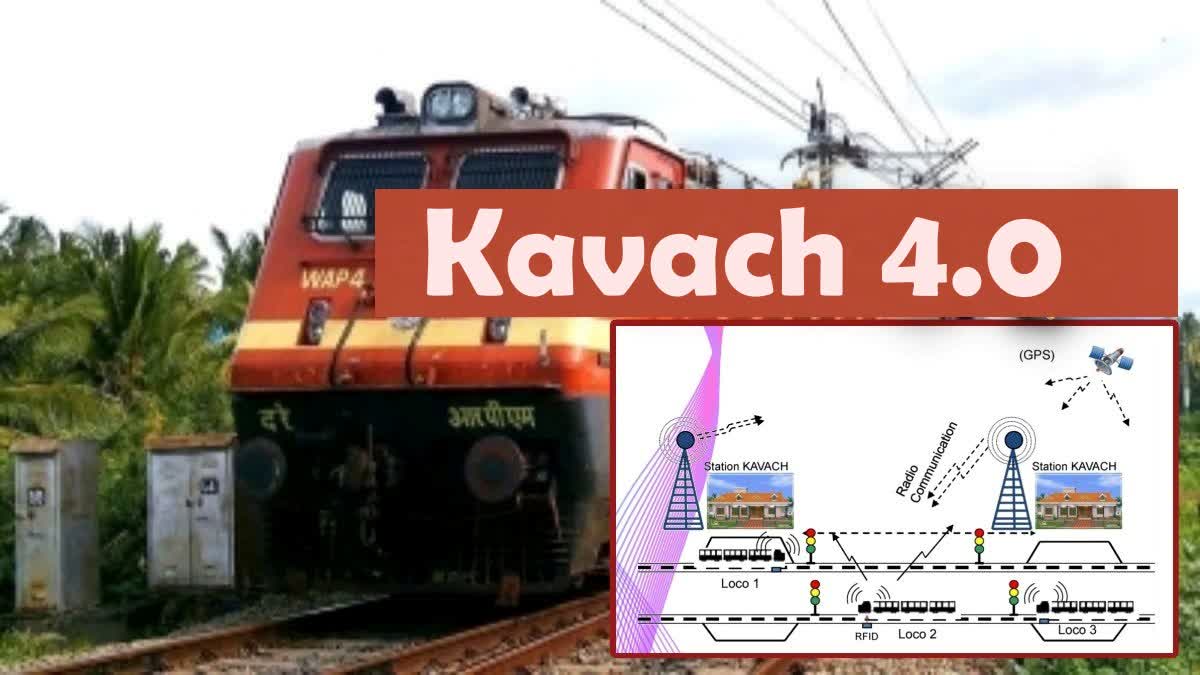
In a significant step towards enhancing passenger safety and operational efficiency, the South Western Railway (SWR) has secured approval for the large-scale implementation of the Kavach train protection system across its 3,692 route kilometre network. The project will be executed in phases, with installations spanning critical railway corridors in Karnataka, including Bengaluru, Mysuru and Hubballi.
The Kavach system, an indigenous technology developed under the Indian Railways’ vision of modernising mobility, functions as a robust collision-avoidance mechanism. By automatically applying brakes when train drivers fail to act in time, it aims to drastically reduce risks of head-on or rear-end collisions, while also ensuring adherence to speed restrictions.The first phase of the project will cover 1,568 kilometres at an estimated cost of over Rs 628 crore. Key stretches such as Hubballi-Ballari, Haveri-Hubballi-Londa, Londa-Miraj, Haveri-Arsikere, Bengaluru-Mysuru and Bengaluru-Jolarpettai will be prioritised. Contracts have already been awarded to leading infrastructure companies, with work involving survey, design, installation of towers, and supply of equipment scheduled for completion in the next two years.
Also Watch: An Exclusive Interview with Sanjeev Jaiswa (IAS), CEO MHADA
The second phase, covering the remaining 2,124 kilometres, is in advanced planning. Detailed estimates for over 450 kilometres in the Bengaluru division have been sanctioned, while proposals for 860 kilometres in Hubballi and 800 kilometres in Mysuru are under financial review. Together, the two phases represent one of the most ambitious technology-driven safety programmes in the history of SWR.Officials confirm that beyond preventing collisions, Kavach will also improve punctuality, reduce human error, and optimise energy consumption. By automating signalling compliance and braking systems, it brings down delays and ensures smoother traffic management. Experts note that widespread adoption of Kavach will not only save lives but also reduce carbon footprint by limiting fuel wastage caused by unsynchronised braking and operational lapses.
For Karnataka, where key industrial and passenger corridors face mounting demand, the introduction of Kavach is expected to reassure commuters and businesses alike. The Bengaluru-Mysuru section, one of the busiest passenger routes, will particularly benefit from the technology, making high-frequency operations safer and more sustainable.Railway planners view the initiative as central to India’s commitment to building modern, eco-friendly and equitable transport systems. The project is in line with the national strategy of making urban and intercity mobility safer, technologically advanced and aligned with the country’s climate goals.With approvals secured and contracts underway, SWR’s Kavach rollout signals a new era for railway safety in Karnataka. The coming years will test the effectiveness of the system, but its promise of secure, punctual and sustainable rail operations positions it as a cornerstone of the region’s transport future.
