


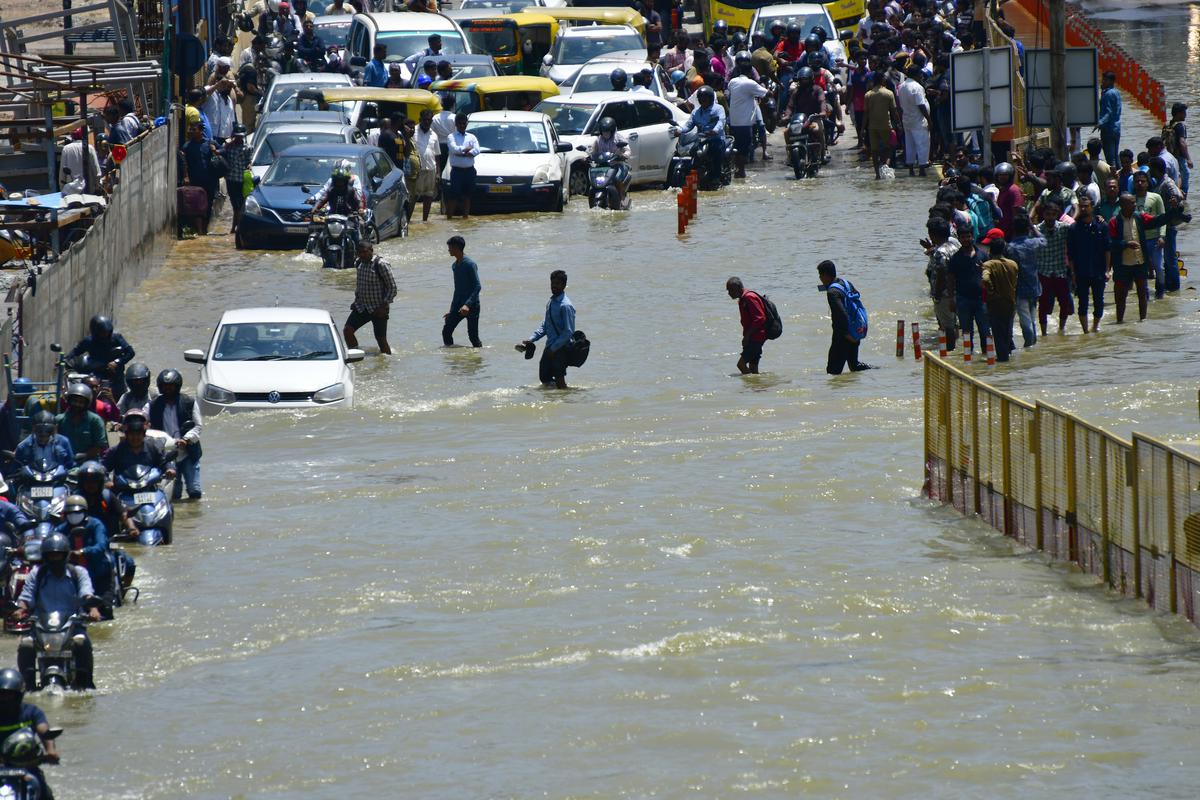
A residential enclave within Bengaluru, finds itself ensnared in a protracted battle for normalcy, weeks after devastating floods submerged over a hundred homes.
The receding waters have unveiled a litany of challenges, from crippling repair costs and damaged infrastructure to burgeoning health concerns, painting a grim picture of a community struggling to regain its footing. This pervasive distress underscores a critical need for integrated urban planning that prioritises resilience and equity in the face of escalating climate volatility. The immediate aftermath of the deluge has left residents grappling with substantial financial burdens. Sump tanks, crucial for household water storage, were inundated with contaminated water, necessitating costly deep cleaning and disinfection. What once incurred a modest charge of approximately ₹500 now commands prices ranging from ₹1,000 to ₹2,000, significantly impacting already strained household budgets. The widespread failure of water pumps has further exacerbated the crisis, creating an acute demand that has inflated replacement and repair costs. Furthermore, the price of tanker water, a vital resource in a city often battling water scarcity, has surged from ₹500 to between ₹700 and ₹900, placing an unbearable strain on families striving to secure even basic amenities.
Beyond the immediate water infrastructure, the flood’s destructive reach extended to valuable household assets. Refrigerators, washing machines, and televisions, often significant investments for families, suffered irreparable damage in numerous homes. Even personal vehicles were not spared, with water infiltrating engines and rendering them immobile. Despite the existence of insurance policies, many residents report a disheartening reality where companies are either outright denying claims or offering only partial compensation for repairs. This systemic shortfall shifts a substantial financial burden onto the homeowners, compounding their misery and highlighting a critical gap in post-disaster financial recovery mechanisms. The challenges in Sai Layout extend beyond material losses, delving deep into the realm of essential services and public health. The Bengaluru Water Supply and Sewerage Board (BWSSB) is endeavouring to provide water via tankers, yet the distribution remains erratic and often inequitable. Working residents frequently miss deliveries, leaving elderly or physically challenged family members to navigate the strenuous and often undignified process of scrambling for their share. This exposes a fundamental flaw in emergency response logistics, underscoring the need for more inclusive and accessible distribution channels that cater to the diverse needs of a community.
The prolonged period of waterlogged homes has, predictably, spurred a surge in public health concerns. Stagnant water creates fertile breeding grounds for waterborne and vector-borne diseases, raising fears of potential outbreaks. The Bruhat Bengaluru Mahanagara Palike (BBMP) has deployed a medical team to the area, undertaking health checks and distributing essential medicines. While a crucial immediate intervention, a proactive and long-term public health strategy is paramount to prevent recurring health crises in flood-prone zones. The ongoing crisis has also triggered a discernible demographic shift within Sai Layout, with a number of tenants reluctantly vacating their rented homes. Driven by the relentless cycle of monsoon-induced flooding, these families are seeking safer, more stable living conditions in areas less susceptible to inundation. This migration pattern underscores a broader socio-economic implication of recurrent flooding, highlighting the disproportionate impact on vulnerable populations and the urgent need for affordable, resilient housing solutions across the urban landscape.
A critical piece of the puzzle lies in the languishing infrastructure projects designed to mitigate such disasters. The expansion of the railway vent near adjoining Geddalahalli, a project pivotal to improving drainage and preventing future flooding, is reportedly only 20% complete. With an estimated six to eight months remaining for its completion, residents live under the perpetual apprehension that even a moderate downpour could trigger another devastating flood. This slow pace of infrastructure development is a stark reminder of the urgent need for expedited, high-impact projects that directly address urban vulnerabilities. For the residents of Sai Layout, rebuilding their physical homes is a monumental task; however, restoring their collective peace of mind, a state of psychological stability continuously eroded by the threat of recurring floods, presents an even more formidable challenge.
The Sai Layout experience serves as a powerful narrative for Bengaluru to reimagine its urban development, prioritising resilient, equitable, and environmentally conscious strategies for a sustainable future.
Also Read: Bihar Officials Visit Lucknow To Study UP Expressway Model To Boost Infrastructure
