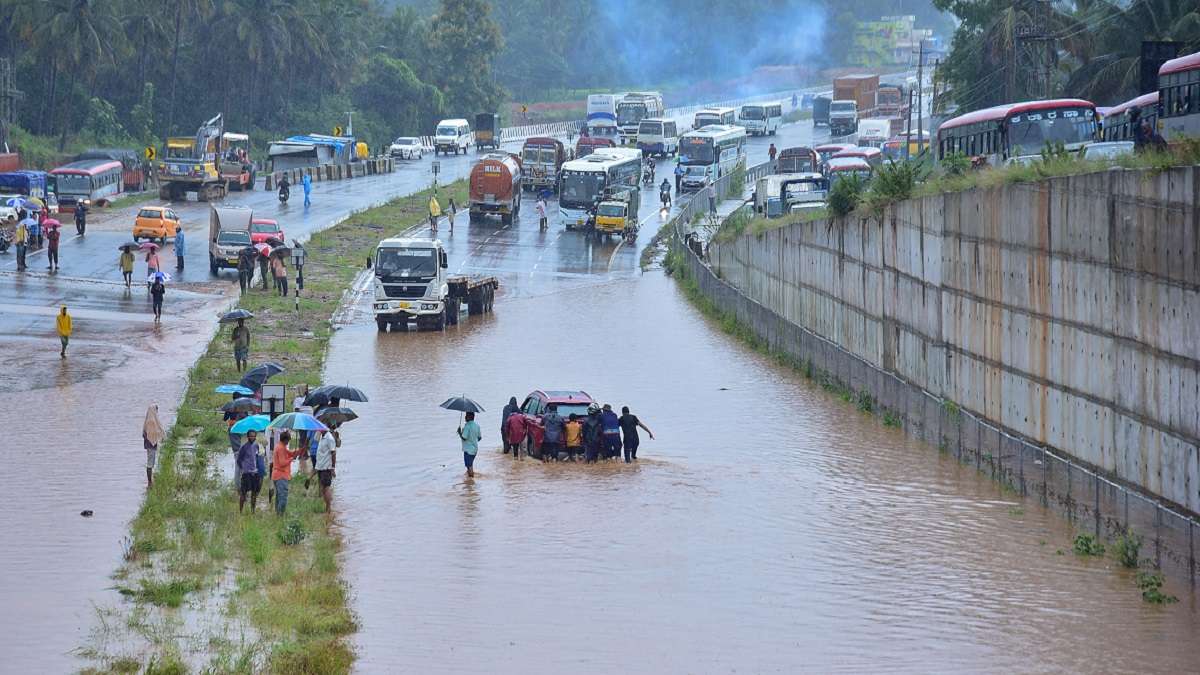
Bengaluru’s unyielding monsoon has damaged over 300 kilometres of roads, leaving daily commuters grappling with treacherous potholes and disrupted travel. Official data shows 878 road segments affected, alongside more than a thousand damaged homes and three fatalities from tree falls. The crisis has reignited public anger over the city’s fragile infrastructure and raised urgent questions about the readiness of its drainage and road systems to withstand extreme weather.
Also Watch: An Exclusive Interview with Sanjeev Jaiswal (IAS), CEO MHADA
According to civic authorities, the southern belt, particularly Bommanahalli, bore the brunt of the destruction, with close to half of the total damaged road length concentrated there. While the east and south zones saw fewer roads destroyed, they reported more instances of water entering homes, especially in low-lying areas prone to flash flooding. The municipal body has disbursed compensation to the bereaved families and initiated measures to construct retaining walls along stormwater drains to mitigate further damage.Daily commuters say the conditions have become dangerous. Motorists, especially those on two-wheelers, have expressed growing fears over road safety. Several residents claim that potholes are now unavoidable, raising risks for children and the elderly. The prevailing sentiment is one of frustration over the reactive, rather than preventive, approach to road maintenance and drainage management.
Senior civic engineers admit that while repair works are ongoing, large-scale resurfacing cannot proceed during active monsoon months. Pothole-filling operations are being carried out in coordination with traffic police to identify hazardous stretches quickly. However, this stop-gap work often fails to withstand repeated downpours, leading to recurring deterioration and escalating repair costs.The municipality has also identified 218 flood-prone locations across the city. As of July-end, interventions have been completed at 169 sites, with work pending at the remaining 49. Officials maintain that the prioritisation of these zones is part of a broader flood mitigation strategy, which includes upgrading stormwater drainage capacity and implementing climate-adaptive engineering solutions.
Urban development analysts argue that Bengaluru’s road and drainage systems require a fundamental shift towards sustainability. They point to the necessity of climate-resilient infrastructure that can endure increasingly erratic rainfall patterns. The reliance on traditional asphalt without advanced drainage integration, they warn, is no longer viable in the face of urban flooding and intense monsoon bursts.The episode also reignites debate over the city’s preparedness for extreme weather events, an issue gaining urgency as climate change reshapes rainfall intensity across South India. For many residents, the call is clear: Bengaluru needs infrastructure built not only for today’s commutes but for the weather challenges of the next decades. Until then, each monsoon may bring a familiar pattern of disruption flooded streets, damaged roads, and long queues of traffic inching through waterlogged intersections.
Bengaluru Roads Damaged Over 300 Km Amid Heavy Monsoon Rains