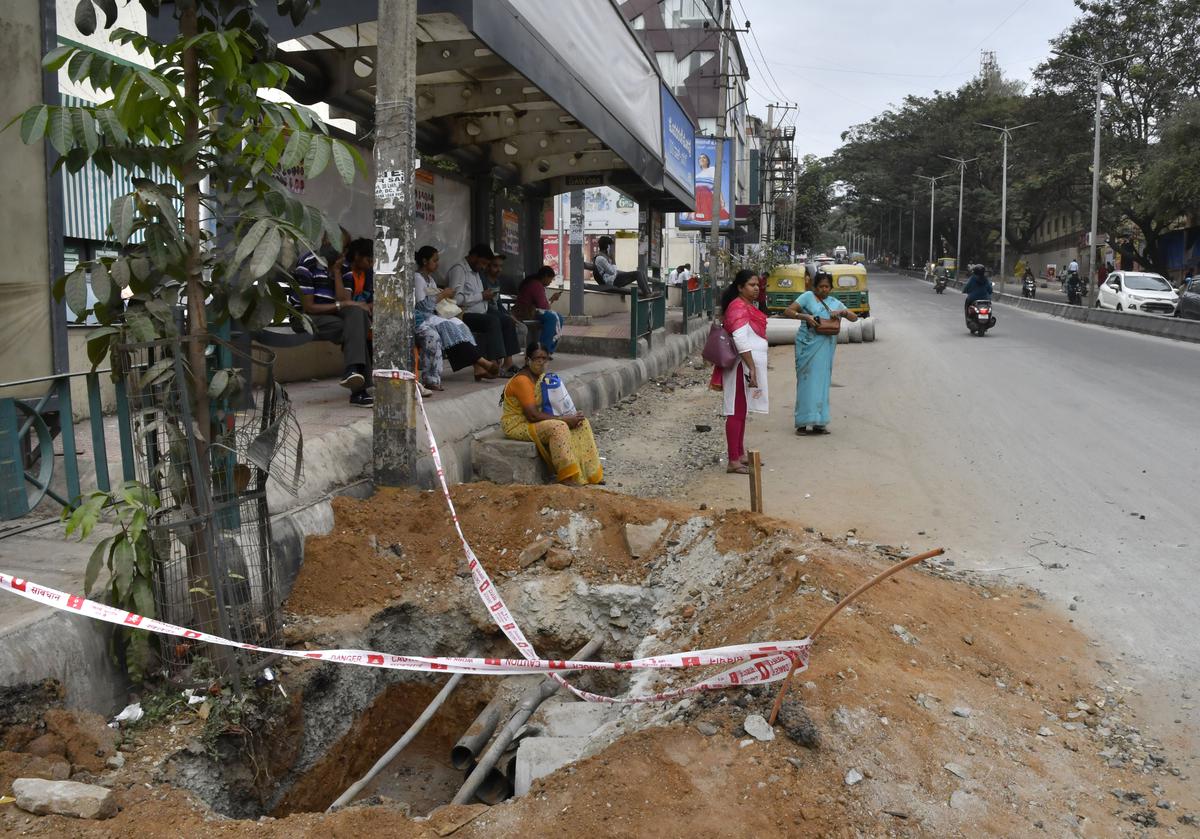
Bengaluru Richards Town residents protest civic neglect and apathy
Bengaluru’s Richards Town and neighbouring localities have raised an urgent alarm over crumbling civic services, unsafe roads, erratic water supply, and unchecked garbage dumping, pressing authorities for immediate, coordinated action. At a community gathering this week, residents voiced their frustration at what they described as years of neglect from multiple civic agencies.
The town’s core problem, residents said, lies in fractured planning and lack of accountability. Footpaths along arterial stretches such as Hennur Road, John Armstrong Road, and Davis Road remain hazardous, with broken slabs and poor lighting. Senior citizens, who form a large proportion of the population here, are forced to walk on traffic-laden streets, risking accidents and health concerns. Residents warned that unchecked encroachments by street vendors and vehicles have eroded pedestrian safety, while civic bodies have yet to designate proper vending or parking zones.
Water scarcity remains another daily ordeal. The supply schedule, once predictable, has been disrupted for months, forcing households to depend on costly private tankers. Repeated pleas to the water board have yielded little improvement. Residents argued that it is unacceptable for a high tax-paying neighbourhood to rely on unsustainable, carbon-intensive tanker water when Cauvery pipelines already exist. Inadequate coordination between agencies has also left major roads in disrepair. Frequent digging by electricity and water utilities has created potholes and flooding during rains, worsening both mobility and air quality. Residents expressed concern that rising road levels without proper drainage planning could intensify urban flooding, an issue already haunting other parts of Bengaluru.
Concerns also extend to safety and public health. Families complained of open drug sales on residential lanes, lack of police patrolling, and unsafe conditions for women and children. Poor waste management has turned Cooke Town and Pillanna Garden into what residents called “garbage hotspots,” with irregular collection, rodent infestations, and mosquito breeding. The situation worsens in monsoon, fuelling public health risks and undermining the city’s sustainability goals. What angers many is the state of Richards Park itself, once a symbol of community pride but now poorly maintained with broken pavements, non-functional fountains, and inadequate lighting. Citizens argued that public spaces should be safe, green, and accessible, yet the park has become emblematic of civic apathy.
Officials from civic agencies assured residents of remedial measures, including footpath repairs, improved water distribution, and enhanced police patrolling. However, residents remain sceptical, pointing to past assurances that rarely translated into meaningful action. The demand is clear: Bengaluru’s neighbourhoods cannot thrive on fragmented interventions. Residents want civic agencies to adopt an integrated approach, one that not only fixes immediate issues but also builds equitable, sustainable, and carbon-conscious urban infrastructure. Without such coordinated governance, Richards Town risks becoming yet another reminder of how India’s cities falter in ensuring basic urban dignity.