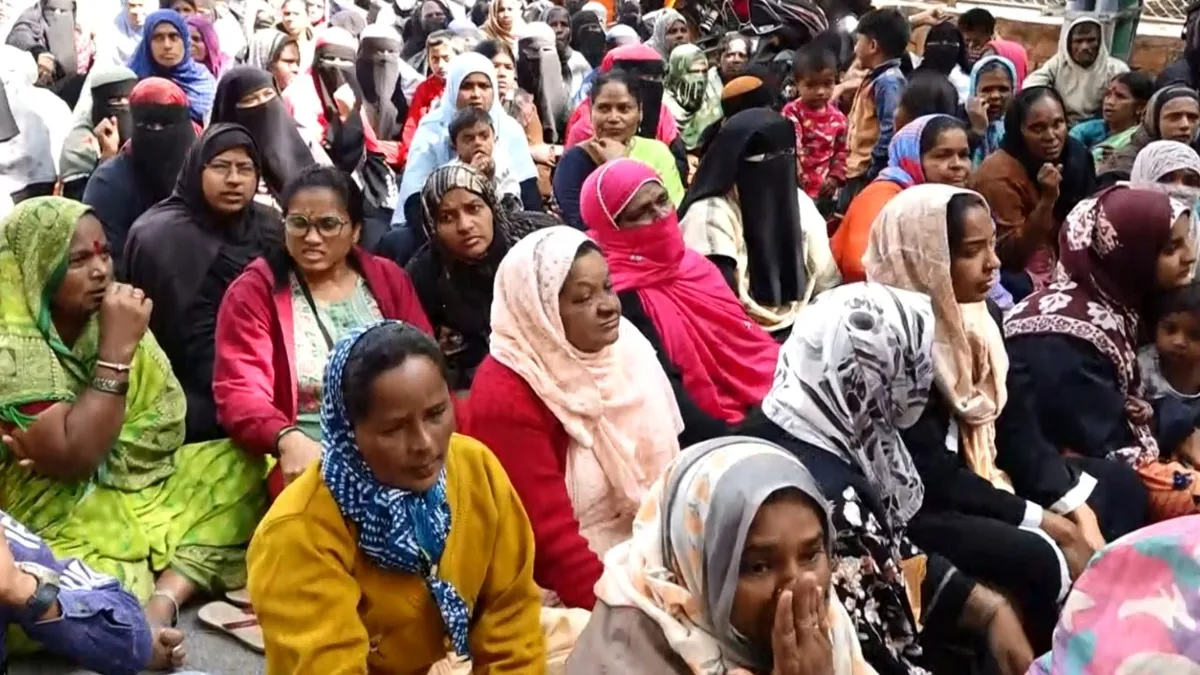
Bengaluru Residents Protest Minister Krishna Byre Gowda House After Kogilu Demolition Drive
Bengaluru residents staged a protest outside Revenue Minister Krishna Byre Gowda’s house on Sunday after over 200 homes were demolished in Kogilu village, Yelahanka. The clearance, carried out by Bengaluru Solid Waste Management Limited, targeted encroachments to make way for a new solid waste processing facility. Families in Waseem Layout and Fakir Colony, many with infants and senior citizens, demanded immediate temporary shelters and alternative housing amid the sudden eviction.
Residents described the demolitions as abrupt, beginning in the early hours without prior written notice. Many households reported power cuts days before the operation, intensifying the disruption. Over 300 protesters assembled at the minister’s Sahakar Nagar residence, pressing for swift government intervention to secure temporary shelters and relief centres for those left homeless. Local civil society organisations, including Dalit Sangharsha Samithi and Dudiyuva Janara Vedike, represented the affected families, highlighting the vulnerability of marginalised communities.“Many families have invested heavily in their homes, often through loans. The sudden action has left residents without basic necessities, including food, medicines, and essential documents,” said an activist representing the displaced residents. Vulnerable households include pregnant women, elderly citizens, people with disabilities, and children, some of whom lost pets and personal belongings during the clearance.
BSWML defended the operation, stating that over 150 temporary structures had encroached upon five acres designated for a solid waste processing complex. CEO Karee Gowda explained that the project includes a bio-methanation plant, animal waste rendering and incineration units, tender coconut waste processing, and sanitary waste treatment facilities—part of Bengaluru’s broader efforts to implement sustainable urban waste management. The clearance operation involved coordination between BSWML, Bengaluru North City Corporation, the revenue department, fire and emergency services, and the Bengaluru Metropolitan Task Force.A provisional order under Section 94C of the Karnataka Land and Revenue Act was cited to authorise the demolition. However, many residents argued that they were unaware of formal legal procedures and assumed they held rights over the land, highlighting gaps in communication and transparency. Critics say the enforcement disproportionately affected marginalised groups, particularly Dalits and low-income households, raising questions about the balance between urban development and social equity.
Urban planning experts note that Bengaluru faces growing challenges in reconciling rapid infrastructure expansion with inclusive housing policies. “Planned development is essential, but authorities must integrate relocation and rehabilitation measures proactively to avoid displacing vulnerable populations,” said a senior urban planner. Officials have scheduled discussions with residents’ representatives to explore immediate shelter arrangements and long-term housing solutions, emphasising the need for socially responsible urban growth alongside zero-carbon, sustainable city planning.