


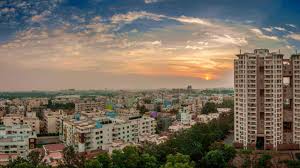
Bengaluru’s residential real estate market is set for a significant upscale expansion in the coming financial year, with a major city-based developer planning multiple high-end housing launches across the eastern and northern growth corridors. The move signals sustained confidence in the city’s premium housing demand and reflects how Bengaluru’s urban form is evolving alongside infrastructure-led growth.
The proposed developments, spread across large land parcels, will add thousands of new homes to the city’s supply pipeline, including a notable share of plotted communities. Industry analysts say the scale of the planned launches points to a strategic shift towards integrated, master-planned projects as buyers increasingly prioritise space, liveability and long-term asset value over compact apartment formats. East and North Bengaluru have emerged as focal points for residential expansion due to their proximity to technology hubs, logistics parks and arterial road networks. These corridors have benefited from sustained public investment in metro rail extensions, peripheral road connectivity and upgraded civic infrastructure, making them attractive for both end-users and long-term investors. Urban planners note that such locations are now shaping Bengaluru’s next phase of decentralised growth. Market data indicates that premium and luxury housing has shown greater resilience than mid-segment supply over the past year. Higher-income households, particularly those linked to technology, global services and startup ecosystems, continue to demonstrate purchasing power despite broader economic volatility. As a result, developers are increasingly calibrating portfolios towards fewer but higher-value units.
From an urban sustainability perspective, the expansion raises important questions around density management, water security and energy use. Experts emphasise that large-format residential developments must integrate climate-responsive design, rainwater harvesting, waste management systems and reduced car dependency to align with Bengaluru’s long-term resilience goals. Without such measures, the city risks intensifying pressure on already strained natural resources. The inclusion of plotted developments within the upcoming supply mix also reflects changing buyer preferences post-pandemic. Larger homes with flexible layouts, private outdoor spaces and lower shared density are gaining traction, particularly among families seeking stability and long-term occupation rather than speculative investment. While the revenue potential of these projects underscores the commercial confidence surrounding Bengaluru’s housing market, urban economists caution that sustained growth will depend on execution discipline and regulatory compliance. Timely delivery, transparent approvals and adherence to environmental norms will be critical to maintaining buyer trust in the premium segment.
As Bengaluru continues to expand outward, the challenge for policymakers and developers alike will be to ensure that luxury housing growth complements broader urban objectives balancing economic momentum with inclusive planning, infrastructure capacity and climate resilience. The coming year is likely to test how well the city can absorb high-value development without compromising its long-term urban health.
Also Read:
Bengaluru Residential Market Signals High Value Expansion
