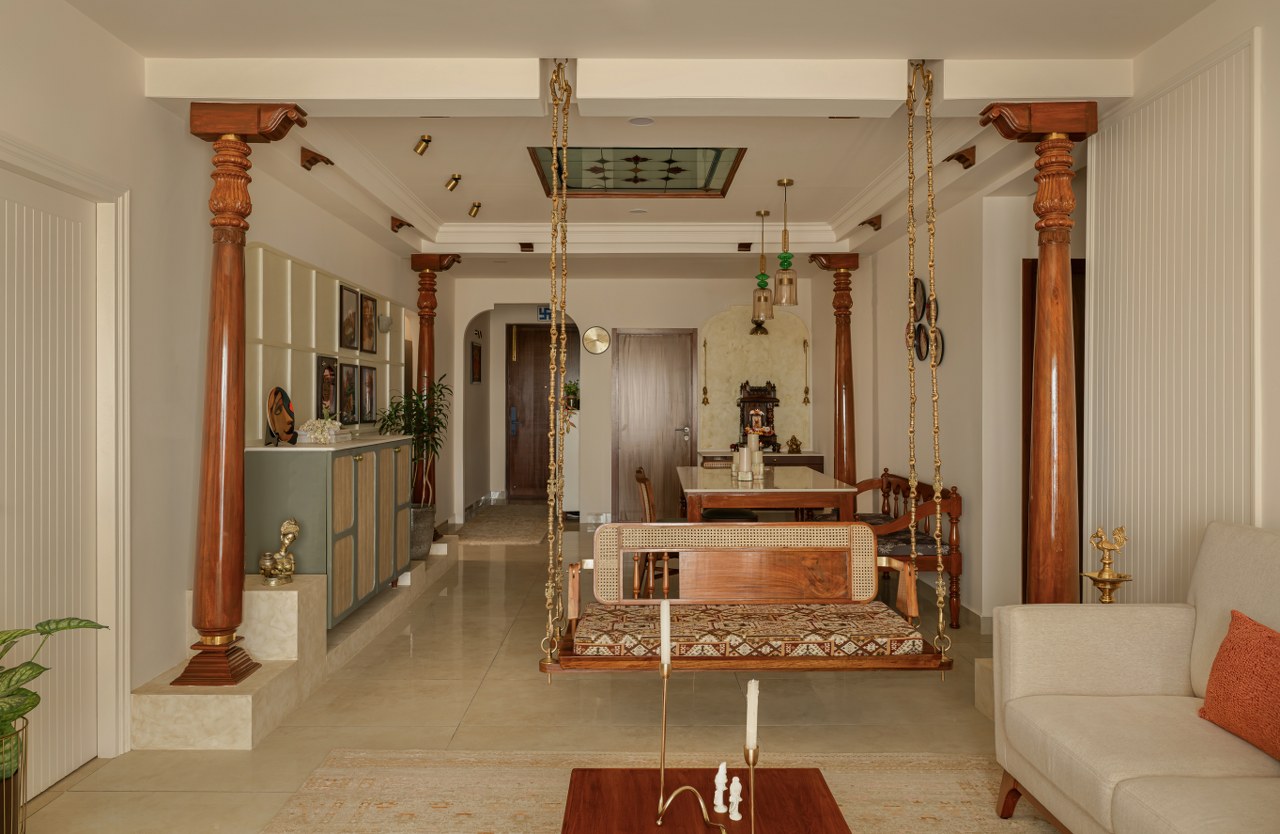
Bengaluru Residence Balances Tradition With Modernity
Bengaluru, a 4,000 sq ft apartment in Indiranagar has undergone a comprehensive interior transformation, reflecting an emerging trend in Indian urban housing: retrofitting existing homes to enhance livability without structural modifications. Situated on a quieter, tree-lined street, the residence illustrates how high-density neighbourhoods can accommodate family-centric, sustainable design while optimising daylight and ventilation in constrained urban plots.
The project, guided by a vision of balance between tradition and contemporary comfort, prioritised brightness, colour integration, and functional aesthetics. Industry experts note that this approach aligns with a growing preference among urban homeowners for adaptive interiors over costly structural renovations, which can disrupt local infrastructure and generate construction waste. By working within fixed elements such as marble inlays and false ceilings, designers demonstrated that high-impact transformations are achievable with thoughtful material selection, spatial planning, and curated décor.
A central strategy involved layering neutral foundations with selective vibrant accents to avoid the cold, impersonal feel often associated with minimal palettes. Urban planners highlight that such design choices contribute to mental well-being, particularly in dense city environments where exposure to greenery and natural light is limited. Materials including timber finishes, marble-topped furniture, and textured wall coverings were used to introduce warmth and longevity, reflecting a commitment to low-maintenance, durable urban interiors. Storage solutions were seamlessly integrated to enhance both utility and cultural value. Custom units accommodated heirlooms and artefacts, reinforcing intergenerational continuity a design choice increasingly valued in India’s growing middle- and upper-middle-class housing segments. Decorative lighting, strategically placed across living and dining areas, also addressed previous deficiencies, improving usability and ambience without increasing energy loads significantly.
Art and curated objects were deployed to anchor spaces, creating focal points that blend personal heritage with contemporary aesthetics. This practice mirrors broader urban trends in India, where residents are combining bespoke elements with mass-produced furnishings to express identity while preserving floor space and flexibility. The result is a home that exemplifies human-centred design principles in dense urban settings: it is visually engaging, adaptable, and functionally resilient. Analysts note that such interventions demonstrate pathways for upgrading older apartments to meet modern comfort standards without major civil work, supporting sustainable urban growth. For Bengaluru and other fast-growing Indian cities, this approach could reduce unnecessary demolition, lower construction-related emissions, and enhance quality of life within established neighbourhoods.