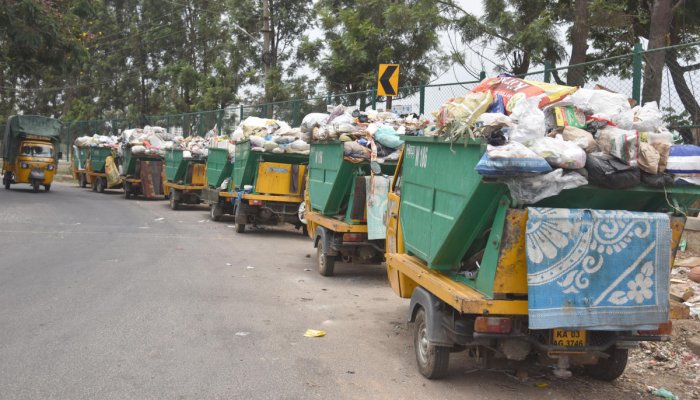
Bengaluru Pushes Accountability In Waste Management
Bengaluru has intensified after-dark surveillance to curb illegal waste dumping, with city marshals now conducting nightly patrols and issuing on-the-spot fines across chronic littering zones. The move, led by Bengaluru Solid Waste Management Limited, signals a tougher enforcement approach at a time when unmanaged garbage continues to undermine public health, neighbourhood liveability, and the city’s sustainability ambitions.
According to senior civic officials, enforcement teams are being deployed daily between late evening hours, focusing on areas repeatedly identified as waste “black spots”. The crackdown has already translated into substantial daily penalties, indicating both the scale of violations and the administration’s intent to assert discipline in public spaces. In particularly persistent locations, patrol hours are being extended to intercept offenders who dispose of waste well past midnight. Urban governance experts note that Bengaluru’s waste challenge is not merely behavioural but systemic. While punitive measures may deter habitual dumping, residents in several dense neighbourhoods argue that inconsistent door-to-door waste collection continues to push households towards informal disposal. In mixed-use localities with large migrant and student populations, irregular collection schedules often clash with work and study hours, leaving residents with few practical options.
A resident welfare representative from south Bengaluru said the absence of predictable waste pickup timings has normalised roadside dumping. “When collection vehicles arrive without notice, compliance becomes difficult even for well-intentioned residents,” the representative said. Such gaps, urban planners argue, weaken trust in municipal systems and disproportionately affect lower-income and rental communities that lack storage space for segregated waste. Civic officials, however, maintain that enforcement and service delivery must move in parallel. Authorities have stated that complaints about irregular waste collection are being tracked ward-wise, with assurances of corrective action where contractors fail to meet schedules. Officials have also encouraged residents to report lapses promptly, signalling a shift towards data-led monitoring of sanitation services.
Beyond patrols, enforcement teams are increasingly using indirect methods to identify repeat offenders, including tracing addresses from discarded documents. Recent action against a motorist caught dumping household waste from a private vehicle has been cited internally as a warning against treating public land as a disposal site. Urban economists point out that cleaner streets carry tangible economic value, from improved public health outcomes to stronger neighbourhood property markets. More importantly, consistent waste governance is foundational to Bengaluru’s longer-term goals of low-carbon growth, inclusive urban services, and resilient infrastructure. As the city expands, aligning enforcement with reliable service delivery will determine whether cleaner streets become a lasting norm rather than a nightly chase.
Bengaluru Pushes Accountability In Waste Management