Indore Property Guideline Value Revision May Raise Rates
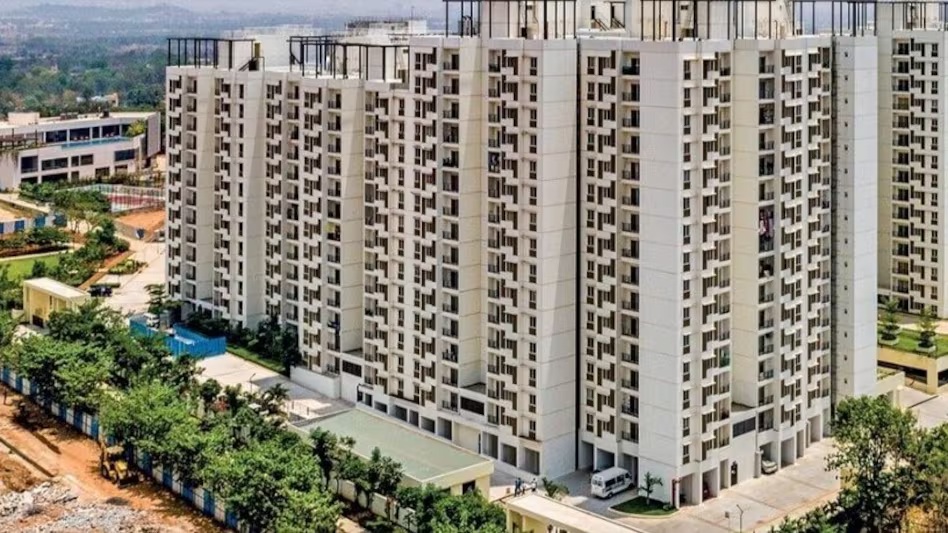
Bengaluru’s housing market has seen a marked acceleration in residential property values over the past three years, driven by tech-led employment hubs and major infrastructure projects. The Sarjapur–Attibele corridor, in particular, has emerged as one of the fastest appreciating residential micro-markets in the city, reflecting broader urban expansion patterns and investment flows.
Between 2022 and 2025, the city witnessed the launch of approximately 2.49 lakh homes, with sales closely tracking at 2.41 lakh units. During the same period, average housing prices across Bengaluru climbed roughly 63%, signalling strong demand pressure amid limited peripheral supply. In the Sarjapur–Attibele stretch, prices jumped nearly 71%, from around ₹4,568 per sq ft in 2022 to ₹7,800 per sq ft by 2025, according to industry data. Forecasts suggest a further increase of about 25% could occur by 2028, potentially pushing average values close to ₹9,730 per sq ft.
Industry analysts highlight the corridor’s strategic location along State Highway 35, linking key IT hubs like Electronic City and Sarjapur Road with manufacturing clusters in Hosur and Bommasandra. This dual economic anchoring has attracted both homebuyers and developers, creating a pipeline of residential supply alongside industrial expansion. Roughly 17,100 units were launched along this corridor over three years, with infrastructure connectivity cited as a central factor in buyer decisions. The area is poised to benefit from multiple upcoming projects, including a planned 647-acre industrial park and extensions to the city’s metro network towards Bommasandra, Attibele, and Hosur. The proposed Satellite Town Ring Road and Peripheral Ring Road, along with a potential greenfield airport near Hosur, are expected to alleviate congestion and improve last-mile connectivity, making the southern corridor increasingly accessible for daily commuters.
Urban planners note that such rapid appreciation presents both opportunities and challenges. While rising property values signal economic vibrancy and investor confidence, there are risks of affordability constraints for local residents, increased pressure on infrastructure, and environmental stress on peri-urban areas. Ensuring equitable access to housing and integrating climate-resilient development practices will be critical as these micro-markets continue to expand. As Bengaluru’s tech-driven growth persists, corridors like Sarjapur–Attibele may serve as bellwethers for future urban densification patterns. Balanced planning, sustainable infrastructure deployment, and inclusive housing policies will determine whether these high-growth zones translate into long-term urban resilience and economic opportunity.