


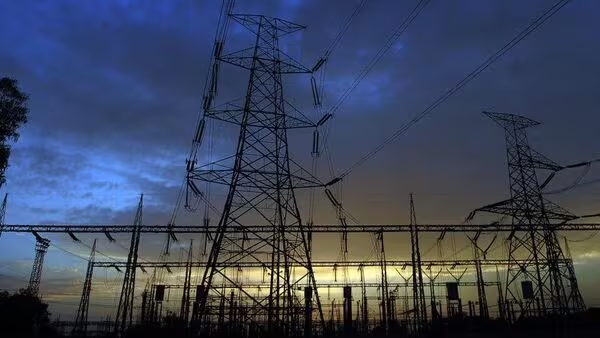
Bengaluru Power Outages on January 29 Key Areas Affected
Bengaluru residents will face power cuts on January 29, as the Bangalore Electricity Supply Company (BESCOM) and Karnataka Power Transmission Corporation Limited (KPTCL) undertake crucial service connection work in several areas of the city. The scheduled power outages are expected to last between 10 am and 4 pm, spanning a six-hour period. These disruptions are part of a larger ongoing effort to upgrade infrastructure and ensure more efficient electricity distribution across Bengaluru.
The areas affected by the outage include the DC Bungalow Premises, which will experience a complete power cut between 10 am and 4 pm. In addition, other locations will face shorter interruptions, with the power cut planned from 2 pm to 4 pm in areas such as Maragankunte, Kothakote, Pesalaparthi, Narayanaswamykote, Krishnapura, Vadrahali, Mamimdikayalapalli, and Mummdivaripalli. Local residents are being urged to plan their day accordingly, ensuring they have backup arrangements for power-dependent activities.
This power cut is part of an extensive plan by BESCOM and KPTCL to enhance the city’s power infrastructure. It follows an earlier series of scheduled outages that occurred from January 23 to 25, which impacted several other parts of the city. Areas such as Mayasandra, HSR Layout, Koramangala Extension, and parts of Doddaballapura Town were affected, as both utility companies undertook significant maintenance work including the relocation of power poles, upgrading power lines, and converting overhead cables into underground ones.
Long-Term Benefits and Sustainability of the Power Infrastructure Upgrade
While these power outages may cause inconvenience for residents, the ongoing infrastructure work is expected to deliver long-term benefits in terms of sustainability and improved service reliability. As urbanisation increases, Bengaluru has seen a rapid rise in power demand, and addressing these challenges is crucial to ensuring the city’s infrastructure can meet future energy needs. The transition to underground power cables, for example, not only improves the reliability of the electricity supply, but also helps in reducing the impact of environmental factors such as storms or high winds that may damage above-ground lines.
Moreover, such upgrades are aligned with sustainability goals, as underground power lines are less prone to disruption, leading to fewer outages and less frequent emergency repairs. Additionally, the work being done in collaboration with the Jalasiri water supply project further strengthens the city’s environmental objectives by reducing energy losses and ensuring a more resilient energy grid.
Impact on Citizens and the Need for Backup Solutions
For residents who rely heavily on electricity for their daily needs – including work, medical equipment, and other critical systems – the power cuts can be a significant inconvenience. During these six-hour outages, citizens are advised to make backup plans to ensure they are not left without power for essential services. Businesses that depend on uninterrupted power supply, such as IT offices and medical facilities, may also need to take preventive measures by securing backup generators or alternative power sources.
In the event of a power outage, BESCOM has reiterated its commitment to ensuring minimal disruption. They encourage residents to report any issues or seek clarifications via their helpline, which remains operational throughout the outages. BESCOM has also requested citizens to remain patient as the improvements being made now will enhance the overall quality of electricity services in the long term.
Towards a Sustainable and Efficient Urban Power Grid
As Bengaluru continues to grow, the sustainability angle becomes increasingly important in managing its urban infrastructure. The challenges posed by rapid urbanisation and increased power demand necessitate long-term solutions that ensure the city’s power grid is efficient, reliable, and capable of withstanding future growth. The current round of upgrades, aimed at converting overhead cables to underground systems and expanding the energy grid, marks an essential step in this direction.
By investing in modern infrastructure and addressing issues such as irregular power cuts, the city is taking the first steps toward a future where energy is not only reliable but also environmentally sustainable. The work being done by BESCOM and KPTCL will help make Bengaluru’s power system more resilient, ensuring that the city can continue to grow while minimizing its environmental footprint. This sustainable approach to energy management is vital for building a smarter, cleaner, and more energy-efficient Bengaluru.
