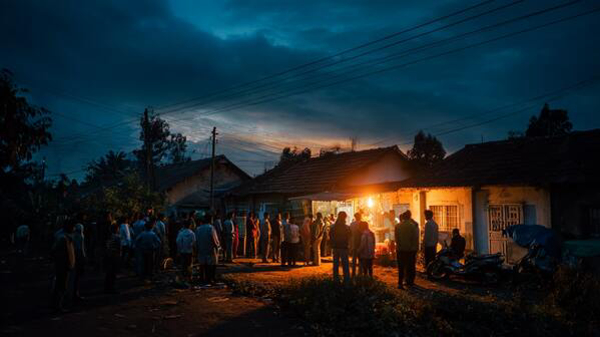
Bengaluru Power Outage Hits Homes Offices Campuses
Bengaluru is set to experience widespread electricity interruptions across multiple neighbourhoods over February 10 and 11, as the city’s power utility undertakes scheduled maintenance and network upgrades. The planned shutdowns, ranging from four to seven hours, will affect residential layouts, commercial clusters, technology parks, and public infrastructure, underlining the mounting pressure on the city’s ageing power distribution system.
According to official grid schedules, electricity supply will be suspended during daytime hours across large parts of south and southeast Bengaluru. These include high-density residential zones, mixed-use corridors, institutional campuses, and industrial layouts that together form the backbone of the city’s employment and housing ecosystem. The outages are linked to preventive maintenance, load balancing, and infrastructure strengthening works aimed at stabilising supply ahead of peak summer demand. Urban planners note that while planned shutdowns are essential to prevent larger system failures, their growing frequency reflects deeper structural challenges. Bengaluru’s rapid spatial expansion, coupled with energy-intensive commercial development and rising household consumption, has placed sustained stress on local substations and feeder lines. Several of the affected areas are also witnessing intense real estate densification, amplifying demand on legacy infrastructure not originally designed for current load levels.
For residents and businesses, even temporary disruptions carry tangible economic and social costs. Home-based workers, small enterprises, healthcare facilities, and educational institutions often rely on backup power solutions, increasing operational expenses and carbon footprints. In lower-income neighbourhoods, extended outages can disrupt water pumping, sanitation systems, and access to essential services, raising equity concerns in infrastructure planning. Energy experts argue that Bengaluru’s power resilience will increasingly depend on decentralised solutions rather than reactive maintenance alone. Rooftop solar adoption, battery storage at community and building levels, and smarter load forecasting are seen as critical to reducing dependence on long-duration shutdowns. Commercial developments in technology and industrial zones are already experimenting with hybrid energy systems, but residential uptake remains uneven.
The Bengaluru power outage also highlights the importance of coordination between electricity distribution, water utilities, and urban transport systems. As cities push toward climate-resilient growth, infrastructure upgrades must be synchronised to minimise repeated civic disruptions and productivity losses. Looking ahead, sustained investment in grid modernisation, transparent outage communication, and neighbourhood-level energy planning will be essential as Bengaluru balances economic growth with liveability. With climate variability expected to intensify demand peaks, the city’s approach to power management may well shape its broader urban resilience trajectory in the years to come.