


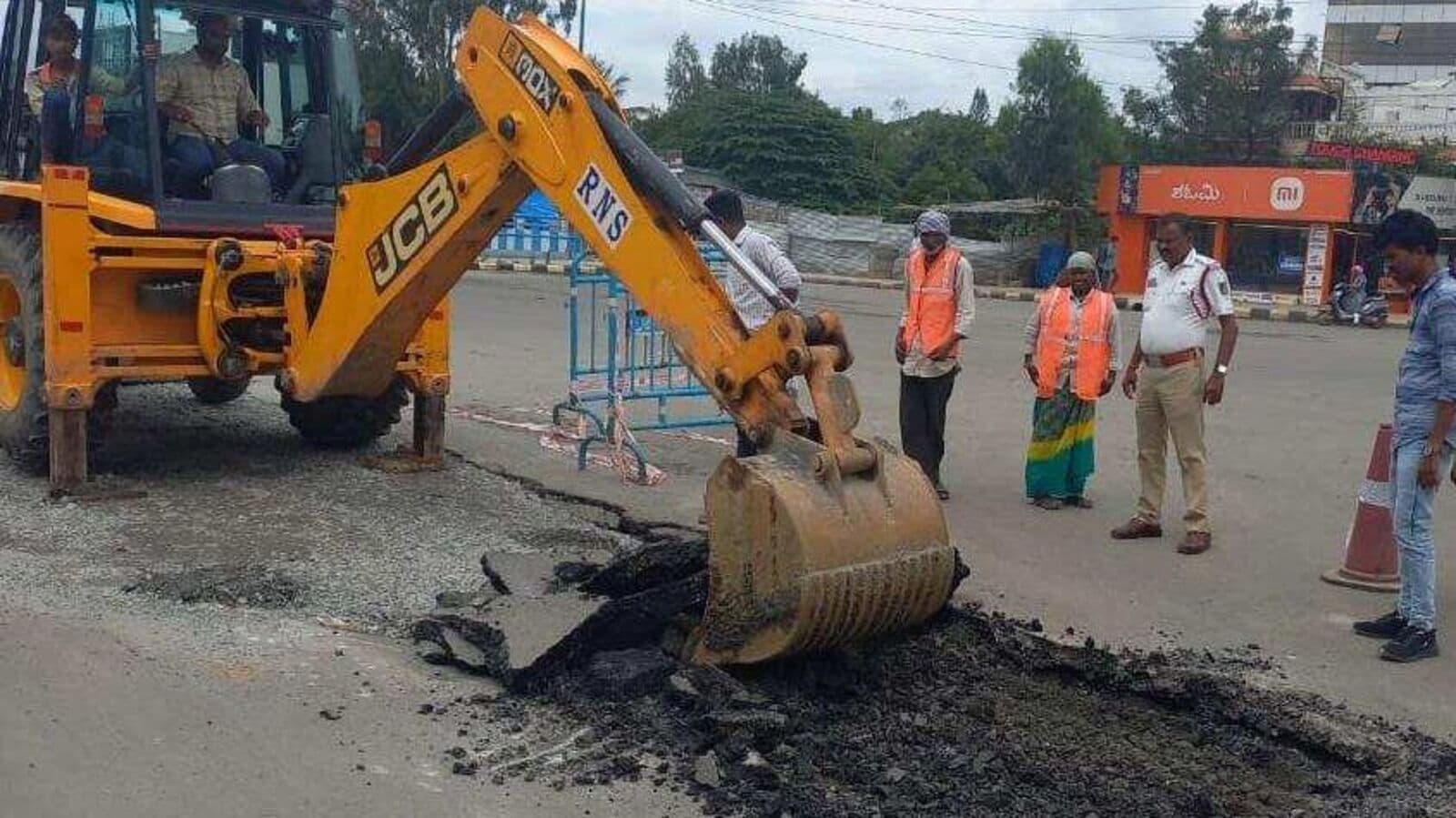
Bengaluru’s worsening pothole problem has triggered fresh concern after new government data revealed a 63 per cent jump in road repairs this year. The civic body filled nearly 1.78 lakh square metres of potholes in 2024–25, up from 1.07 lakh square metres the previous year, highlighting the deepening crisis in the city’s road infrastructure.
The cost of repairs has climbed in parallel. Expenditure rose to ₹12.25 crore in 2024–25 compared with ₹7 crore the previous year. Despite the higher spend, commuters report little visible improvement on the ground. Roads across southern and eastern Bengaluru continue to develop fresh craters within weeks of being patched, exposing the poor durability of temporary repair work.Commuters describe the situation as frustrating and unsafe. While pothole-filling works are frequently undertaken, residents complain that the same stretches quickly fall back into disrepair. For road users, this means continued damage to vehicles, longer travel times, and heightened safety risks during the monsoon season when waterlogged craters become accident-prone.
Also Watch: An Exclusive Interview with Sanjeev Jaiswal (IAS), CEO MHADA
Experts point to structural flaws as the real culprit. Potholes tend to appear where rainwater stagnates due to faulty drainage systems. Poorly maintained shoulder drains allow water to seep into the road surface, weakening it and causing rapid collapse. The problem is compounded by repeated digging by multiple civic agencies for utilities such as power, water, and sewage. Even after restoration, adjoining areas remain weak and prone to fresh pothole formation.Officials from the civic body admit that pothole-filling is merely a stopgap measure. They argue that during monsoon months, only temporary patchwork is possible. Permanent resurfacing or structural reinforcement can only be undertaken once dry weather allows for more durable interventions.
Yet for residents, this explanation has become a recurring annual excuse, with little change in outcomes year after year.Transport analysts warn that short-term repairs are not only wasteful but also unsustainable. Spending crores on patchwork without addressing drainage design, utility coordination, and road engineering standards is unlikely to produce long-term results. They emphasise that resilient urban infrastructure must align with the principles of sustainability, including eco-friendly materials, better water management, and accountability in civic works.
