


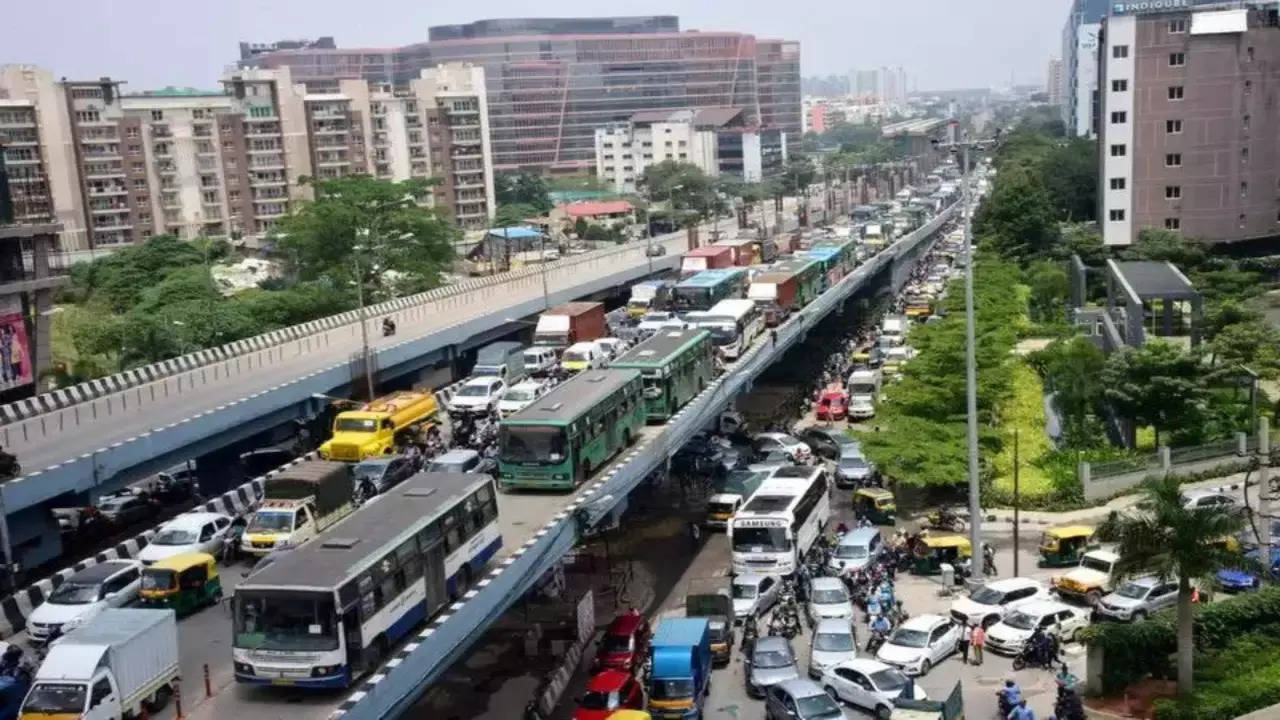
Bengaluru, long criticised for its gridlocked traffic and chronic congestion, is preparing to launch a game-changing infrastructure project — a 114-kilometre elevated corridor traversing key urban routes.
This ambitious transport upgrade, proposed by the Karnataka government, marks one of the city’s most comprehensive interventions to overhaul surface-level commuting and unlock seamless intra-city movement. Designed to be constructed above existing arterial roads, the elevated corridor is expected to decongest major bottlenecks and reduce travel time dramatically for daily commuters. The multi-lane flyover will operate as a signal-free express route, enabling vehicles to bypass densely packed junctions notorious for delays, especially during peak hours.
Officials associated with the project confirm that the corridor will include strategically located on-ramps and off-ramps, ensuring accessibility without overburdening any single junction. The city’s traffic and road planning authorities aim to integrate the corridor’s access points with existing roads to provide last-mile connectivity and reduce localised traffic buildups. Interestingly, in an effort to maintain decorum and ease of movement around administrative centres, no entry or exit ramps will be placed within a kilometre radius of the Vidhana Soudha. This zoning restriction is designed to prevent civic clutter and ensure security around the state’s legislative premises while the rest of the city experiences an expansion in vehicular infrastructure.
This project is being framed as a cornerstone of the state’s “Brand Bengaluru” urban transformation campaign, which seeks to position the city as a model of next-generation infrastructure. Under this initiative, several other large-scale projects are underway, including a proposed 16.7-kilometre underground tunnel corridor linking Hebbal Junction (Esteem Mall) to Central Silk Board Junction. When read alongside the elevated road blueprint, the tunnel proposal signals a multi-layered approach to vertical urban transport planning — offering underground, ground-level, and elevated traffic routes. Officials associated with the project have suggested that Bengaluru’s urban fabric will undergo substantial transformation through this multi-modal model, bringing relief to over 1.2 crore city residents who navigate increasingly longer and unpredictable travel times. The tunnel corridor and the elevated road are being conceived as complementary channels — designed to carry different traffic loads without overlapping, thereby ensuring fluidity in citywide mobility.
In parallel, other facets of the Brand Bengaluru programme include the development of new metro lines, construction of double-decker flyovers in highly congested zones, expansion of the road network by over 700 kilometres, and a ₹4,000 crore investment in revamping the city’s waste management ecosystem. Urban planning experts have responded with cautious optimism, noting that while elevated corridors can offer short-to-mid-term relief from vehicular congestion, long-term solutions must align with sustainable city design. The focus, they argue, must also include encouraging public transport, prioritising non-motorised transit modes, and introducing disincentives for excessive private vehicle use.
“Elevated roads cannot be treated as a silver bullet,” said an expert affiliated with a national urban mobility think tank. “If not coupled with systemic changes — such as transit-oriented development, better pedestrian infrastructure, and equitable access for all residents — such projects risk reinforcing car-centric urban sprawl.” Environmental voices have also weighed in, raising concerns over the carbon footprint of large-scale construction and the potential loss of tree cover. In response, officials involved in the planning process insist that the elevated corridor design is being finalised with minimal ecological disruption, and compensatory green measures will be included as part of the construction tender.
This infrastructural leap arrives at a critical juncture for Bengaluru, where vehicular ownership continues to climb and the existing road network remains woefully inadequate. With an average of nearly 10,000 new vehicles added to the city’s roads every week, the pressure on its transport arteries is unsustainable in the current form. The hope is that this project, alongside metro and tunnel investments, will reset the course for a more efficient, connected, and breathable Bengaluru. Urban economists point out that cities like Bengaluru, often dubbed India’s Silicon Valley, require infrastructure that reflects the ambitions of their innovation-driven economies. Efficient mobility, they argue, is not just a civic concern but a productivity imperative. Time lost in traffic congestion translates into lower economic output, lost man-hours, and increased fuel consumption.
While construction timelines and funding allocations are yet to be officially released, the state has signalled its intention to fast-track the project under public-private partnership models, while simultaneously exploring green infrastructure financing routes through urban resilience funds. As with all transformative projects, implementation remains key. If executed with foresight, transparency, and an inclusive approach, Bengaluru’s elevated corridor could very well become a national benchmark in large-scale urban mobility design. The project’s success, however, will hinge on how well it integrates with broader urban renewal goals, including air quality improvement, equitable access, and climate resilience.
In a city where the average commute time can exceed two hours a day, and where public dissatisfaction with infrastructure is rising, this elevated corridor presents an opportunity — not just to move faster, but to move better.
Also Read : Bengaluru Urban Transit Projects Reviewed for Speedy Sustainable Development
