


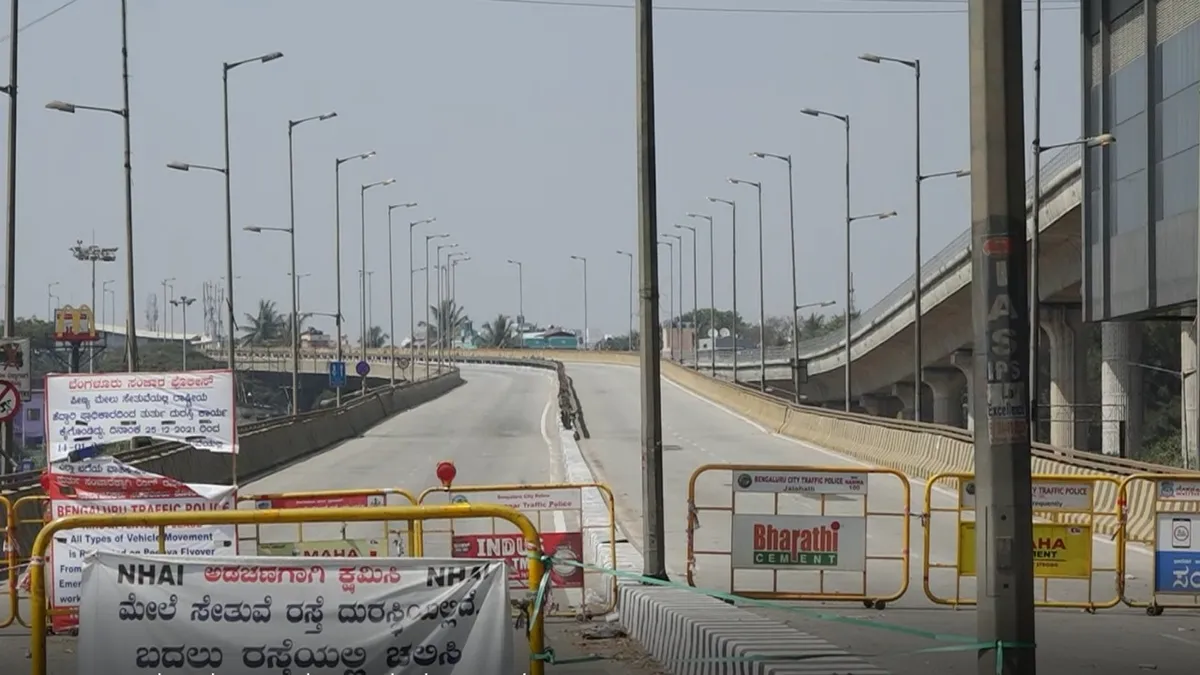
The postponement of load testing on a key elevated corridor has brought renewed attention to the Bengaluru Peenya flyover and the complexities involved in maintaining critical urban infrastructure.
While vehicular movement continues uninterrupted, the delay underscores the importance of rigorous safety assessments in high-traffic zones.Infrastructure experts note that load testing is a vital process to evaluate the structural integrity and performance of flyovers under simulated stress conditions.The deferment of this phase for the Bengaluru Peenya flyover highlights the cautious approach required to ensure public safety, particularly in areas with heavy industrial and commuter traffic.Peenya, one of Bengaluru’s major industrial hubs, experiences significant daily movement of goods vehicles, buses, and private transport.Any disruption or uncertainty surrounding infrastructure readiness can have ripple effects on logistics, commute times, and economic activity in the region. The flyover plays a crucial role in easing congestion and facilitating smoother traffic flow.From an urban planning perspective, the delay reflects broader challenges in infrastructure project management, including coordination between agencies, technical preparedness, and adherence to timelines. Ensuring that projects like the Bengaluru Peenya flyover meet safety and quality standards is essential, even if it requires adjustments to schedules.The decision to allow traffic to continue during the postponement suggests that authorities consider the structure safe for current use, though final validation through testing remains pending.
Experts emphasise that completing the load testing process is critical to confirming long-term durability and resilience.The situation also highlights the growing demand on urban infrastructure in rapidly expanding cities. Increased vehicle volumes, coupled with industrial activity, place additional stress on flyovers and road networks. Regular monitoring and timely maintenance are therefore essential to prevent deterioration and ensure reliability.Economic implications are closely tied to infrastructure efficiency. Delays in project milestones can affect logistics chains, particularly in industrial zones like Peenya, where time-sensitive movement of goods is crucial. However, prioritising safety and compliance is seen as a necessary trade-off to avoid larger risks.From a governance standpoint, transparent communication around project timelines and delays is key to maintaining public trust. Clear updates on the status of the Bengaluru Peenya flyover and expected timelines for testing can help manage commuter expectations and reduce uncertainty.The episode also underscores the importance of integrating advanced monitoring technologies into infrastructure management.Sensors and real-time data systems can provide continuous insights into structural performance, potentially reducing the need for disruptive testing processes.In the context of sustainable urban development, ensuring the longevity and safety of existing infrastructure is as important as building new assets. Proper maintenance and timely upgrades can extend the lifecycle of structures, reducing the environmental and financial costs associated with reconstruction.
As Bengaluru continues to expand its transport network, the handling of projects like the Bengaluru Peenya flyover will play a crucial role in shaping perceptions of infrastructure reliability. Balancing efficiency, safety, and transparency will be essential to meeting the demands of a growing urban population.
Also Read:Bengaluru Heat Action Plan Targets Climate Resilience
