


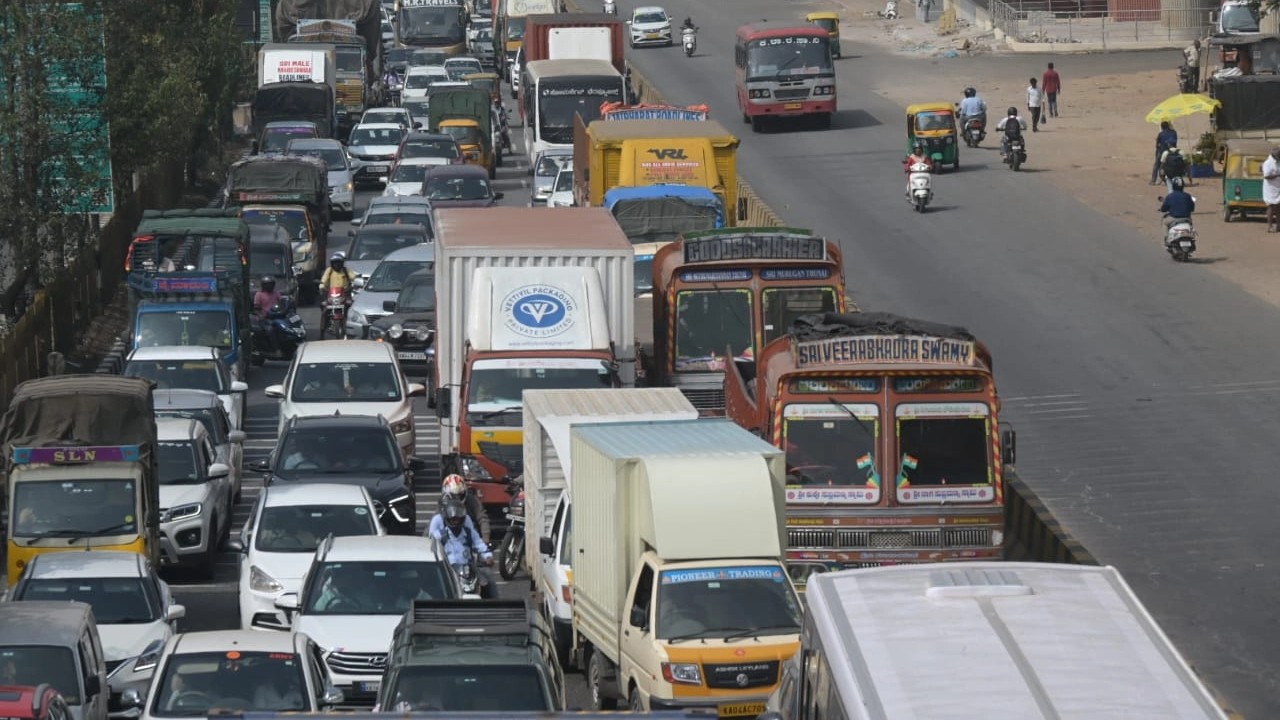
Traffic movement in Bengaluru’s industrial corridor is set to face disruptions following the closure of the Peenya flyover, prompting authorities to implement diversion plans to manage commuter flow.
The shutdown is expected to impact one of the city’s busiest stretches, widely used by industrial traffic and daily commuters.Civic and traffic officials have initiated alternate routing strategies to ease congestion, but the closure is likely to result in longer travel times and increased pressure on surrounding roads. The Peenya belt, known for its concentration of manufacturing units and logistics activity, relies heavily on efficient road connectivity to sustain operations.The development highlights the vulnerability of urban mobility systems to infrastructure constraints. In high-density corridors, even temporary closures can create cascading effects across the transport network, affecting both passenger movement and goods transportation.From an urban planning perspective, the Bengaluru Peenya flyover closure underscores the importance of redundancy in transport infrastructure. Cities with multiple route options and integrated transit systems are better equipped to absorb disruptions without significant impact on daily operations.Experts note that industrial zones such as Peenya require robust and well-maintained connectivity to support economic activity.
Any disruption in these areas can affect supply chains, delivery schedules, and workforce mobility, leading to broader economic implications.The Bengaluru Peenya flyover closure also brings attention to the need for regular infrastructure audits and timely maintenance. Proactive identification of structural issues can help prevent sudden shutdowns, allowing for planned interventions that minimise disruption.Urban mobility specialists emphasise the role of public transport in mitigating the impact of such closures.Strengthening metro connectivity, bus services, and last-mile links can provide commuters with viable alternatives, reducing reliance on road networks.There are also environmental considerations. Increased congestion due to diversions can lead to higher vehicle emissions and fuel consumption, adding to the city’s pollution burden. Efficient traffic management and staggered work timings could help reduce peak-hour pressure.Authorities are expected to monitor traffic conditions closely and make adjustments to diversion plans as needed.Clear communication with commuters will be critical to ensuring smooth navigation during the disruption period.The situation also highlights the need for long-term investments in resilient and adaptable infrastructure. As Bengaluru continues to grow, ensuring that key transport assets are both durable and supported by alternative routes will be essential for maintaining urban efficiency.
As the city navigates the impact of the closure, the focus will be on balancing immediate traffic management with long-term planning solutions. The Bengaluru Peenya flyover closure serves as a reminder that infrastructure reliability is central to sustaining both mobility and economic activity in rapidly expanding urban centres.
Also Read:Bengaluru Flood Mitigation Works Face Strict May Deadline
