Bengaluru Night Temperatures Rise Despite Light Rain
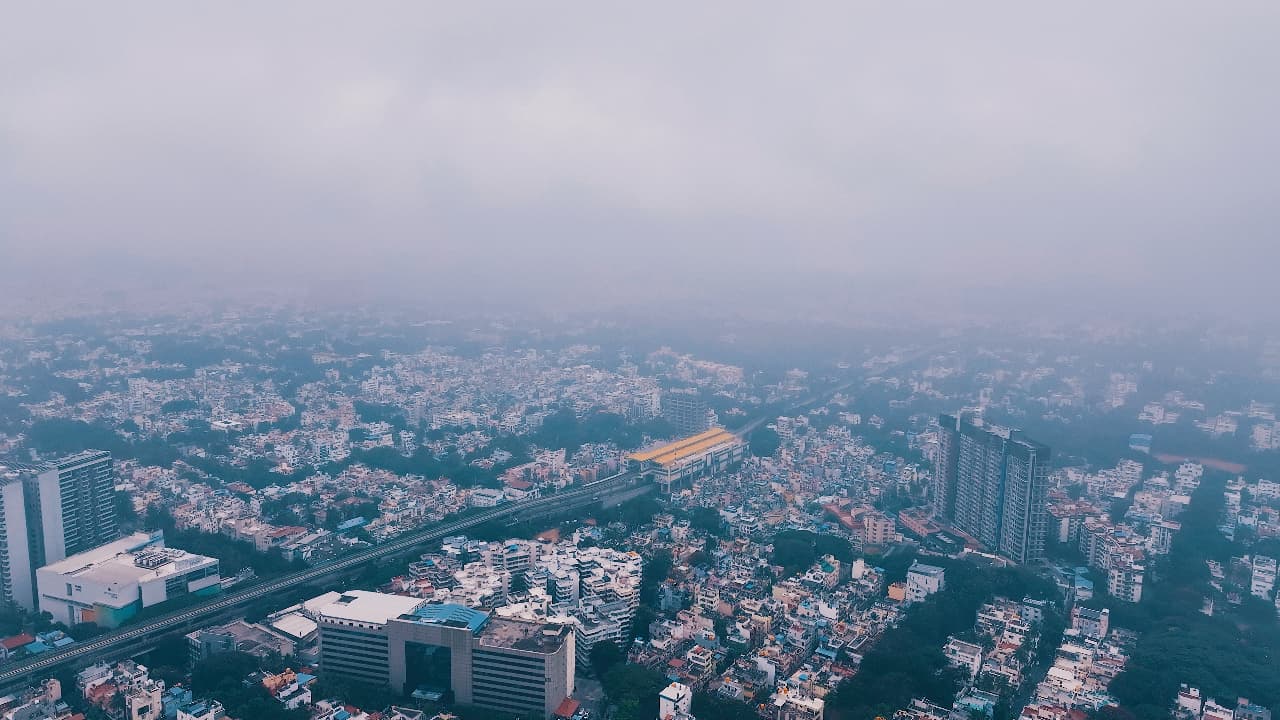
Bengaluru began the week under overcast skies with intermittent light rain, even as night-time temperatures across Karnataka showed a gradual rise. The changing weather pattern, driven by increased cloud cover, signals a short-term shift in winter conditions that carries implications for urban mobility, air quality, and energy consumption in the state’s largest city.
The city experienced a cool start to the week, marked by passing drizzles, moderate winds, and relatively high humidity levels. While daytime temperatures have remained slightly subdued, cloud cover has limited heat loss after sunset, resulting in milder nights. Meteorologists tracking regional circulation patterns note that moisture-laden clouds moving in from the Bay of Bengal are influencing temperature behaviour across much of southern India. For Bengaluru, these conditions mean a brief overlap of light rain activity and rising minimum temperatures. While no prolonged wet spell is expected, isolated drizzles may continue in pockets of the city before drier weather takes hold later in the week. Air quality levels have remained within the moderate range, a factor closely monitored by urban health experts as weather transitions often affect pollutant dispersion in dense metropolitan areas.
Across Karnataka, the impact of cloud cover has been more pronounced during night hours, particularly in interior districts. Several regions that recently recorded sharp winter chills have seen minimum temperatures edge upward, narrowing the gap between day and night readings. In the northern plains, some districts still reported relatively cool conditions, but even there, night-time lows have moderated compared to earlier in the month. Coastal Karnataka is expected to remain largely dry, with stable temperatures supported by maritime influences. In contrast, parts of the southern interior—particularly hilly and forested districts may experience occasional light rain due to residual moisture and localised cloud formation. These variations underline the state’s diverse microclimates and the challenge of issuing uniform weather advisories across regions.
Urban planners and climate researchers say such patterns highlight the growing complexity of managing cities under shifting climatic conditions. Warmer winter nights can increase electricity demand due to higher humidity and reduced thermal comfort, even as cooler days limit solar heat gain in buildings. Transport authorities also monitor these shifts, as light rain combined with cloud cover can affect traffic flow and commuter safety during peak hours.
Looking ahead, Bengaluru is expected to transition into a largely dry phase with gradual clearing of skies. While winter is far from over, the current weather episode underscores how short-lived climatic fluctuations are becoming more frequent. For residents, the immediate takeaway is milder nights and occasional drizzles. For policymakers, the episode reinforces the need for climate-responsive urban systems that can adapt to increasingly variable weather without compromising sustainability or public well-being.