


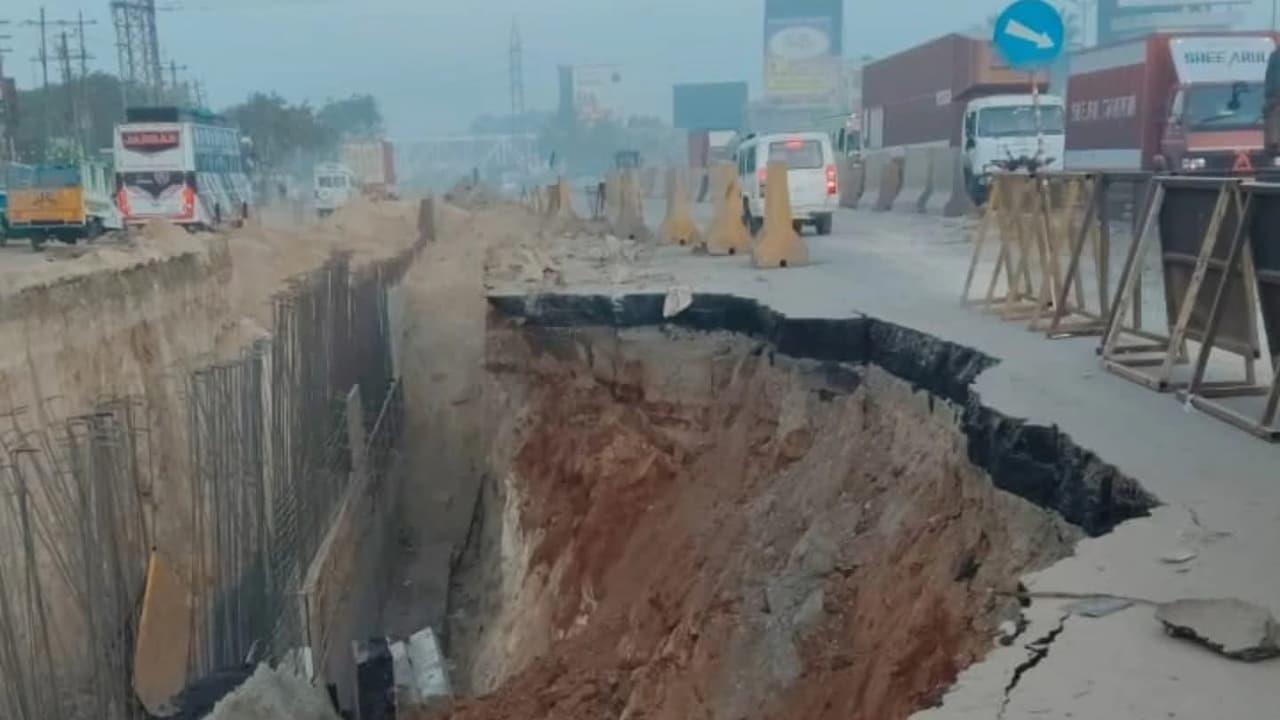
BENGALURU — A sudden collapse along a key stretch of National Highway 44 on the southern edge of Bengaluru this week brought one of the region’s most critical transport corridors to a near standstill, disrupting daily commutes, freight movement and interstate connectivity. The incident, which resulted in a large sinkhole near a fast-growing peri-urban zone, has renewed scrutiny of infrastructure resilience in rapidly urbanising corridors.
NH-44 serves as a vital economic artery linking Bengaluru with industrial clusters in neighbouring states. The cave-in narrowed traffic movement to limited lanes, triggering hours-long congestion and forcing heavy vehicles, buses and emergency services onto already strained service roads. For thousands of workers commuting between the city and surrounding employment hubs, the disruption translated into lost work hours and heightened safety risks. Officials overseeing highway maintenance indicated that the collapse occurred near an active construction zone where elevated structures and service road upgrades are underway. Preliminary assessments suggest sub-surface instability, possibly aggravated by excavation activity and sustained heavy vehicular loads. Urban infrastructure experts note that such failures often reflect gaps in geotechnical assessment and phased construction management, particularly in high-traffic corridors. The episode underscores the pressures facing Bengaluru’s expanding metropolitan region, where infrastructure upgrades are racing to keep pace with growth. Peri-urban highways increasingly function as urban streets, carrying local traffic, freight and public transport simultaneously. Without design standards that reflect this transition, vulnerabilities in road foundations, drainage systems and load management are more likely to surface.
From an economic standpoint, the disruption extends beyond inconvenience. NH-44 is a logistics spine for manufacturing, warehousing and agri-supply chains. Delays along this route affect time-sensitive deliveries and increase transport costs, with ripple effects across regional markets. Industry representatives warn that recurring infrastructure failures can erode investor confidence in emerging industrial and logistics zones around Bengaluru. Urban planners also point to the environmental dimension of the incident. Large sections of the city’s outskirts face altered drainage patterns due to construction and land-use change. Inadequate stormwater management and soil compaction increase the risk of subsidence, particularly during seasonal rainfall. Climate-resilient road design — including improved drainage, soil reinforcement and real-time monitoring — is increasingly seen as essential rather than optional.
Traffic authorities implemented diversions and temporary repairs, but congestion persisted as repairs progressed. Officials stated that structural restoration would prioritise safety checks before full reopening, even if that extends timelines. Public transport users and non-motorised commuters, however, remain the most exposed during such disruptions, highlighting the need for safer alternate routes and multimodal planning. The NH-44 collapse is a reminder that infrastructure expansion must be matched by rigorous oversight and long-term resilience planning. As Bengaluru continues to grow outward, the durability of its transport networks will play a decisive role in shaping economic productivity, urban safety and everyday quality of life. The coming weeks will test whether corrective measures focus only on restoration, or also on preventing similar failures across the region’s expanding road network.
Also Read: Pune Mumbai Expressway Shutdown Tests Emergency Readiness
Bengaluru NH44 Collapse Disrupts Regional Mobility
