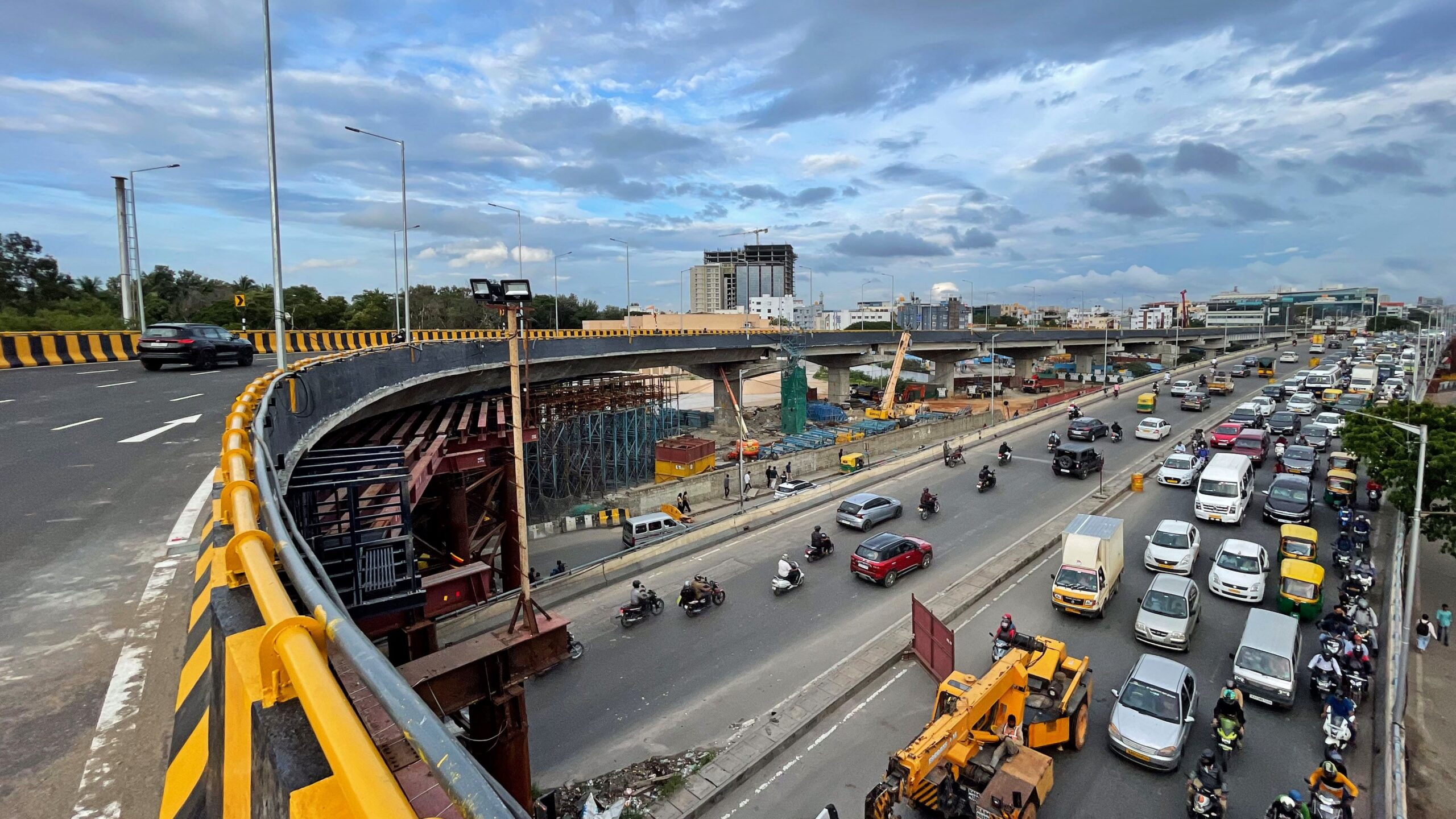
Bengaluru’s ongoing urban infrastructure maintenance has prompted temporary traffic curbs along a key stretch of Mysore Road, highlighting the city’s challenge of balancing mobility with safety and resilient urban design. The bridge repair, scheduled for the evening of February 6, aims to reinforce structural integrity and ensure safe commuting for thousands of daily travellers, while necessitating careful traffic management across adjoining routes.
Urban transport officials have outlined alternate corridors to minimise congestion during the repair window, reflecting the growing need for proactive planning in high-density zones. Vehicles approaching from Mysore Road towards the university sector are advised to detour via Jnanabharathi Junction, Jairamdas Junction, and Muthyalanagar Government Press Road before reaching the campus area. Likewise, traffic from Ullal and Mariyappanapalya junctions can bypass the worksite through Bengaluru University Head Office Circle, Nagarbhavi Main Road, and Nagarbhavi Ring Road. These adjustments are intended to prevent bottlenecks and maintain steady flow in the surrounding residential and institutional precincts.
Experts note that short-term disruptions such as these underscore the importance of integrating resilience into urban mobility planning. “Scheduled maintenance of bridges is critical, yet it must be paired with real-time traffic coordination and citizen-friendly communications,” a senior urban planner observed. Bridges in rapidly expanding metropolitan corridors are not merely transport nodes; they are linchpins of economic activity, linking residential areas with educational, commercial, and industrial zones. Unplanned congestion can ripple across supply chains and local commerce, highlighting the interconnected nature of urban infrastructure. From an environmental perspective, managed traffic diversion also mitigates the risk of idling vehicles contributing to emissions spikes. Industry analysts emphasise that Bengaluru’s commitment to climate-conscious urban growth increasingly requires synchronising civil works with low-carbon transport solutions and public transit alternatives.
For residents and businesses, the bridge repair presents both a temporary inconvenience and a longer-term gain. While commuters must navigate slightly longer routes on February 6, the structural upgrade is expected to extend the bridge’s operational lifespan and reinforce public safety, aligning with broader city goals of climate-resilient, inclusive, and sustainable infrastructure. Looking ahead, urban authorities are encouraged to embed predictive maintenance schedules and digital traffic management tools to reduce disruption and support equitable mobility. As Bengaluru continues its infrastructure modernisation, balancing citizen convenience, environmental impact, and infrastructural robustness remains central to building a resilient, future-ready city.