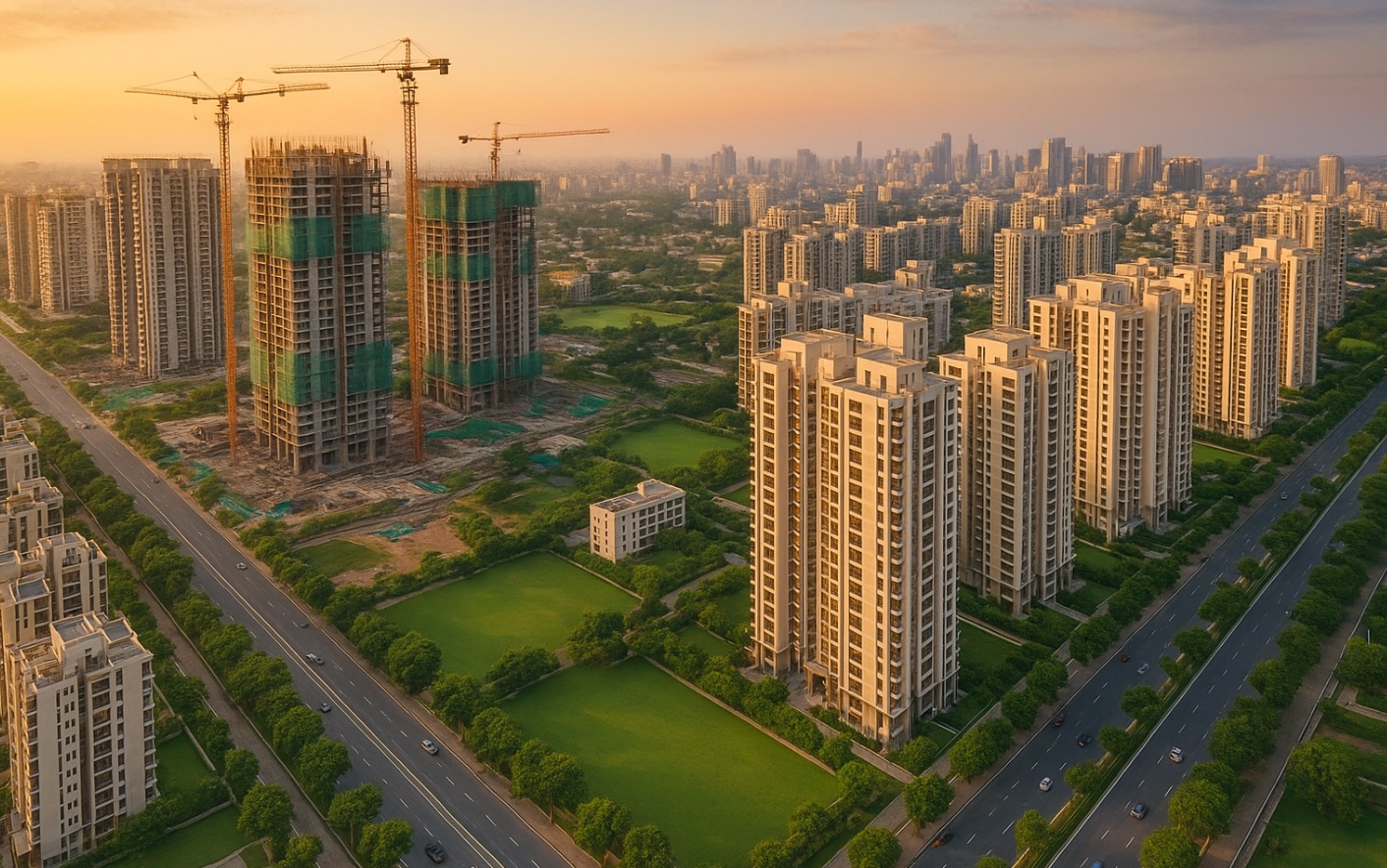
Bengaluru Mumbai And GIFT City Attract Real Estate Attention
Urban and financial planners are increasingly evaluating Indian cities as potential alternatives to Dubai’s real estate and business ecosystem, amid ongoing regional geopolitical uncertainties in the Middle East. A recent online discussion highlighted Mumbai, Bengaluru, and Gujarat’s GIFT City as candidates for attracting investment that might otherwise flow to Dubai, triggering debate over feasibility and long-term urban implications.
GIFT City, formally the Gujarat International Finance Tec-City, has emerged as India’s only operational International Financial Services Centre. Spanning 880 acres along the Sabarmati River between Ahmedabad and Gandhinagar, the city combines a Special Economic Zone and non-SEZ areas to support financial services, IT, and residential development. Currently, approximately 30% of the city is functional, with another 30% designated for residential projects. Residential units average around ₹10,000 per sq ft, while commercial office rentals range from ₹50 to ₹100 per sq ft monthly, suggesting a more accessible entry point for global investors than Dubai’s premium markets. Urban planners note that GIFT City’s integration of smart infrastructure and finance-oriented design positions it uniquely as a climate-conscious, mixed-use hub with international appeal.
Mumbai, India’s financial capital, retains a concentration of prime commercial districts such as the Bandra Kurla Complex, alongside emergent zones in Navi Mumbai and peripheral areas collectively termed Mumbai 3.0. Experts indicate that Mumbai’s deep financial ecosystem, extensive domestic market, and coastal location provide conditions for replicating certain aspects of Dubai’s lifestyle at a lower cost. Residential prices in these regions range from ₹15,000 to ₹2 lakh per sq ft, while commercial rentals can exceed ₹1,000 per sq ft in top-tier locations, reflecting both opportunity and affordability considerations for institutional investors. Bengaluru leverages its technology-driven economy and thriving startup ecosystem to attract multinational office demand, particularly from global capability centres. Prime residential properties in the city typically range from ₹8,000 to ₹18,000 per sq ft, while Grade A office rentals are ₹70–₹130 per sq ft monthly.
Analysts suggest that the city’s innovation focus and strong human capital create an alternative investment narrative distinct from Dubai’s luxury-oriented real estate model. Despite these prospects, senior real estate analysts caution that no Indian city currently matches Dubai’s scale in capital inflows, tax incentives, luxury inventory, or integrated infrastructure. They emphasise that structural resilience, policy stability, and urban planning will determine whether India’s emerging hubs can progressively absorb investment shifts from the Middle East. The trajectory of these cities will depend not only on market dynamics but also on sustainable development strategies that balance economic growth with climate resilience and inclusive urbanisation.