


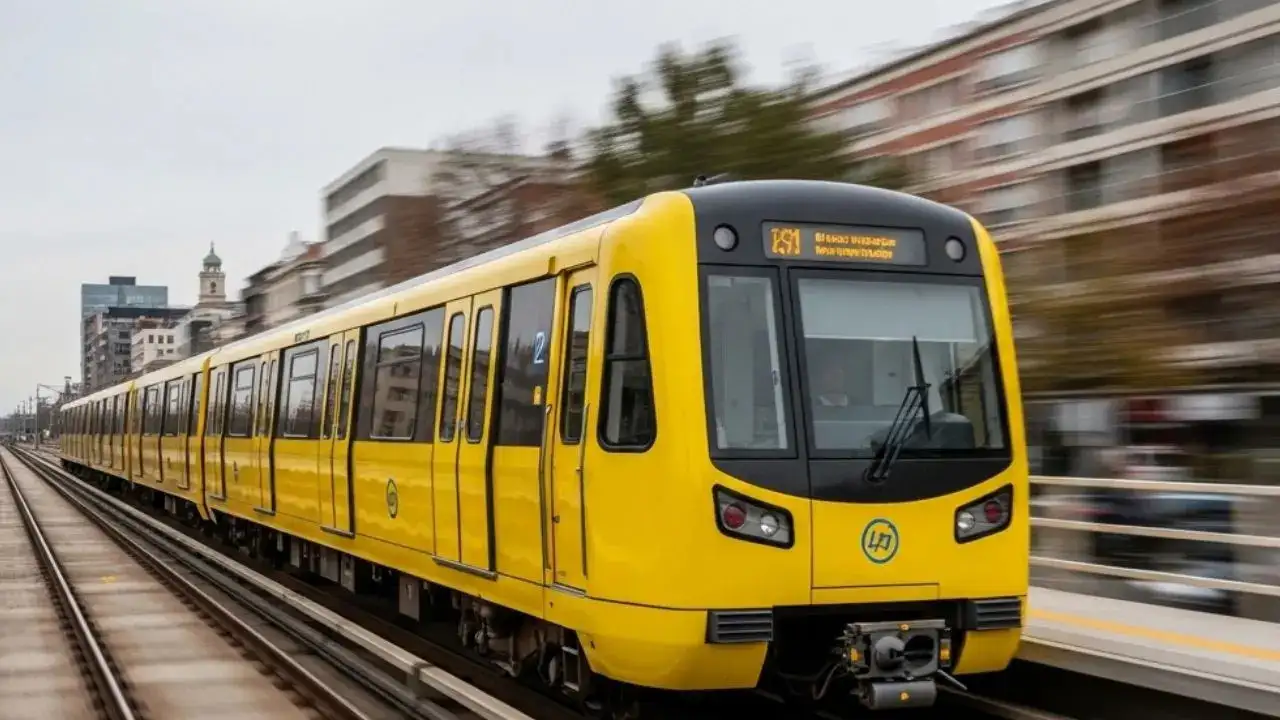
Bengaluru’s much-anticipated Yellow Line metro service is set to launch on August 10, bringing a significant shift in urban mobility for residents travelling between central and southern parts of the city. Designed to connect major employment and residential hubs including the bustling Electronic City, the new 19.15-kilometre corridor is poised to reduce travel time, decongest key traffic bottlenecks, and elevate the city’s multimodal transport ecosystem.
Officials confirmed that the Yellow Line, which runs between RV Road and Bommasandra, will be inaugurated by the Prime Minister. The new line features 16 stations, linking important points such as Silk Board Junction, BTM Layout, Jayadeva Hospital, and several tech and industrial zones. This corridor is expected to serve up to 8 lakh daily commuters, many of whom currently endure prolonged road commutes due to heavy congestion in south Bengaluru. As part of the metro expansion strategy, the Prime Minister is also expected to lay the foundation stone for Phase-3 of the Namma Metro network, adding 44.65 kilometres of new lines at an investment of ₹15,611 crore. The Yellow Line project alone has been built at a cost of approximately ₹5,056.99 crore, demonstrating the government’s commitment to strengthening public transport infrastructure in India’s tech capital.
Metro services on the Yellow Line will run from 5 AM to 11 PM daily, with a frequency of every 25 minutes. Commuters will be able to complete a one-way journey between RV Road and Bommasandra in roughly 38 minutes. Fares are structured between ₹10 and ₹90, making it an accessible and economical option for the city’s growing working population. The new line also enhances integration with other existing and upcoming metro corridors. RV Road will provide interchange access to the Green Line, which connects Nagasandra to Silk Institute. Jayadeva Hospital will become a future interchange with the upcoming Pink Line, while Central Silk Board is set to link with the future Blue Line, which will extend connectivity to Bengaluru International Airport.
Officials have called this launch a turning point in Bengaluru’s transport journey. The Yellow Line’s alignment through notoriously congested locations such as Silk Board is expected to ease road traffic and bring time-saving benefits to thousands of commuters daily. The line will also help reduce vehicle emissions, contributing to the city’s long-term climate and sustainability goals. Once fully operational, the corridor is likely to create ripple effects across real estate, employment hubs, and last-mile connectivity services. It reinforces Bengaluru’s push towards becoming a more accessible, liveable, and environmentally responsive city, while addressing the immediate needs of its urban commuters.
Also Read : Supreme Court Clears State Nod For 20k To 150k Sqm Projects
