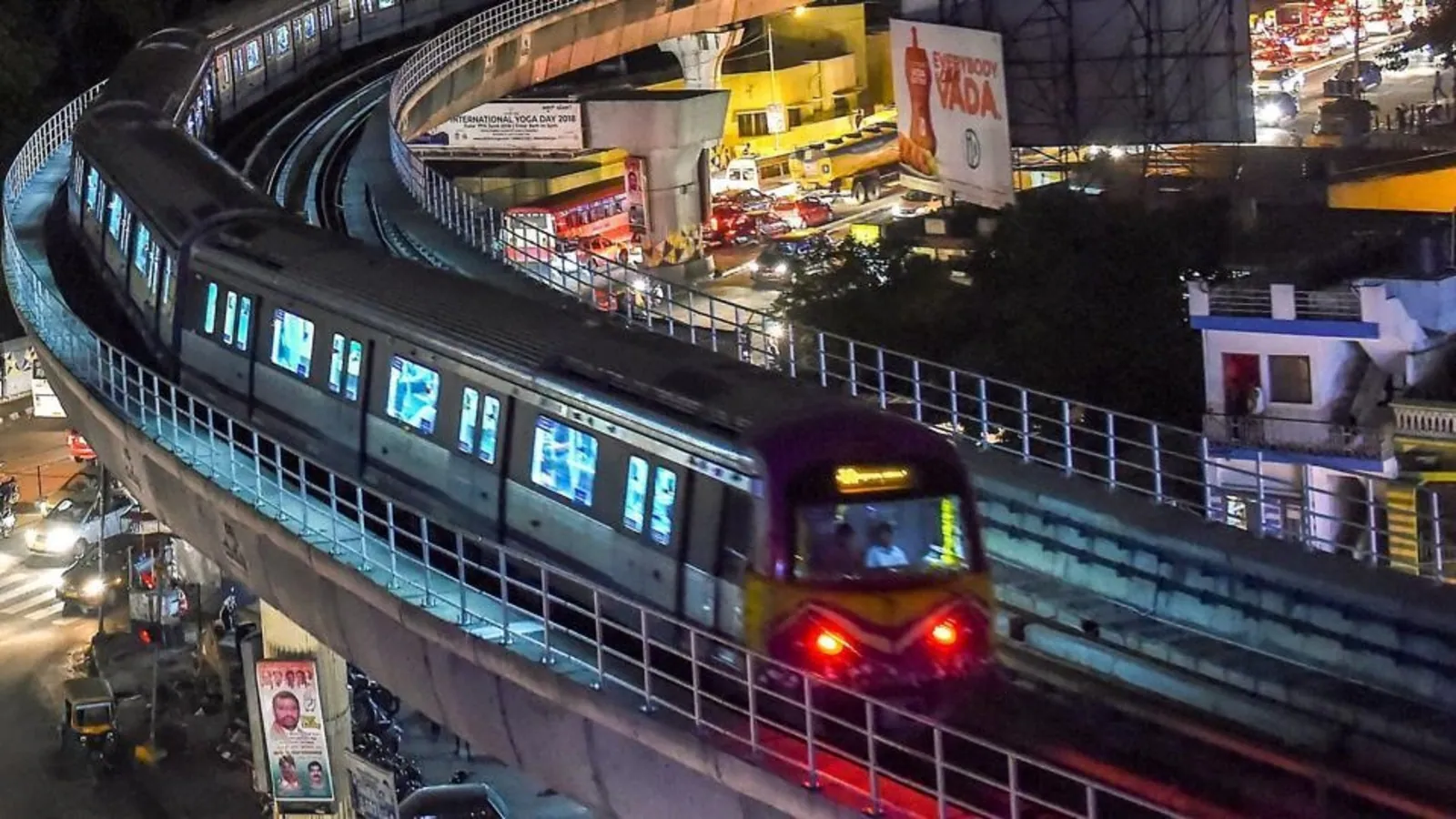
Bengaluru Metro Yellow Line Nears Launch After Safety Clearance
Bengaluru’s long-awaited Metro Yellow Line has moved a step closer to reality after receiving the Independent Safety Assessment (ISA) clearance, paving the way for final inspection by the Commissioner of Metro Railway Safety (CMRS). The delayed ISA, issued by an international agency in collaboration with a local technology partner, had been held up due to technical software updates. With the latest clearance, the Bangalore Metro Rail Corporation Ltd (BMRCL) can now initiate the last-mile inspection and fast-track the commissioning of the line. Officials now expect the Yellow Line, part of Phase 2, to be operational by mid-August, marking a major milestone in the city’s mass transit infrastructure journey.
The Yellow Line, which runs between RV Road and Bommasandra, is projected to significantly decongest south Bengaluru’s traffic-clogged corridors. With crucial IT parks, educational institutions, and residential zones lying along the route, the metro line is expected to ease commuter stress and reduce dependency on private vehicles. Transport experts point out that this connectivity will improve accessibility for daily wage earners and office workers alike, allowing more inclusive urban mobility. The project’s delays—originally slated for mid-2023—had raised public concern over sluggish urban transport delivery, prompting renewed calls for efficiency in metro expansion timelines. The fresh clearance is seen as a positive step toward closing these gaps and enhancing Bengaluru’s green transport framework. Officials indicate that the CMRS inspection will begin shortly, which includes detailed checks of signalling, power supply, emergency readiness, and alignment consistency.
Such rigorous scrutiny is essential to ensure safety and operational stability, especially as Bengaluru expands its metro network. Urban planners stress that beyond mere speed, quality assurance in infrastructure delivery should be central to all public transit projects. They argue that delays in critical assessments reflect a deeper need for digitised coordination between multiple government agencies. Moreover, future phases of metro expansion will need to integrate built-in timelines for international collaboration, particularly when software and systems are sourced globally. The Yellow Line’s progress, although delayed, offers a blueprint for refining these coordination mechanisms. This development also brings renewed attention to Transit-Oriented Development (TOD), a key urban strategy aiming to create high-density, mixed-use zones around metro stations.
By linking housing, employment hubs, and commercial areas more efficiently, TOD can transform metro corridors into economic lifelines. Local stakeholders are pushing for uniform metro train designs and streamlined approvals to support manufacturing efficiencies and ensure that India’s metro networks are future-ready. Analysts note that integrating TOD with sustainable planning can reduce carbon footprints, encourage walkability, and cut down on traffic-induced pollution—an especially urgent goal for Bengaluru, which frequently ranks high in urban congestion indices. Thus, the Yellow Line’s readiness has implications beyond transport—it signals a shift towards smarter, climate-aligned urban growth.
As Bengaluru prepares for the final round of safety inspections, the Yellow Line’s commissioning is not just a metro milestone but a litmus test for how Indian cities can align infrastructure delivery with climate resilience, commuter dignity, and systemic transparency. Whether this line becomes a model for timely, sustainable metro expansion will depend on how efficiently the remaining processes unfold and how inclusive the benefits turn out to be for the city’s residents.