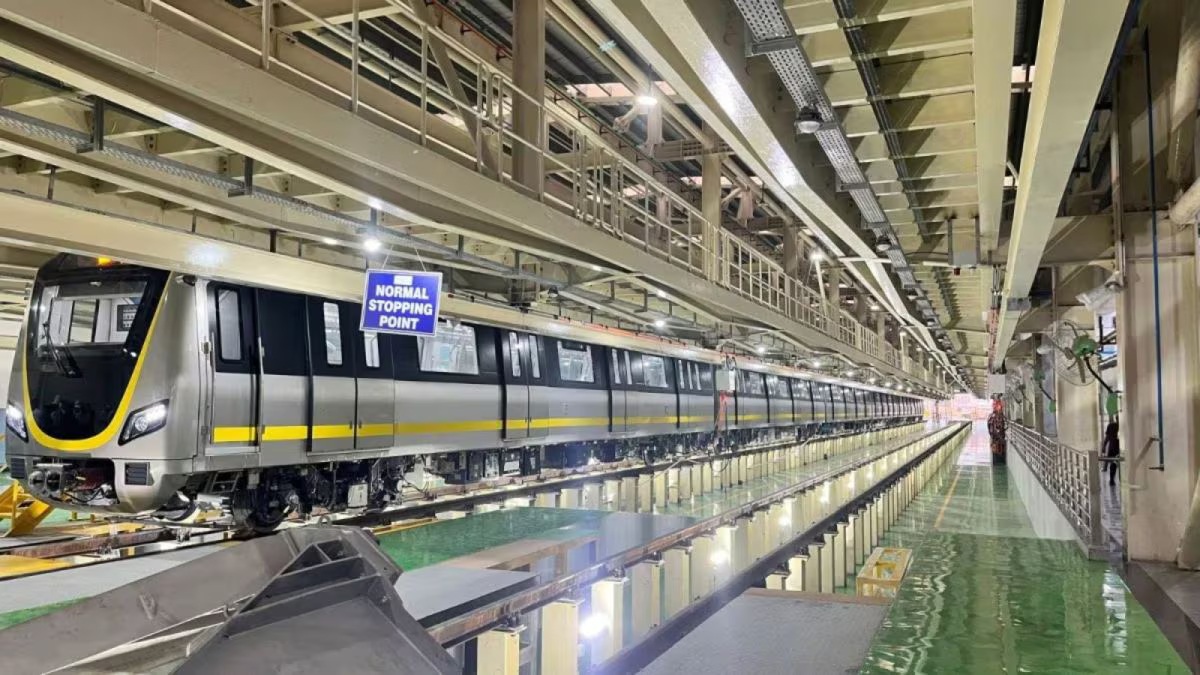
Bengaluru Metro Yellow Line Improves Train Frequency
Bengaluru’s Metro network is set to ease daily commutes as the Yellow Line reduces waiting times with the addition of a new trainset. From February 27, commuters on this critical corridor can expect trains to arrive more frequently, marking a strategic step in improving the city’s urban mobility ecosystem. Officials highlight that this move aims to better manage peak-hour crowding and optimise operational efficiency without extending service hours.
The Yellow Line, which links R V Road in the north to Bommasandra in the south, carries a substantial portion of the city’s workforce, including office-goers and service sector employees. By introducing an eighth train, peak-hour intervals are now nine minutes instead of ten, while off-peak frequency will improve from 18 minutes to 14. Weekday schedules will reflect these changes, though Sunday operations remain unchanged. Terminal station timings will also stay consistent, preserving first and last train schedules.
Urban planners and transport analysts see this as a measured step toward creating a more resilient and people-centric public transport system. Reduced waiting times can decrease reliance on private vehicles, indirectly supporting Bengaluru’s climate and traffic management goals. “Incremental capacity increases like this can alleviate congestion, encourage commuter adoption of public transit, and align with broader zero-carbon urban strategies,” a transport consultant observed. Economically, improved metro frequency can also have a ripple effect on business districts along the Yellow Line. Shorter wait times make daily commutes more predictable, supporting workforce punctuality and productivity. It can also influence real estate dynamics, with enhanced accessibility potentially increasing demand for residential and commercial spaces adjacent to metro stations.
From an operational perspective, introducing a new trainset requires synchronised scheduling, additional staff deployment, and maintenance adjustments. BMRCL officials note that the initiative is part of ongoing efforts to optimise existing assets before expanding lines further, reflecting a fiscally responsible and sustainable approach to urban transit development. For Bengaluru residents, the benefits are immediate: more frequent services during high-demand hours, shorter idle time on platforms, and a marginally faster transit experience. Looking ahead, continuous monitoring of commuter volumes and service efficiency will determine if further expansions are required. Strategic, data-driven enhancements like this underscore the importance of scalable, climate-conscious infrastructure in rapidly growing Indian cities.