


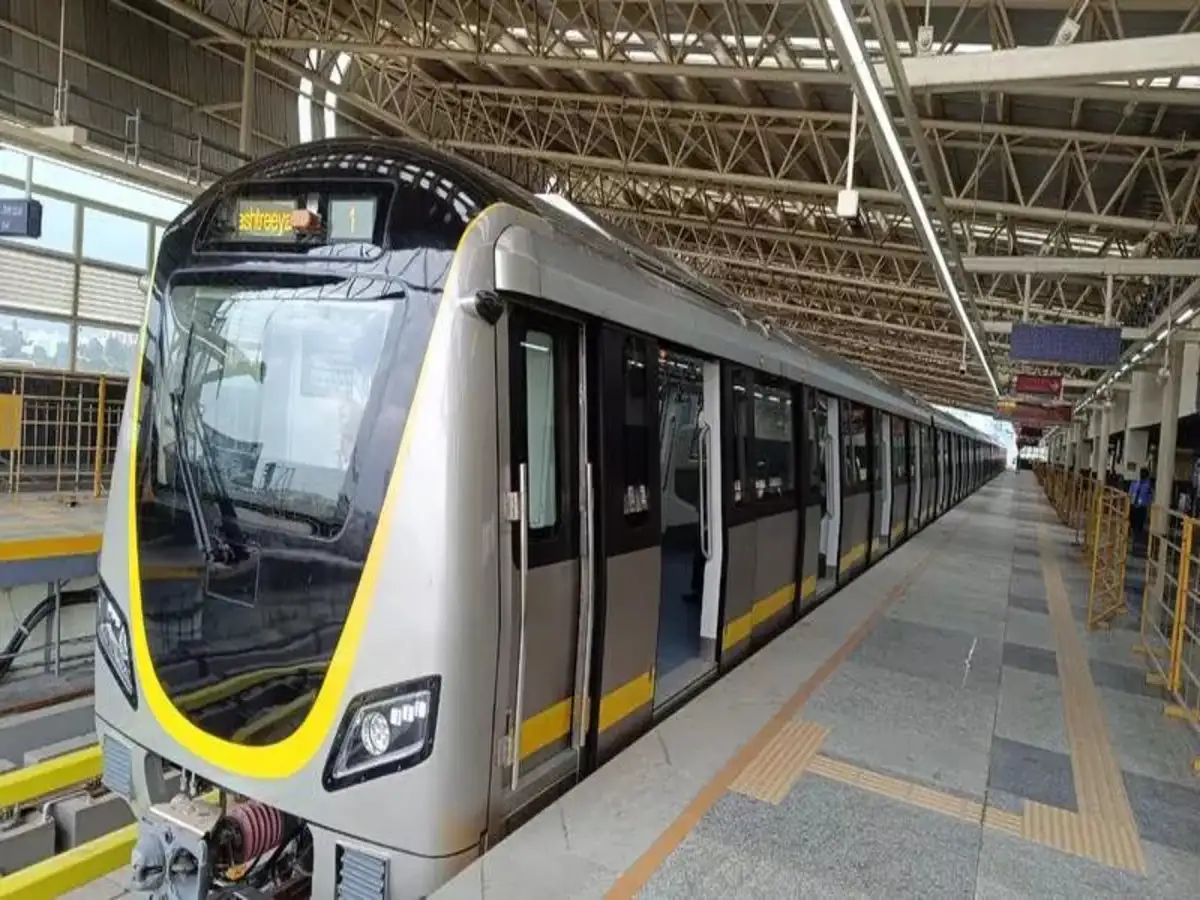
Bengaluru’s public transport network is set for a significant boost as the Bengaluru Metropolitan Transport Corporation (BMTC) launches four new Metro Feeder routes to complement the recently operational Yellow Line. The expanded network will operate 96 daily trips across six key stations in Electronics City, connecting commuters efficiently to the metro and major city hubs.
The new feeder routes link Hosur Road, Beretena Agrahara, Electronics City, Infosys Foundation Konappana Agrahara, Hebbagodi, and Bommasandra. Officials highlighted that the initiative is designed to improve first- and last-mile connectivity, making public transit more attractive, reducing private vehicle usage, and enhancing sustainable urban mobility. BMTC, which currently facilitates over 44 lakh daily passenger trips via more than 65,000 journeys, has steadily expanded its feeder services since 2023. The corporation’s earlier initiatives, including services at KR Puram Railway Station and BTM Layout Bus Stand, now cover 45 routes with 2,750 daily trips, serving over 1.2 lakh passengers.
Electronics City, one of Bengaluru’s busiest technology and industrial corridors, was a focal point for this expansion. The surrounding Hosur Road corridor already sees 3,000 BMTC trips daily across 100 routes. Wipro Gate alone is served by 14 bus routes running 700 trips per day, while 18 NICE Road routes connect Electronics City and Wipro Gate to central city hubs, catering to roughly 14,000 commuters daily. The newly launched feeder services are detailed as follows: Route MF-22 will connect Electronics City Wipro Gate to Kodathi Wipro via Konappana Agrahara, Hosur Road, and Kasavanahalli, operating four buses over 32 daily trips. Route MF-22A will run via Huskur Gate and Chandapura Cross, operating four buses over 24 daily trips. Routes MF-22B and MF-22C are loop services covering Bommasandra, Hebbagodi, and Konappana Agrahara, running two buses each for 20 trips per day.
In addition, BMTC has integrated digital tracking through QR codes at metro stations and inside feeder buses, allowing commuters to plan journeys efficiently, monitor bus arrivals, and track schedules in real-time. This tech-enabled solution further strengthens Bengaluru’s commitment to sustainable, gender-neutral, and equitable urban transport. Experts emphasise that improving metro feeder connectivity is pivotal for sustainable urban transit, reducing road congestion, lowering carbon emissions, and encouraging public transport adoption. The Electronics City expansion marks a step toward a more integrated, commuter-centric mobility ecosystem, linking industrial hubs with metro services to ensure efficient, eco-friendly travel for residents and employees alike.
Officials also noted that these initiatives align with long-term plans to establish Bengaluru as a smart, sustainable city with enhanced multi-modal public transport networks. By bridging gaps between metro stations and workplaces, BMTC’s feeder services aim to create a seamless commuting experience, enhancing the city’s overall mobility and sustainability goals.
Also Read :Chennai Metro Plans Guindy Multimodal Transit Hub DPR
