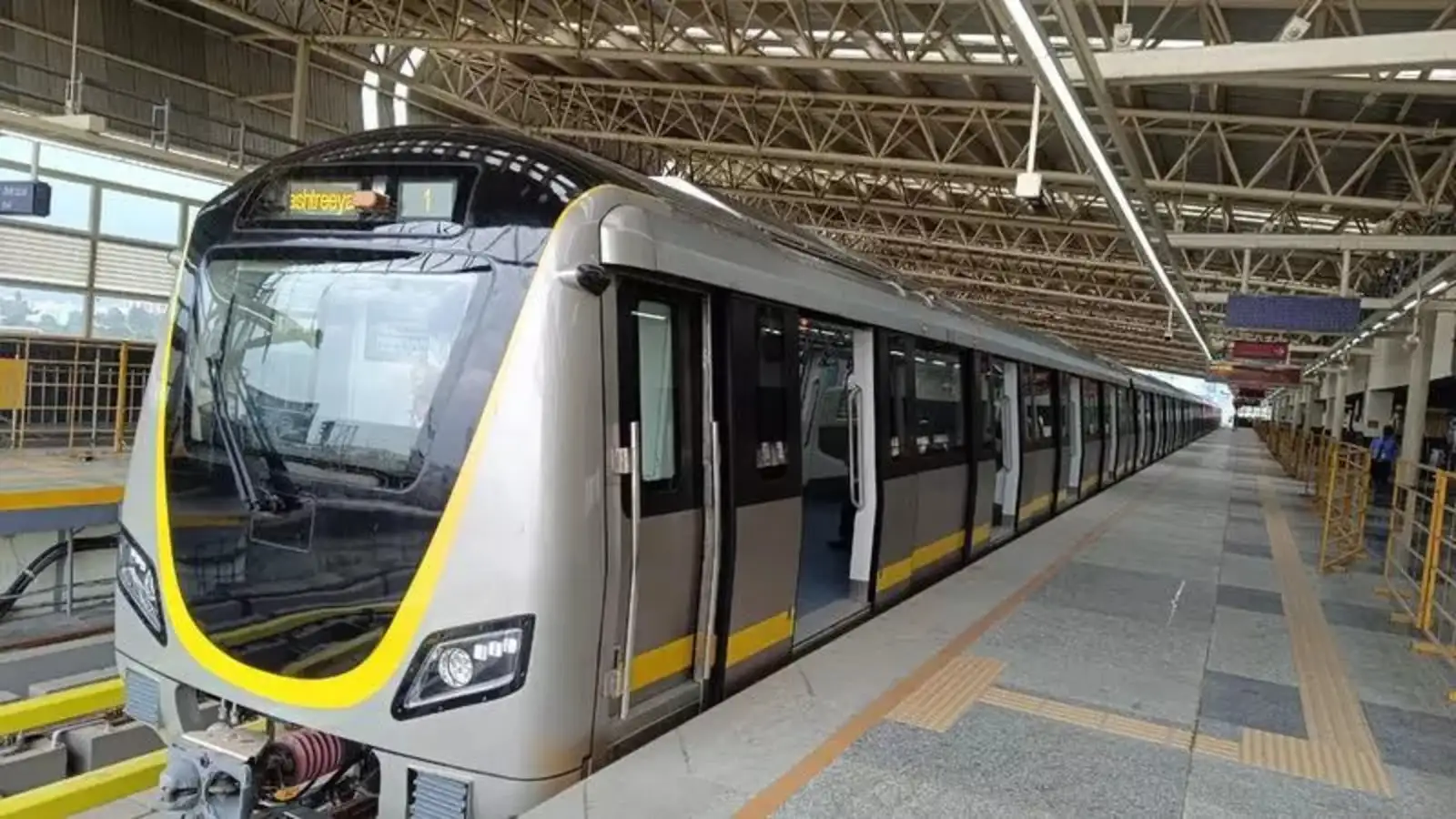
Bengaluru Metro Yellow Line adds fourth trainset to ease rush
Bengaluru’s crowded Yellow Line could soon see some relief as an additional trainset is readied for deployment by mid-September. The Bengaluru Metro Rail Corporation Ltd (BMRCL) confirmed that the fourth trainset, already under mainline testing, will be pressed into service in the coming weeks, offering respite to thousands of passengers enduring cramped rides during peak hours.
Currently, only three trainsets operate on the 19-kilometre Yellow Line stretch, carrying over 60,000 commuters daily. The shortage has forced BMRCL to restrict operating hours, with services beginning at 6:30 a.m. instead of the 5 a.m. start seen on other lines. The introduction of the new train is expected to ease congestion and expand service capacity, especially during early hours when passenger demand spikes.
Officials pointed to a delay in sourcing critical bogies from overseas as the main hurdle slowing down the delivery schedule. Under a partnership with a domestic manufacturer, bogies were meant to be supplied from China for assembly in India. However, setbacks in shipping timelines have pushed back local production of subsequent trainsets, with the sixth unit now expected to be delayed by at least two to three weeks. To mitigate the impact, a delegation is scheduled to meet in Kolkata to review supply bottlenecks and explore faster delivery channels.
Urban transport analysts highlight that Bengaluru’s dependence on external suppliers reflects the larger challenges of indigenising metro infrastructure. While the “Make in India” approach has been partially integrated into the metro ecosystem, international dependencies continue to expose city transit projects to delays. Experts argue that airlifting bogies, though costlier, would ensure timely delivery and help stabilise the city’s strained commuter network.
The urgency is underscored by the everyday reality of the Yellow Line’s ridership. Trains run overcrowded during peak hours, leaving many passengers standing for long stretches. Commuters have voiced concern over safety, travel comfort, and lost productivity. For a city struggling with chronic road congestion, a delayed metro expansion threatens to undermine efforts to create a sustainable and efficient transport ecosystem.
Industry observers also point to the broader economic impact. Delays in fleet augmentation not only affect passenger comfort but also reduce potential farebox revenues and diminish the environmental gains of shifting travellers away from private vehicles. Each additional trainset in service can lower reliance on road transport, cutting both congestion and carbon emissions. As Bengaluru expands its metro footprint, timely delivery of rolling stock remains critical. Whether through domestic manufacturing acceleration or faster import logistics, resolving the Yellow Line’s capacity challenge is now seen as essential for easing commuter pressure and keeping the city’s public transport ambitions on track.