Bengaluru Metro Ridership Back Near Pre-Hike Levels Amid Recovery Signs
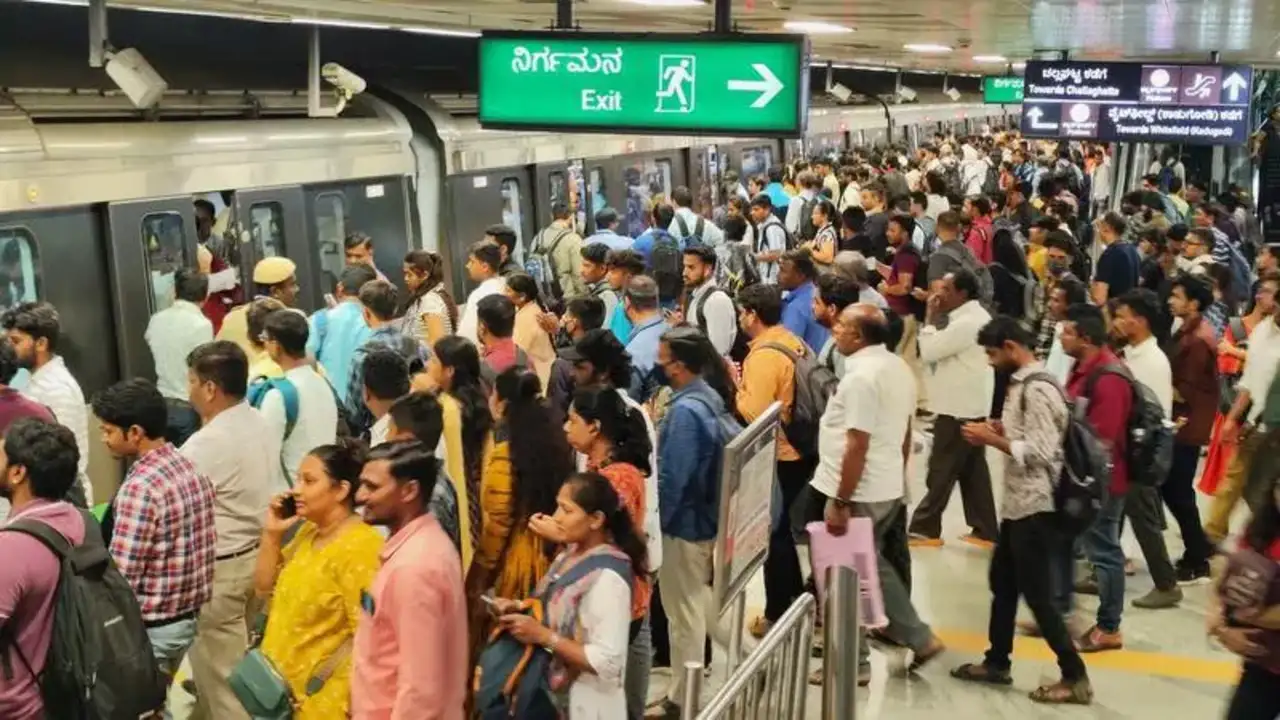
The city’s Namma Metro is witnessing a steady rebound in commuter numbers after months of fluctuating footfall following the fare hike earlier this year. Recent data reveals that average daily ridership has almost returned to pre-hike levels, indicating a renewed public trust in the rapid transit system despite earlier apprehensions. With over 8.5 lakh commuters using the metro on weekdays and signs of consistent growth, Bengaluru’s mass transit seems to be regaining its momentum. Officials expect further increases with the upcoming Yellow Line addition.
The fare hike, introduced in February, had sparked concerns about reduced accessibility and affordability for working-class residents. A 51.5% increase before discounts, capped at 71.43%, had led to a significant drop in ridership—from 8.03 lakh in January to 7.24 lakh in March. However, the latest figures suggest that the metro has nearly recovered. In June alone, the average daily passenger count reached 7.89 lakh, with weekday ridership surpassing 8.5 lakh. This rebound demonstrates the resilience of public transport demand in a city grappling with traffic congestion and rising fuel costs. Officials at the Bangalore Metro Rail Corporation Limited (BMRCL) attribute the recovery to strategic operational adjustments and continued service reliability. The corporation’s decision to limit fare increases, maintain peak-hour service frequency, and offer digital ticketing discounts appears to have softened the initial impact.
The metro’s stable operations seem to offer a more sustainable and efficient alternative to private transport. Urban planners and mobility experts believe the upward trend reflects more than just fare adaptation—it signals a broader behavioural shift. With Bengaluru’s road traffic becoming increasingly unsustainable, public transport options like the metro are gaining favour for their predictability and lower carbon footprint. This also aligns with the city’s long-term sustainability goals and net-zero mobility ambitions. Experts stress that while fare affordability remains important, expanding coverage and ensuring last-mile connectivity will be key to sustaining high ridership and drawing in new users.
Looking ahead, BMRCL is preparing to open a crucial 19.15-km stretch of the Yellow Line connecting RV Road to Bommasandra. Officials estimate that even a partial launch in August—with just three trains—could push ridership up by another 25,000 daily. Once fully operational, the Yellow Line is projected to raise overall ridership to 14 lakh. As metro usage surges, the city must now focus on integrating multimodal connectivity and ensuring commuter-centric policies that support inclusive and equitable access to mobility for all sections of society.