


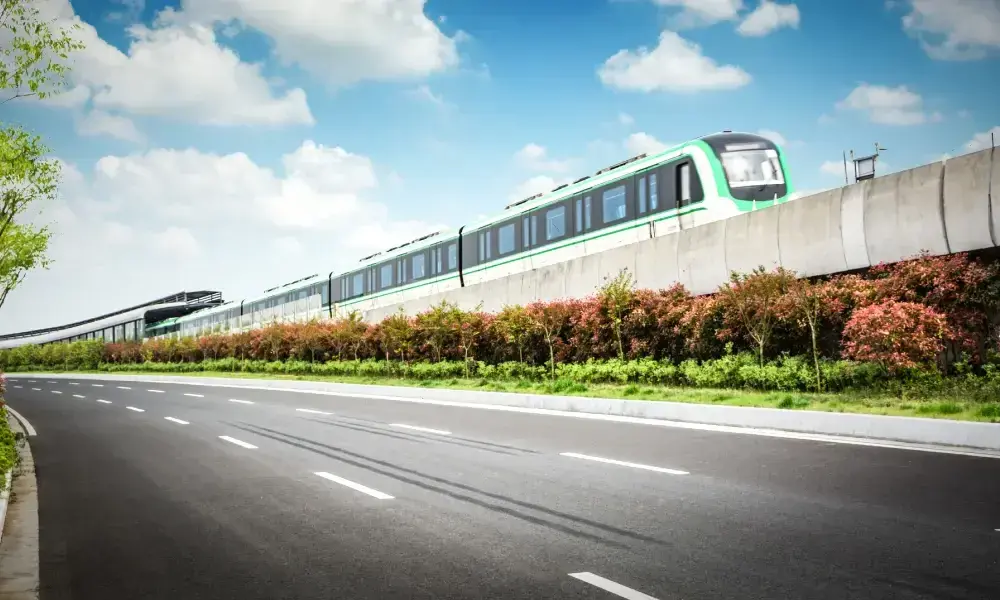
Bengaluru’s southern growth corridor is undergoing a structural shift as metro connectivity begins to redefine where and how people choose to live. The operationalisation of the Yellow Line, linking RV Road to Bommasandra, has altered residential demand patterns across Electronic City, transforming it from a peripheral employment hub into a metro-integrated housing market with rising long-term value.
The nearly 19-kilometre elevated corridor now connects key industrial, healthcare and technology nodes in under 40 minutes, replacing road commutes that previously exceeded 90 minutes during peak hours. For thousands of professionals working in Electronic City, this change has translated into tangible time savings, improved daily mobility and greater predictability factors that urban planners identify as critical drivers of residential location decisions. Real estate analysts observe that metro access has become a decisive factor in Bengaluru’s housing market, particularly as affordability pressures push buyers outward from the traditional central business districts. Electronic City, once viewed primarily as a workplace destination, is now being evaluated as a residential base offering both employment proximity and citywide connectivity. This shift reflects a broader urban trend where transport infrastructure, rather than distance alone, determines perceived liveability. Data from multiple market trackers indicates that neighbourhoods aligned with operational metro lines consistently outperform road-dependent micro-markets. Properties located within walking distance of stations typically command premiums of 10–20 per cent, especially where social infrastructure such as schools, hospitals and retail clusters already exists. Along the Yellow Line, this effect is becoming visible across Electronic City Phase 1, Phase 2 and the Hosur Road–Bommasandra belt.
Industry experts note that price appreciation in Electronic City has accelerated since the metro line moved from planning to execution. While values remain below inner-city benchmarks, steady growth has attracted both end users and long-term investors seeking relatively resilient demand. Larger configurations, including three- and four-bedroom homes, are seeing increased interest as commuting constraints ease and families prioritise space, amenities and work–life balance. Beyond pricing, the metro has influenced the nature of housing demand. Developers are reporting stronger absorption in projects offering integrated amenities, shared green spaces and flexible work areas, reflecting changing household needs in a post-pandemic urban economy. For senior professionals and non-resident Indians, metro connectivity has reduced the perceived trade-off between location and lifestyle. Urban transport specialists caution, however, that infrastructure-led growth must be matched by responsible planning. As Electronic City densifies, attention will need to focus on last-mile connectivity, pedestrian safety, water management and energy-efficient building design to ensure that growth remains climate-resilient and people-centric.
Looking ahead, proposed extensions towards Attibele and Hosur are expected to further reinforce the corridor’s role in Bengaluru’s southern expansion. For the city, the Electronic City experience underscores a larger lesson: when mass transit delivers reliability and scale, it does more than move commuters it reshapes housing markets, redistributes opportunity and sets the foundation for more sustainable urban growth.
Also Read: ITC Hotels Adds Managed Property In Dehradun
Bengaluru Metro Reshapes Housing Demand In Electronic City
