


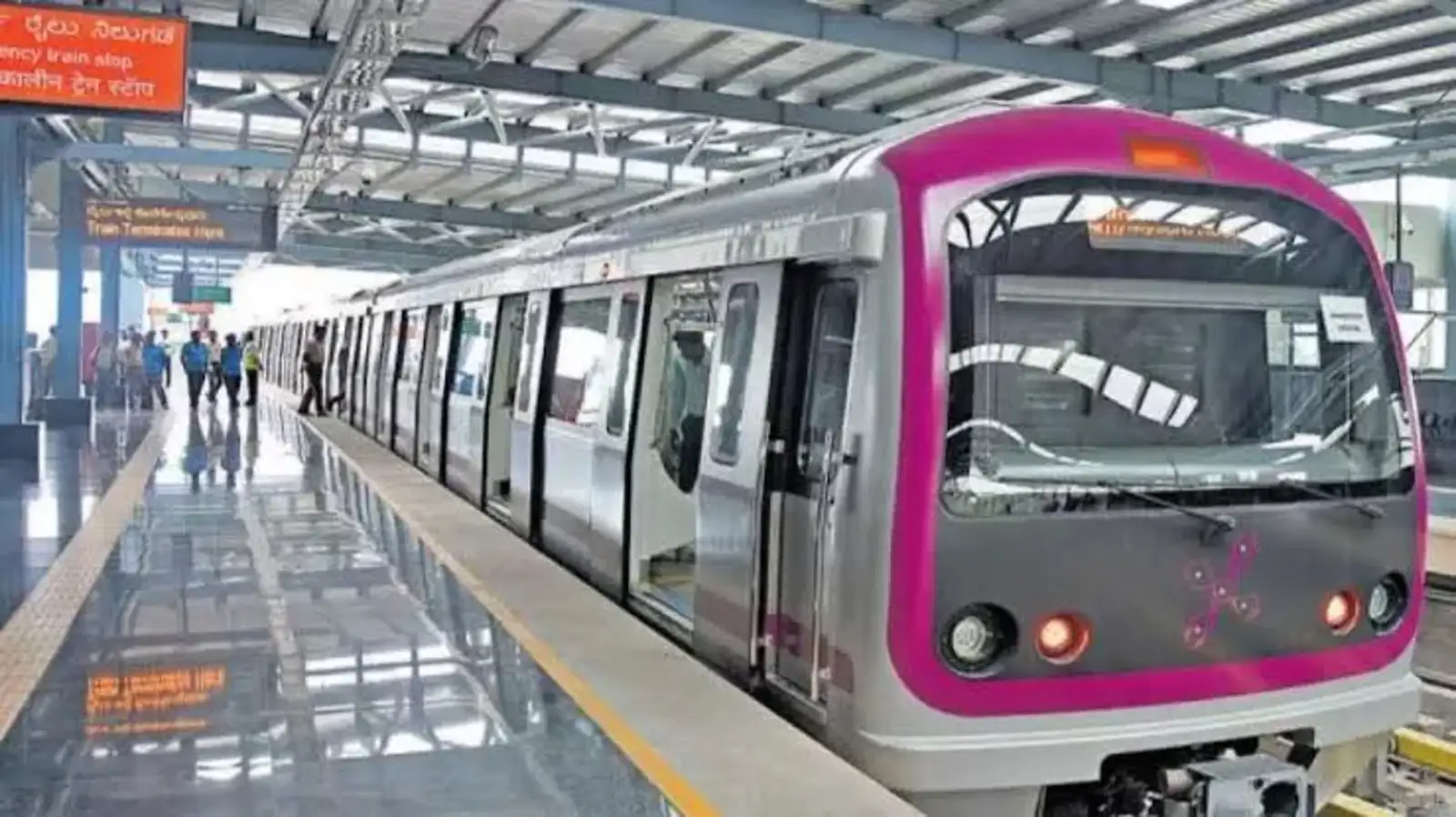
Bengaluru is facing mounting public criticism after the city’s metro operator raised ticket prices by up to 71 percent earlier this year, while the Delhi Metro has kept its fare revision modest at just 7 percent. The steep difference has intensified debates on affordability, equitable mobility, and the sustainability of India’s expanding urban transport networks.
While the Delhi Metro, covering nearly 395 kilometres of track, increased fares by only Re 1 to Rs 4 on most routes this week, Bengaluru’s Namma Metro passengers continue to shoulder some of the highest metro charges in the country. A typical passenger in Delhi pays Rs 32 for up to 12 kilometres of travel. In Bengaluru, a similar amount takes commuters only 6 kilometres, highlighting the disparity in cost versus distance covered.The contrast is even sharper for longer journeys. Delhi commuters pay Rs 64 for trips beyond 32 kilometres, but Namma Metro passengers pay Rs 80 for 20-25 kilometres and Rs 90 beyond that range. For a commuter in Bengaluru, the daily cost of travelling to work can easily exceed Rs 180, often making two-wheelers a cheaper alternative despite the city’s rising pollution levels and growing congestion.
Also Watch: An Exclusive Interview with Sanjeev Jaiswal (IAS), CEO MHADA
Transport analysts argue that steep metro fares risk undermining the very purpose of mass transit in Indian cities, where public mobility must remain affordable, sustainable, and inclusive. Rising fares not only discourage passengers from leaving private vehicles behind but also weaken the environmental and social benefits that modern metro systems are meant to deliver.The fare disparity has fuelled anger among civic groups, who point out that a high-capacity network like Delhi has managed a restrained fare hike while maintaining service quality and expansion. Bengaluru’s system, by contrast, has expanded to 96 kilometres but still struggles with overcrowding and limited frequency on some lines. Critics say charging premium fares without delivering comparable service quality is unfair to daily riders.
Officials defending the Bengaluru Metro have stressed that the financial models of the two networks are not directly comparable. Land acquisition costs, funding guarantees, and project timelines have varied significantly. However, this explanation has done little to ease commuter frustration, with calls growing louder for greater transparency, public consultation, and long-term fare rationalisation strategies.As cities across India seek to build sustainable transport systems, the Bengaluru case underscores a crucial challenge: balancing financial viability with social equity. If mass transit becomes unaffordable, the goal of reducing carbon emissions and easing urban congestion may remain elusive. For commuters, what matters most is affordable, frequent, and reliable service that supports both their livelihoods and the city’s long-term sustainability.
