


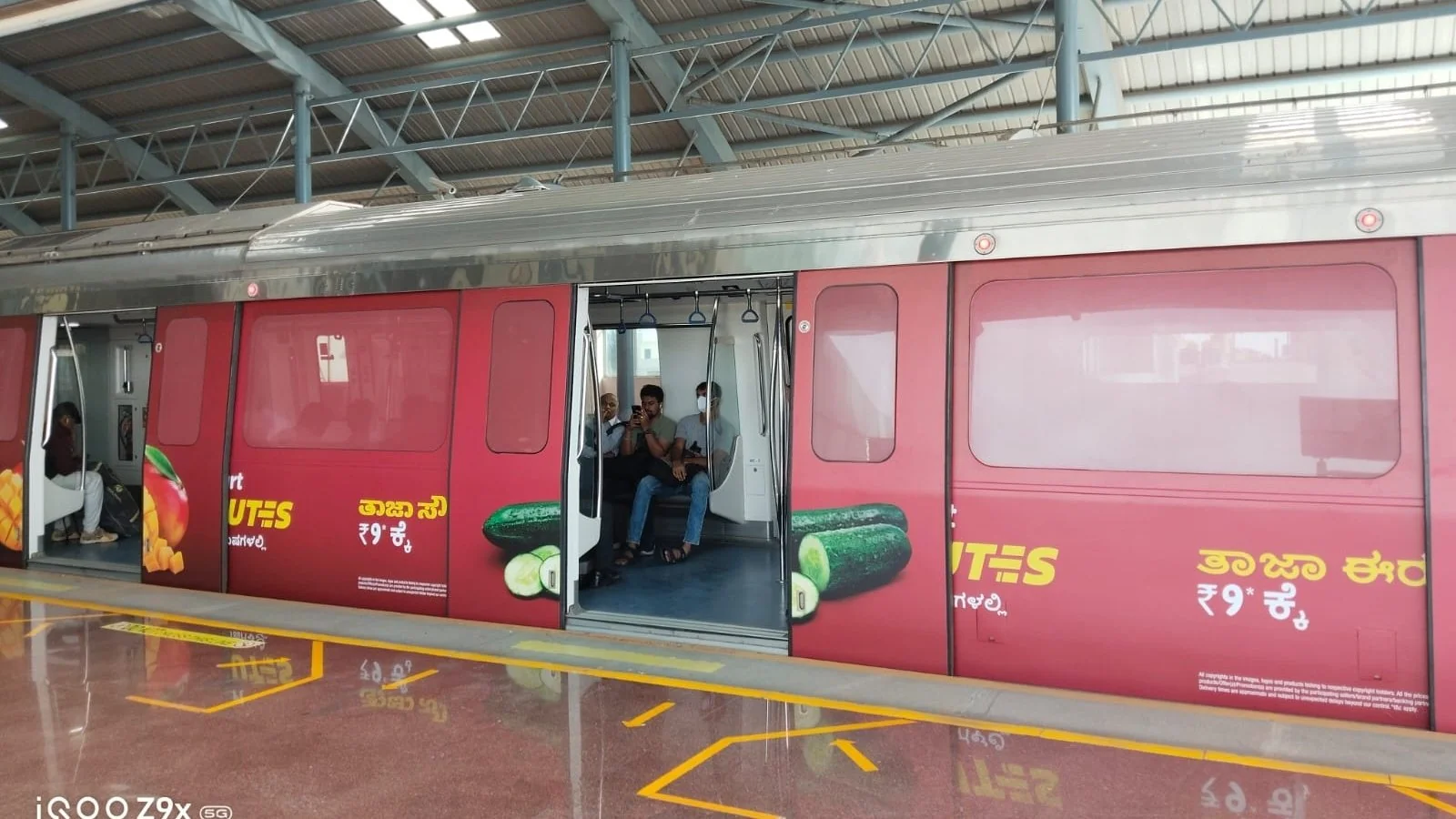
Bengaluru is set to witness the return of advertisements on metro infrastructure after a seven-year hiatus, potentially generating up to ₹80 crore annually in non-fare revenue for the Bengaluru Metro Rail Corporation (BMRCL). Officials confirmed that tenders have been invited for ad displays on selected metro pillars and portals along operational corridors — Purple, Green, and Yellow Lines — with plans to extend coverage to the upcoming Pink and Blue Lines.
The development follows the Karnataka government’s July 18 decision to lift the long-standing ban on outdoor advertising across the city, a move that signals renewed opportunities for the advertising sector and the Bruhat Bengaluru Mahanagara Palike (BBMP). The revised BBMP Advertisement Bye-Laws, 2024, now govern the rights and regulations surrounding outdoor media, formalised through submission to the Karnataka High Court. Under the new framework, advertising rights will be allocated to the highest bidders for specific roads or clusters, but ads will be restricted on roads narrower than 60 feet unless the area is zoned commercial or industrial. Experts note that this regulation balances revenue generation with the city’s sustainable urban design and traffic considerations.
The guidelines emphasise private property usage, requiring written consent from owners for hoarding installations. Hoardings must maintain a minimum spacing of 200 meters with a maximum horizontal width of 40 feet. Furthermore, advertisements are prohibited on roads, footpaths, or properties not listed in BBMP records, ensuring safety and civic compliance. Tax-compliant commercial establishments may display ads facing public roads while paying applicable fees. A key aspect of the policy mandates reserving space for public interest messaging — 10% of daily screen time on digital displays and 20 days per year for static hoardings — demonstrating the city’s commitment to equitable and socially responsible advertising.
Officials explained that while BMRCL is authorised to display advertisements on metro pillars and stations, the BBMP will oversee tendering and revenue-sharing arrangements. This collaboration between the civic body and metro authorities is expected to optimise financial returns while maintaining the cityscape’s visual integrity. Urban planning experts suggest that the return of advertisements could enhance Bengaluru’s non-fare revenue streams, supporting sustainable metro operations and funding future infrastructure upgrades. Simultaneously, the policy’s regulatory safeguards and public messaging provisions reflect a balance between commercial imperatives and civic welfare, promoting a gender-neutral, inclusive, and eco-conscious urban environment.
As Bengaluru continues to expand its metro network and urban infrastructure, this policy shift is likely to influence how cities in India monetise public transport assets while ensuring that commercial growth does not compromise sustainability or citizen well-being. Analysts consider this a strategic step toward integrating financial viability with responsible urban governance.
Also Read : Delhi Airport Operations Safe Despite European MUSE Software Cyberattack Alert
