


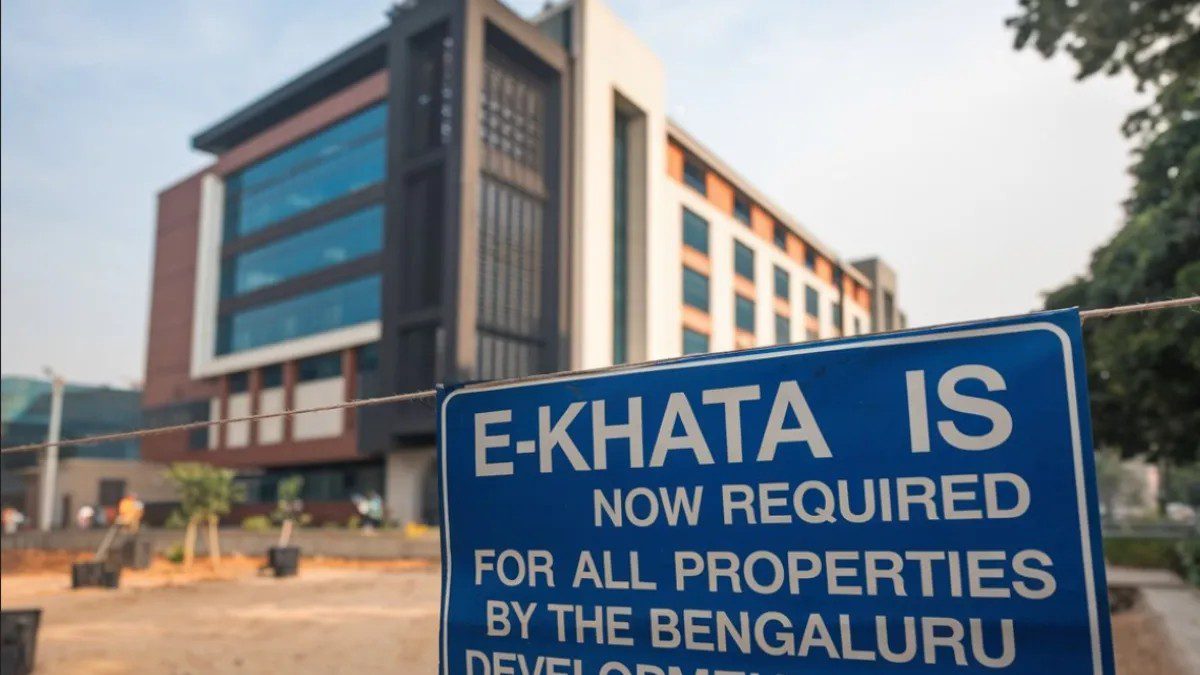
Bengaluru’s real estate market in 2025 was deeply influenced by the rollout of the e-Khata system, a digital reform aimed at modernising property records and accelerating ownership transfers. While the initiative promises long-term transparency and efficiency, its first year has exposed operational gaps that temporarily slowed registrations, unsettled buyers and strained developer cash flows across India’s technology capital.
Introduced as a replacement for manual khata certificates, the e-Khata framework was designed to offer faster online issuance of ownership records, reduce fraud and improve data accuracy. For a city grappling with rapid growth, fragmented land records and mounting pressure on civic services, digitisation was widely seen as a necessary step towards better urban governance. However, nearly a year into implementation, the transition has been uneven. Homebuyers reported errors in digital records ranging from spelling mistakes and missing co-owner details to discrepancies in built-up area and parking allocations. With no fully functional online correction mechanism, many residents were forced to make repeated visits to civic offices, undermining the very efficiency the system was meant to deliver. Industry experts noted that these inaccuracies have had financial implications as well. Errors in area declarations have triggered reassessments of property tax, sometimes resulting in unexpected demands. Brokers said buyers have become more cautious, carefully verifying every entry before migrating to the new platform to avoid future liabilities. The impact has extended to transaction volumes. Developers’ associations flagged a sharp slowdown in registrations following the mandatory shift, estimating that high-value property deals were delayed as khata updates failed to keep pace. A senior industry body representative said that the abrupt transition, without phased implementation, disrupted sales cycles and affected project timelines, even as underlying housing demand in Bengaluru remained resilient.
Despite the teething troubles, urban policy specialists argue that the reform’s long-term benefits are substantial. Making digital khata certificates compulsory for building plan approvals from mid-2025 has strengthened compliance and reduced ambiguity in land ownership. The state’s decision to regularise certain previously informal properties and upgrade them into the formal system is also expected to expand access to civic amenities, formal finance and municipal revenues. To address service bottlenecks, the government is now examining institutional changes, including centralised service centres modelled on passport offices to handle e-Khata applications more efficiently. Officials said this approach could reduce dependency on intermediaries, improve accountability and restore public confidence in the system. As of late 2025, authorities confirmed that several lakh digital khatas had already been issued across Bengaluru. Urban planners believe that once stabilised, the e-Khata framework could play a critical role in building a more transparent, inclusive and sustainable property ecosystem one that supports orderly growth while reducing administrative friction for citizens.
For now, Bengaluru’s experience highlights a familiar challenge in urban reform: balancing the urgency of digital transformation with the need for careful execution to ensure that technology truly works for people and cities alike.
Also Read: Bengaluru Ultra Wealthy Buyers Drive Luxury Property Market From Penthouses To Prime Land
Bengaluru Major EKHata Reforms Transform Real Estate Sector In 2025 Year Ender
