


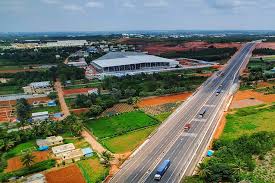
Property owners across Bengaluru have started transferring land to the city’s civic authority for a landmark infrastructure initiative aimed at decongesting traffic and enhancing connectivity across the metropolitan region. The first tranche of handovers forms part of the Bengaluru Business Corridor, a multi-lane arterial route intended to link peripheral neighbourhoods with key employment and industrial hubs. Urban planners describe this as a pivotal move in shaping Bengaluru’s long-term mobility and urban growth trajectory.
The corridor, envisioned as a high-capacity ring connecting northern, eastern, and southern clusters, will facilitate faster transit while reducing traffic pressure on the city’s inner roads. The civic authority is compensating landowners with a combination of cash payments, developed plots, and transferable development rights (TDR) entitlements. Experts note that offering multiple compensation avenues is essential to encourage participation, especially in areas where property values have risen sharply over the past decade. Urban development specialists say the corridor aligns with the city’s broader objectives of promoting sustainable and people-first infrastructure, integrating transport efficiency with future-ready land use planning. A senior urban planning official highlighted that enabling additional floor area ratio (FAR) and TDR options as part of the compensation package not only offsets opportunity costs for landowners but also encourages long-term engagement in the city’s development agenda. The Business Corridor project has faced decades of delays, largely due to disputes over land acquisition, valuation, and legal entitlements.
Analysts suggest that these initial handovers could signal a shift toward faster project implementation, as acquiring contiguous land parcels has been the key bottleneck. Once operational, the corridor is expected to catalyse economic growth in peripheral districts, improve logistics for industrial clusters, and attract investment into underdeveloped neighbourhoods. Infrastructure experts also caution that transparent utilisation of funds collected from land transfers and FAR premiums will be crucial to public confidence. Recommendations include escrow accounts and regular reporting on expenditure toward roads, pedestrian networks, and green infrastructure. Integrating climate-resilient design elements and urban greenery is expected to mitigate environmental impact while enhancing livability along the corridor.
For Bengaluru residents, the project promises tangible improvements in commuting times and accessibility, particularly for communities in the Outer Ring Road, Kanakapura, Sarjapur, and Whitefield corridors. The early phase of land acquisition provides a roadmap for subsequent approvals, design finalisation, and construction, setting the stage for one of the city’s most significant urban transport interventions in recent years.
Also Read: Assetz introduces premium apartments in south Bengaluru
Bengaluru landowners begin handover for business corridor
