


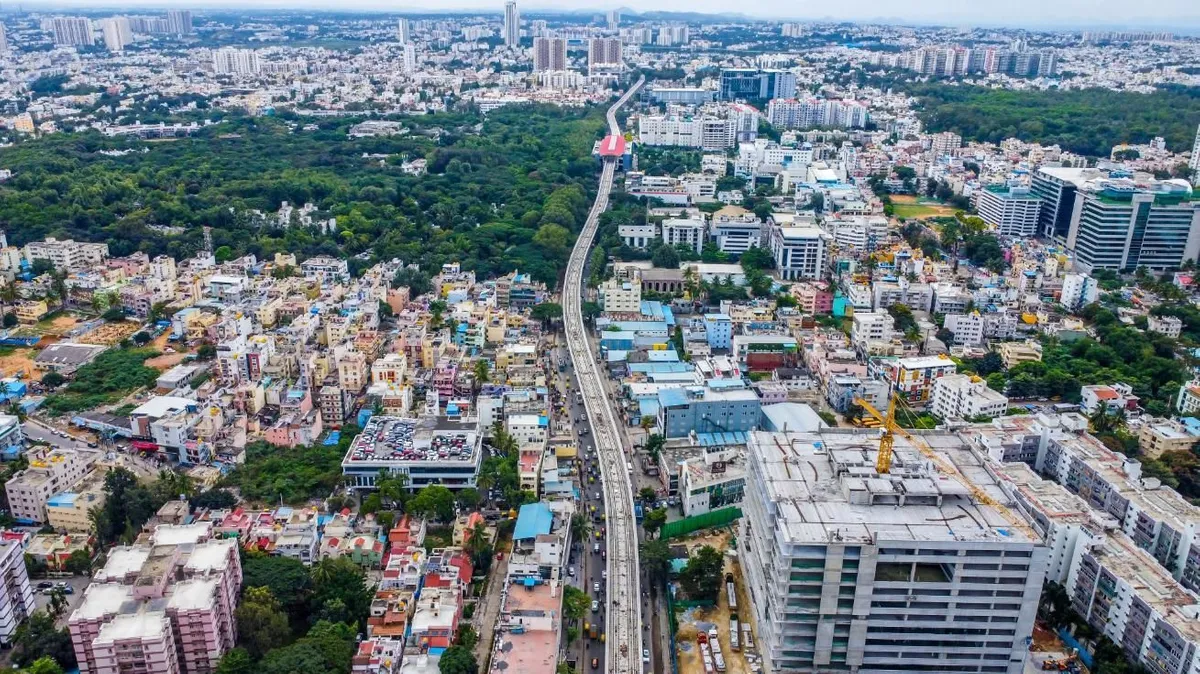
A prolonged freeze on khata-related services in Bengaluru has pushed thousands of property owners into administrative and financial uncertainty, exposing deeper governance challenges in India’s fastest-growing technology capital and threatening the smooth functioning of its real estate economy.
Khata certificates, the primary civic document that establishes property ownership for taxation, registration and financing, have remained largely inaccessible across large parts of the city. The disruption has halted routine processes such as property bifurcation, ownership transfers, regularisation of layouts and conversion of conditional records into fully compliant ones. For homeowners, this has translated into an inability to sell, mortgage or legally update their assets. The impasse stems from unresolved jurisdictional overlaps between the city’s municipal corporation and the state’s development authority. Properties originally planned or approved by the development authority but later brought under municipal limits are now caught between competing interpretations of who holds final approval powers. With the Greater Bengaluru Authority’s planning division stepping in, applications have slowed further as zoning norms and compliance frameworks remain unclear. Urban policy experts warn that the freeze has had a cascading impact beyond individual homeowners. Banks and housing finance companies have tightened lending norms, refusing to process home loans or loan-against-property applications without updated civic records. As a result, both resale and primary market transactions have slowed, affecting not just buyers and sellers but also allied sectors such as construction services, legal firms and registration offices.
Civic officials privately acknowledge that the disruption is also denting municipal finances. Property tax collections, a critical revenue stream for urban infrastructure, have been affected as thousands of properties remain unable to update records or resolve discrepancies. Estimates suggest that delayed assessments and unpaid dues linked to the khata freeze could cumulatively run into several thousand crore rupees, weakening the city’s capacity to fund basic services. The situation has also highlighted the unintended consequences of rapid digitisation. While online khata systems were introduced to improve transparency and reduce manual errors, stricter backend scrutiny and the absence of harmonised land records have slowed approvals rather than streamlined them. Resident groups argue that ordinary homeowners are being penalised for legacy planning gaps and inter-agency coordination failures beyond their control. From an urban development perspective, planners caution that prolonged uncertainty around land and property records undermines trust in city governance. Clear titles and predictable approvals are essential for sustainable densification, redevelopment of ageing neighbourhoods and climate-resilient urban renewal. Without these, cities risk encouraging informal transactions and speculative behaviour.
The state government is now under mounting pressure to intervene with a time-bound resolution that clarifies authority, standardises zoning interpretation and offers transitional relief to affected owners. Until that clarity emerges, Bengaluru’s khata freeze remains a reminder that urban growth without aligned governance frameworks can stall both citizen confidence and the city’s long-term development ambitions.
Also Read: Bengaluru housing affordability tightens for mid income buyers
Bengaluru khata freeze paralyses property transactions
