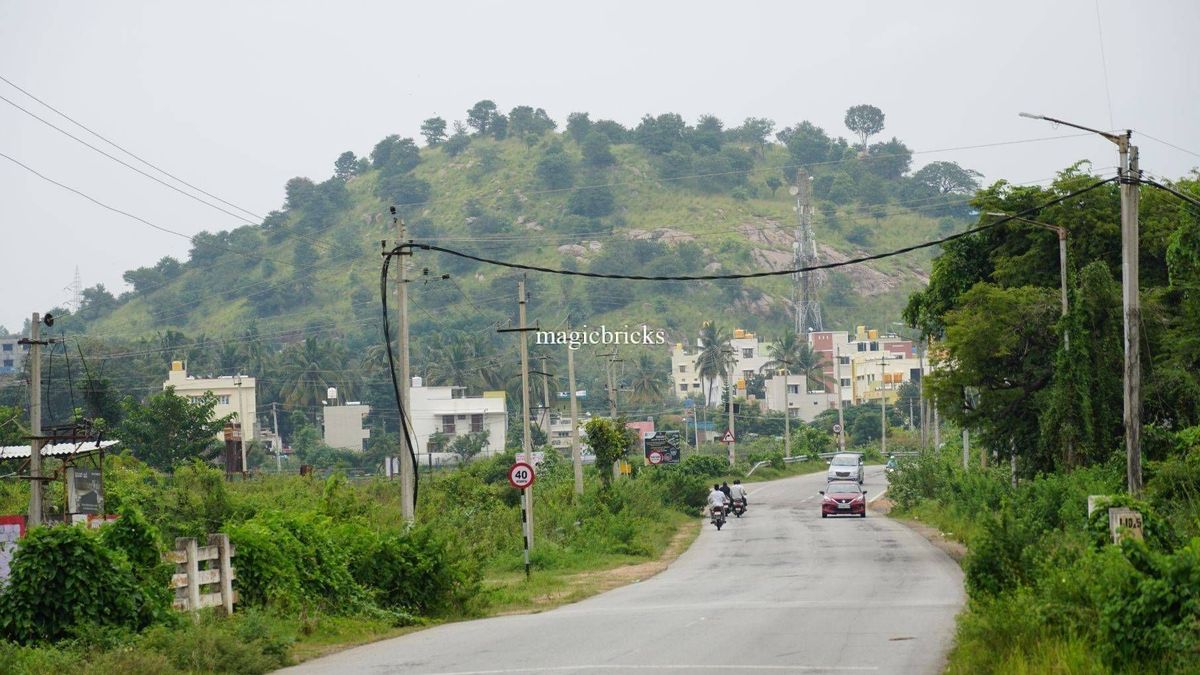
An ambitious road modernisation initiative on Bengaluru’s Kanakapura Road is drawing sharp scrutiny from residents and urban mobility observers, as incomplete execution threatens to undermine the corridor’s original objectives of safer streets, multimodal access and smoother traffic flow. The project, envisioned as part of a citywide high-density corridor programme, was intended to serve as a template for people-first street design in fast-growing urban zones.
Spanning roughly eight kilometres in south Bengaluru, the corridor was planned to introduce consistent carriageway widths, continuous pedestrian infrastructure and segregated cycling space. Instead, large sections remain unfinished, particularly beyond the initial few kilometres, leaving behind fragmented footpaths, narrowed traffic lanes and poorly regulated curbside activity. For daily commuters and residents, the result has been heightened congestion and increased safety risks. Urban planners point out that partial implementation of street redesigns often creates more friction than benefit. In the absence of continuous footpaths, pedestrians are pushed into live traffic. Where cycling lanes exist without enforcement or network continuity, they are quickly absorbed by informal parking or spillover traffic. On Kanakapura Road, this mismatch between design intent and ground reality has become increasingly visible.
The corridor cuts through dense residential neighbourhoods, senior citizen housing clusters, educational institutions and metro-access zones. Residents report that unfinished pavements and encroachments have made short-distance walking unsafe, discouraging non-motorised travel and increasing reliance on two-wheelers even for local trips. This runs counter to the project’s stated aim of reducing private vehicle dependence along a high-demand arterial road. From a governance perspective, the project highlights coordination challenges between planning agencies and execution bodies. While the corridor was positioned as a capital-intensive urban upgrade, accountability for delivery and post-construction management appears diffused. Urban infrastructure experts note that without a clearly identified implementing authority and enforcement mechanism, even well-funded street projects struggle to deliver outcomes.
The implications extend beyond mobility. Kanakapura Road is a key real estate and transit corridor linked to metro infrastructure and residential densification. Persistent design flaws and incomplete works can depress liveability, affect property values and erode public trust in future urban renewal efforts. Developers and housing societies along the stretch are increasingly vocal about the gap between approved plans and visible outcomes. The project also raises broader questions about how Indian cities interpret “high-density” planning. International best practice treats density as an opportunity to prioritise pedestrians, public transport and universal accessibility. However, when such concepts are implemented without local calibration, enforcement or completion discipline, they risk becoming cosmetic interventions rather than functional upgrades.
As Bengaluru prepares for further road redesigns and transit-oriented development initiatives, Kanakapura Road serves as a cautionary example. Urban mobility specialists argue that completing unfinished segments, correcting design misalignments and restoring pedestrian continuity must take precedence before replicating the model elsewhere. The corridor’s future effectiveness will depend not on sunk costs, but on whether execution can realign with the people-centric planning principles it was meant to represent.